
How to Build a Model Yacht by Herbert Fisher and Frank Nichols – 1902
This is a collection of articles from The Rudder magazine republished as a book that provides "practical instructions in the art of model making."
This is a collection of articles from The Rudder magazine republished as a book that provides "practical instructions in the art of model making."
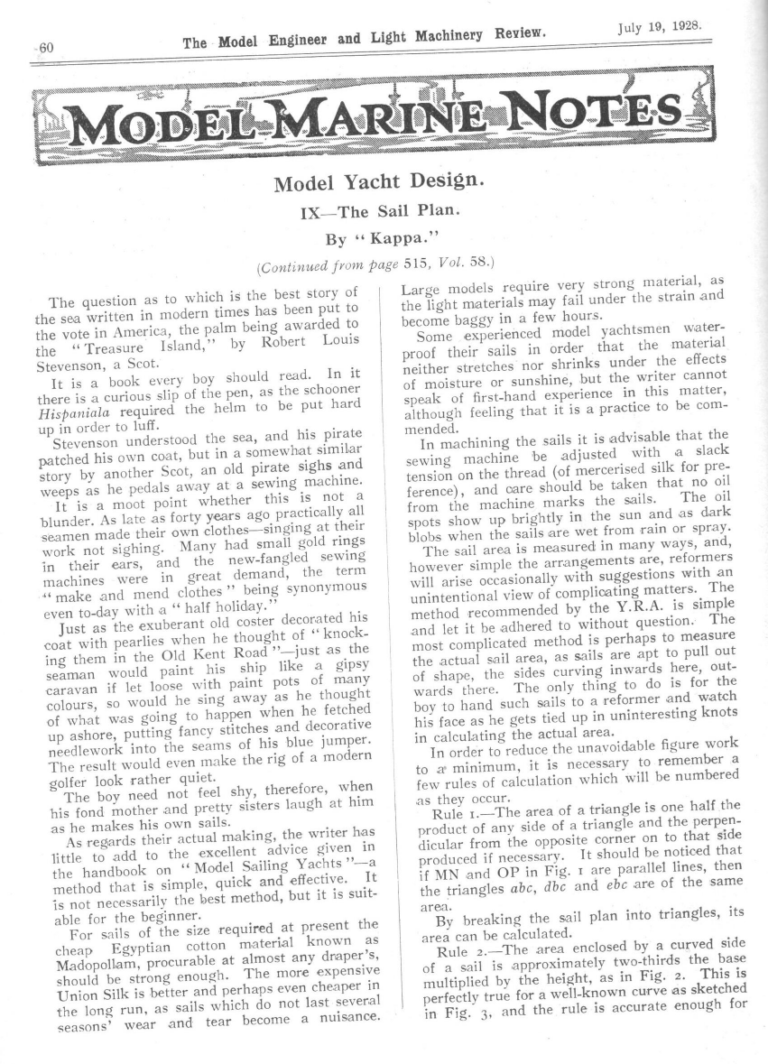
The sail area is measured in many ways, and, however simple the arrangements are, reformers will arise occasionally with suggestions with an unintentional view of complicating matters. The method recommended by the Y.R.A. is simple
and let it be adhered to without question.
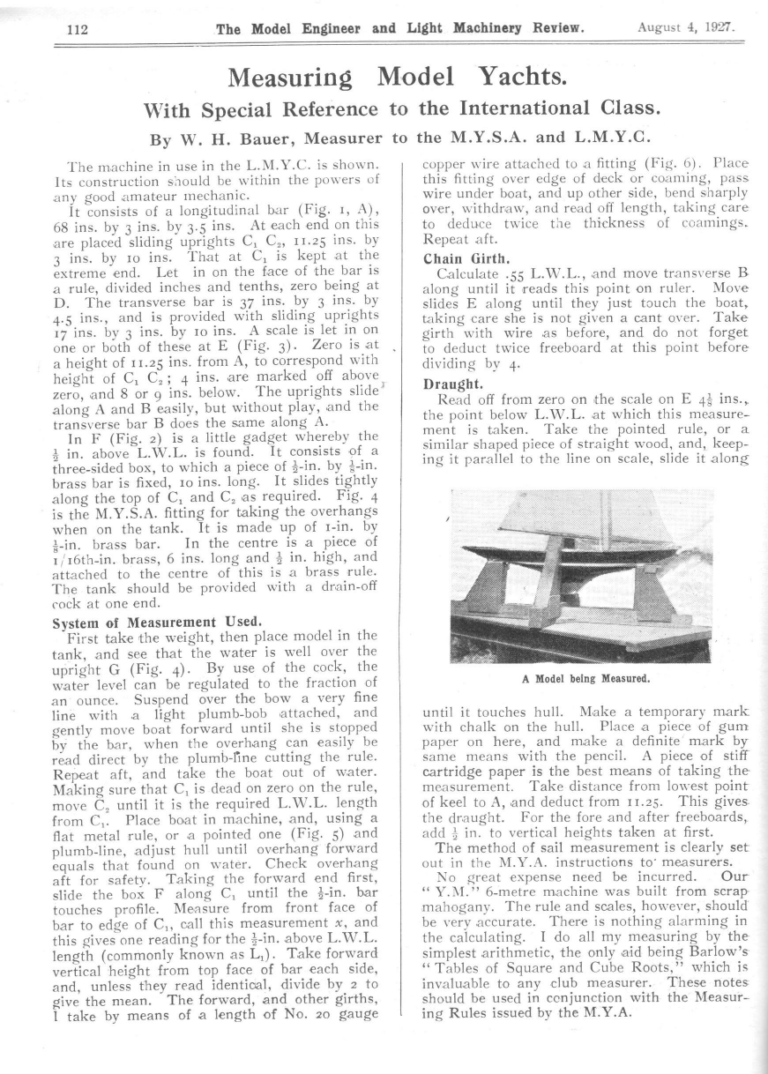
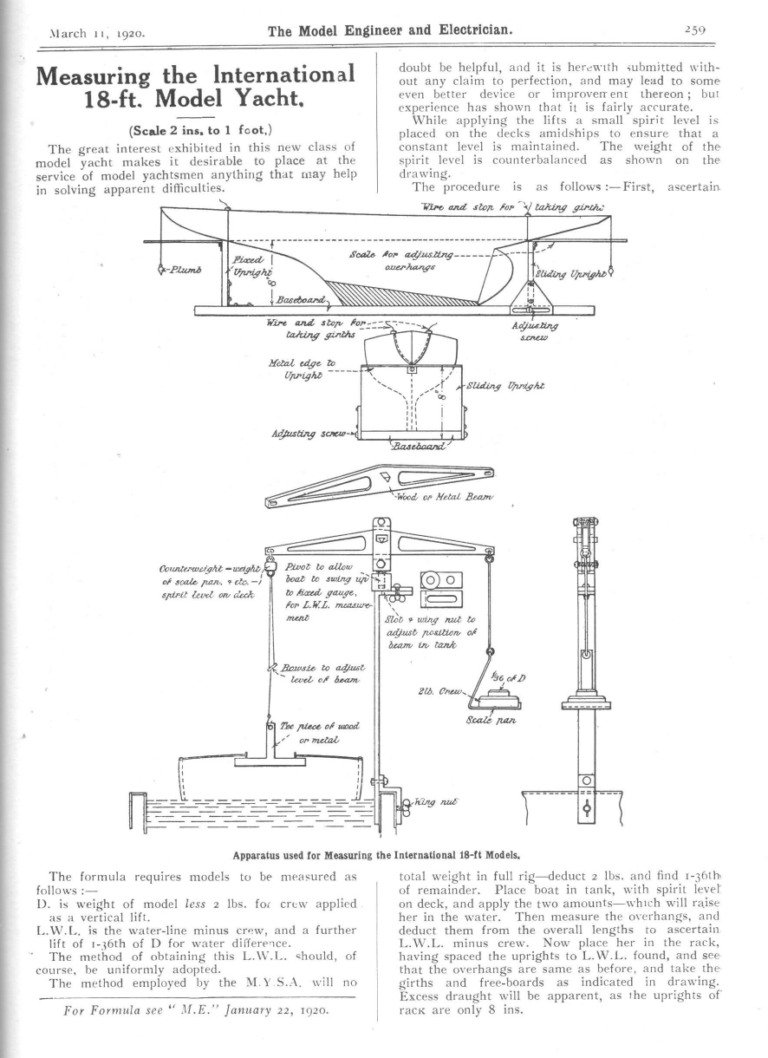
First take the weight, then place model in the tank, and see that the water is well over the upright G (Fig. 4). By use of the cock, the water level can be regulated to the fraction of an ounce.
There are wonderful educational possibilities in a good model yacht, while as a sporting or recreational activity, boating deserves serious consideration. A young man can get more pleasure out of an afternoon's try-out of a model boat along the banks of some cool lake or stream, than he could by spending days in some closed-in back yard.
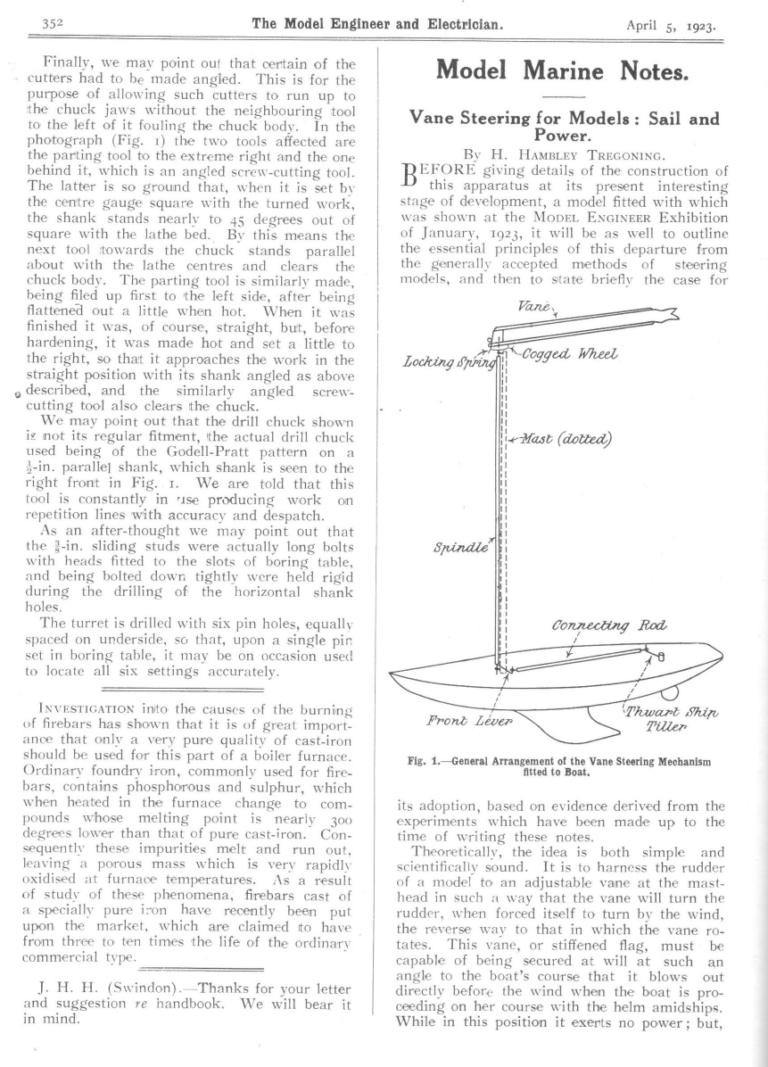
Theoretically, the idea is both simple and
scientifically sound. It is to harness the rudder of a model to an adjustable vane at the masthead in such a way that the vane will turn the rudder, when forced itself to turn by the wind, the reverse way to that in which the vane rotates.
No doubt if one had Mr. Daniels’ experience, and his brains as well, they would be definite instructions rather than hints, and the art of designing a yacht would become the practically pure geometrical exercise he maintains it to be.
Every boy likes to build boats. The interest in boats seems to be born in the race. little three-year-old chap is instinctively attracted by a puddle of water in which to sail his "boat," which may take the form of a piece of shingle or common board. Few men have passed through their boyhood days without having built boats at some time.
Herreshoff, in his usual way, eviscerated the rule and took those elements and those only that counted. A canoe body to run over the water—the exact amount of lateral resistance needed for the S.A. in
the form of a metal fin—the lead disposed in the most effective form at the lowest point in the forms of a torpedo halved and bolted on the bottom of the fin. Such was the Wee Win.