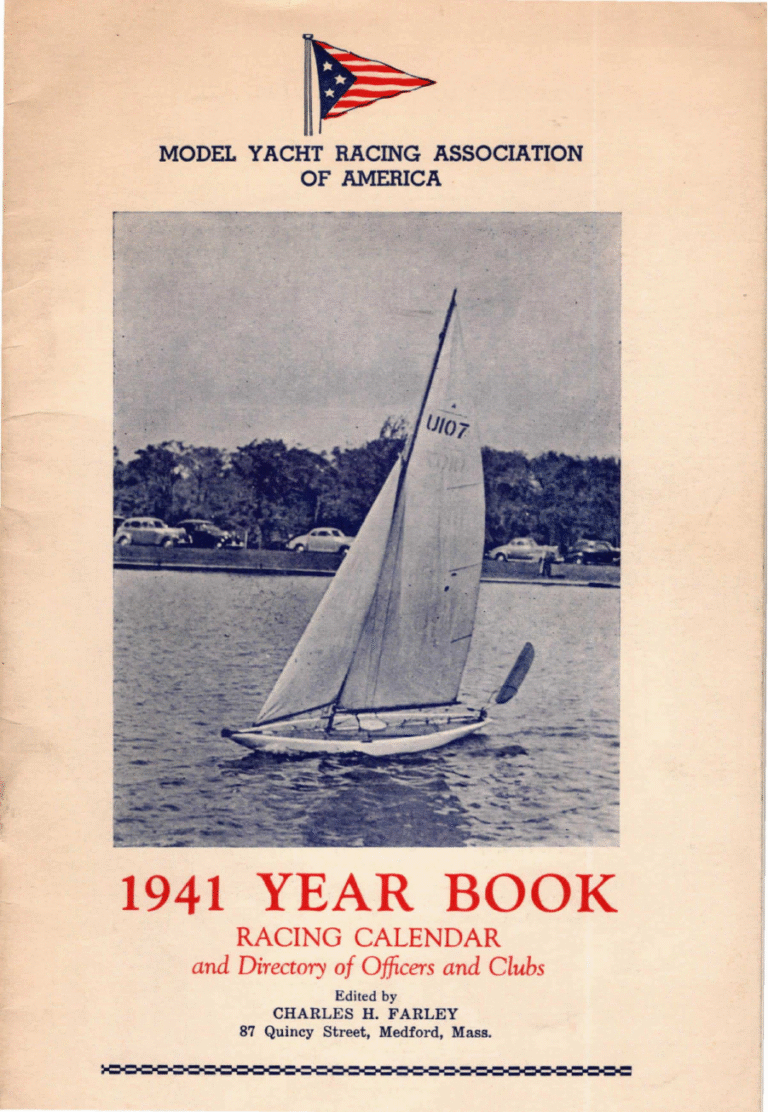
The Model Craftsman: Volume 9, Issue 10 – March 1941
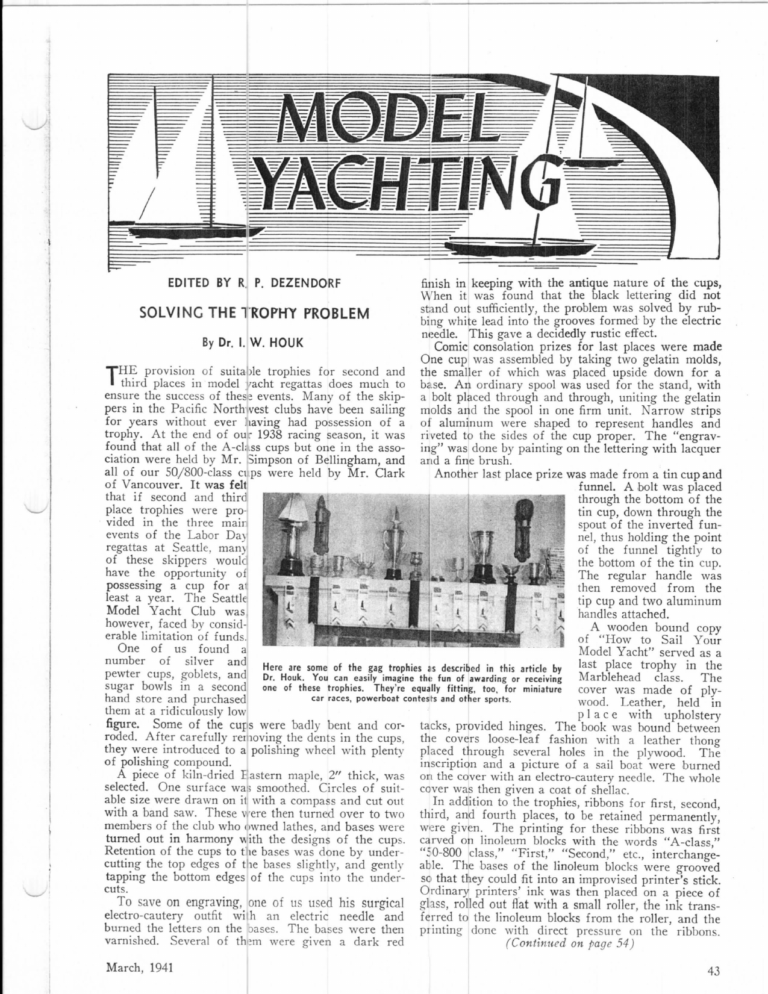
To save on engraving, one of us used his surgical electrocautery outfit with an electric needle and burned the letters on the bases.

To save on engraving, one of us used his surgical electrocautery outfit with an electric needle and burned the letters on the bases.

Several letters have been received advocating the adoption of a 36” National Class for juniors. This idea has been suggested many times, but up until now, nothing concrete has been done about it. A Committee will be appointed shortly to formulate proposed rating rules and a scheme of conduct of racing for this class, to be submitted to the Executive Committee of the M.Y.R.A.A.


What’s It All About? A Dissertation on Model Yachting
MYRAA Objective, National Officers, Executive Committee and Divisions Leader
1941 Racing Calendar
Official Burgees of the MYRAA
Canadian Model Yacht Racing Association
Your Hobby
Sport vs Friendship
Sailing from Skiffs: Through the eyes of the officer of the day
Sailing from the Shore: Pond Sailing through the eyes of the officer of the Day

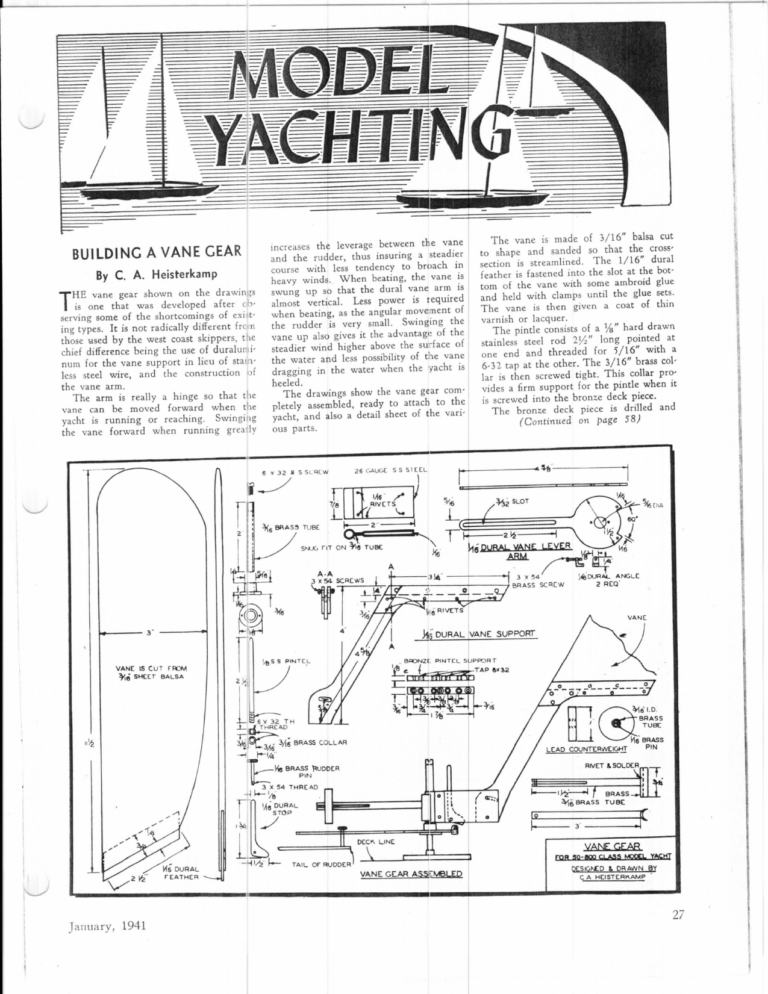
It is not radically different from those used by the west coast skippers, the chief difference being the use of duraluminum for the vane support in lieu of stainless steel wire, and the construction of the vane arm.

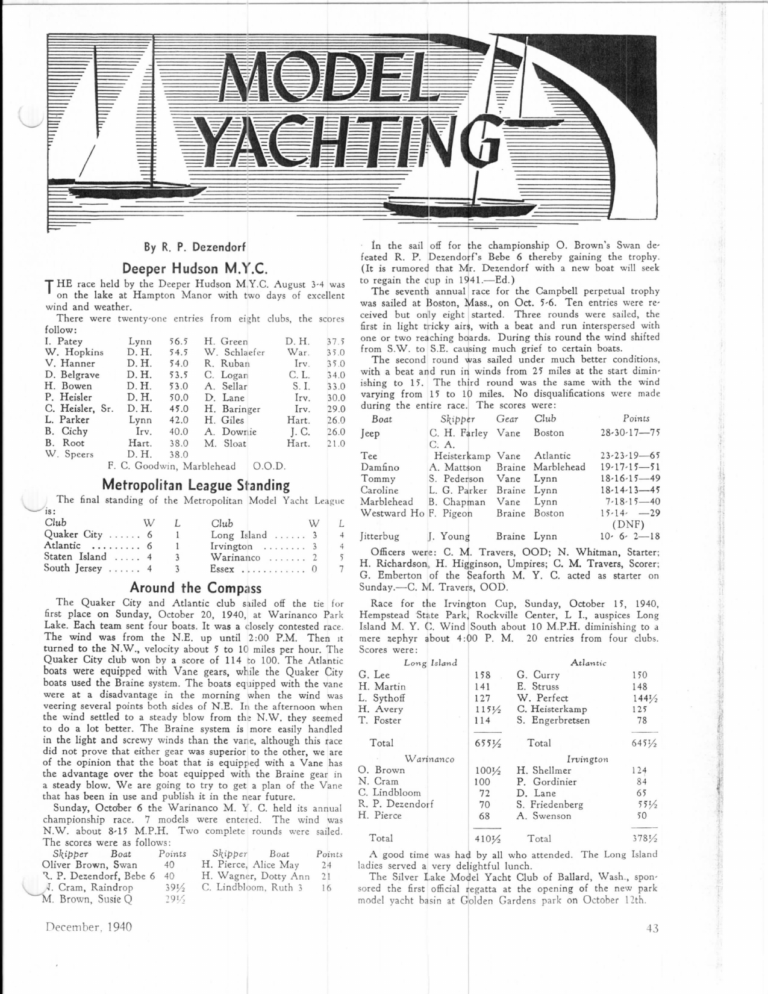
The Quaker City and Atlantic club sailed off the tie for first place on Sunday, October 20, 1940, at Warinanco Park Lake. Each team sent four boats. It was a closely contested race.

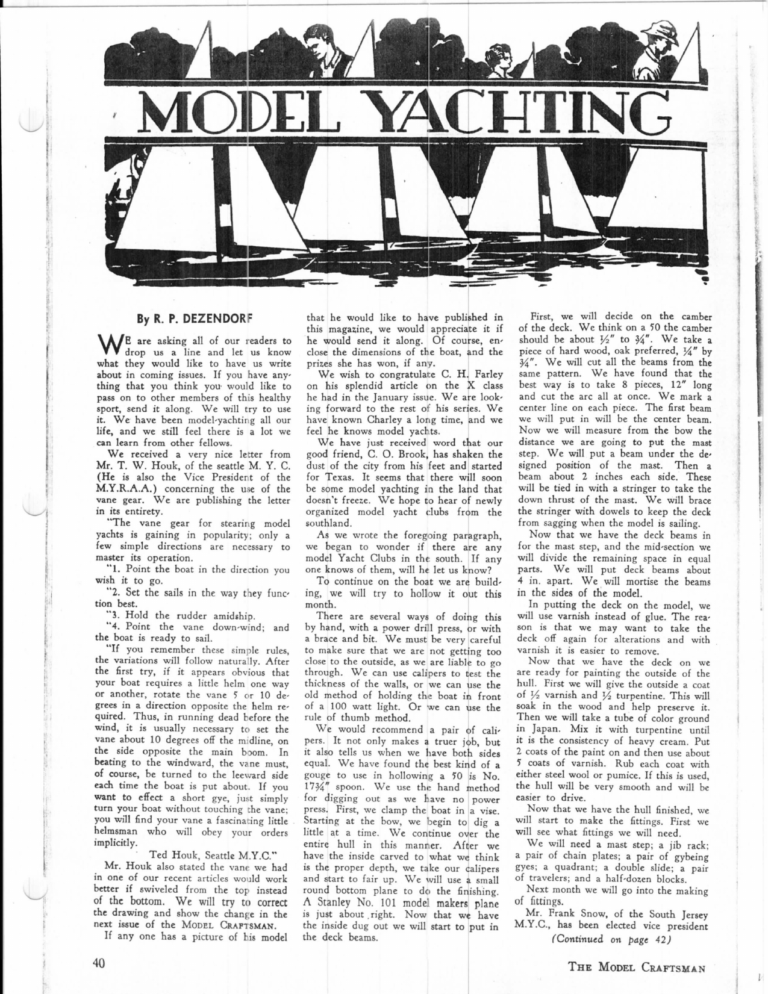
We received a very nice letter from
Mr. T. W. Houk, of the seattle M. Y. C.
(He is also the Vice President of the
M.Y.R.A.A.) concerning the use of the
vane gear. We are publishing the letter
in its entirety.

Designs for the 6-meter, M Class, X Class and A Class