- Description of contents

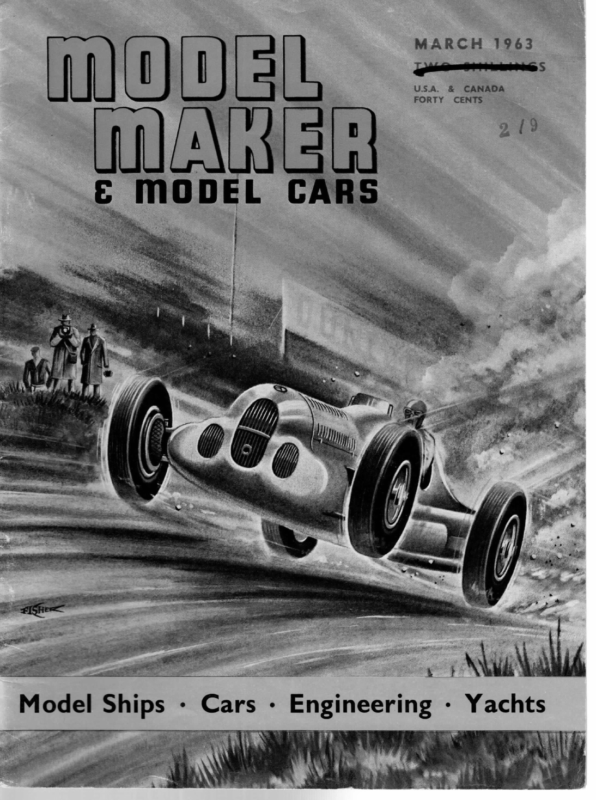
MARCH 1963 USA. & CANADA FORTY CENTS
MARCH 1963 GOSPORT R/C YACHT REGATTA One of the last 1962 events described by C. Brazier, photos by T. G. Carrington-Wood mittee decided that where competitors suffered from the clash of frequency problem, the points obtainable at each heat between such boats would be shared. This arrangement cut out the very unsatisfactory “time round the course business” and saved valuable time. Giving points away is never a good thing in a competition but this method seems to be the best answer until the interference problem is beaten. N the 22nd and 23rd September, 1962, the Gos- port Model Yacht Club staged the Annual Regatta for the Alan Tamplin Challenge Cup and the Captain Curry (R.N.) Mug. There were 11 entries: A. Tamplin (Selma), G. Stalkartt (Woonraker II), J. Hogg (Sunlight), C. Brazier (Spindrift), (these four being Gosport’s entries) J. Gascoigne (Senorita) YM 6, J. Merrick (Gypsy) Birmingham, R. Curwen (Windrush) Poole, E. Brothers (Bee) I.R.C.MLS. The wind was light from the N.W. which, by reason of the time factor, only allowed one lap of the course to be sailed in each heat of the tournament system used for the Alan Tamplin Challenge Cup Race. A running commentary was given through a loud speaker set up, provided by that very enthusiastic R/C model yachtsman, Carrington Wood. The commentary made the event interesting to spectators, who were treated to a very good sailing spectacle. Each time these R/C model yachtsmen meet the standard of sailing gets higher and the sailing rules appreciated and applied the more, to the betterment of the sport. On both days some very good luffing matches, manoeuvres round marker buoys and sailing tactics were observed, and made a good impression on some members of a local full-size yacht club who were among the spectators. The Sailing Com- On the Saturday evening, closing sailing for the day, the mass race for the Captain Curry cup was sailed off. There were six boats clear of interference which were able to enter this race. It was most spectacular—the skippers showed considerable skill in jockeying their boats about the starting line awaiting the starting whistle when they finally crossed in good order. It was fascinating to see these craft being manoeuvred so close together, port tack giving way to starboard as the occasion demanded while they weaved about and edged up to the line. Had Captain Curry (R.N. retd.) been able to attend the regatta this mass race would surely have delighted his sailor heart. Three laps of the course were sailed for this race, and Bob Curwen’s Windrush got a flying start. She picked up her skirts and showed a saucy stern to the big “A*: boats, for this was indeed 10 rater weather. She held her lead and romped round the course in an evening breeze which had stiffened a little, while the others, somewhat close together, plugged on, battling all the way, using the racing rules to gain advantage over each other, all of which made this a very exciting event. Captain Curry really started something when he gave us a cup for mass racing. As Windrush approached the last marker buoy for the homeward leg, a beat to windward, she turned somewhat sharply and stood in irons, then fell off on the starboard tack towards the shore and, sad to relate, her skipper was unable to turn her away; she [Continued on page 125] — left to right Alan Tamplin, Fashions in transmitters small box, big tripod, John Hogg, portable with strap, Bob Curwen, ground-based with hand controller, Stalkartt with hand-held, and Merrick, large box and 465 aerial, also seen in general view in heading picture. 129