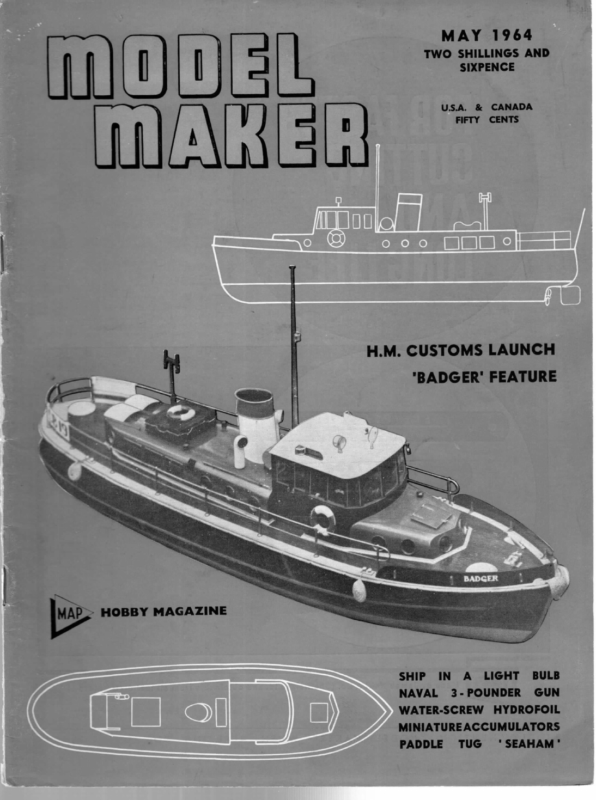
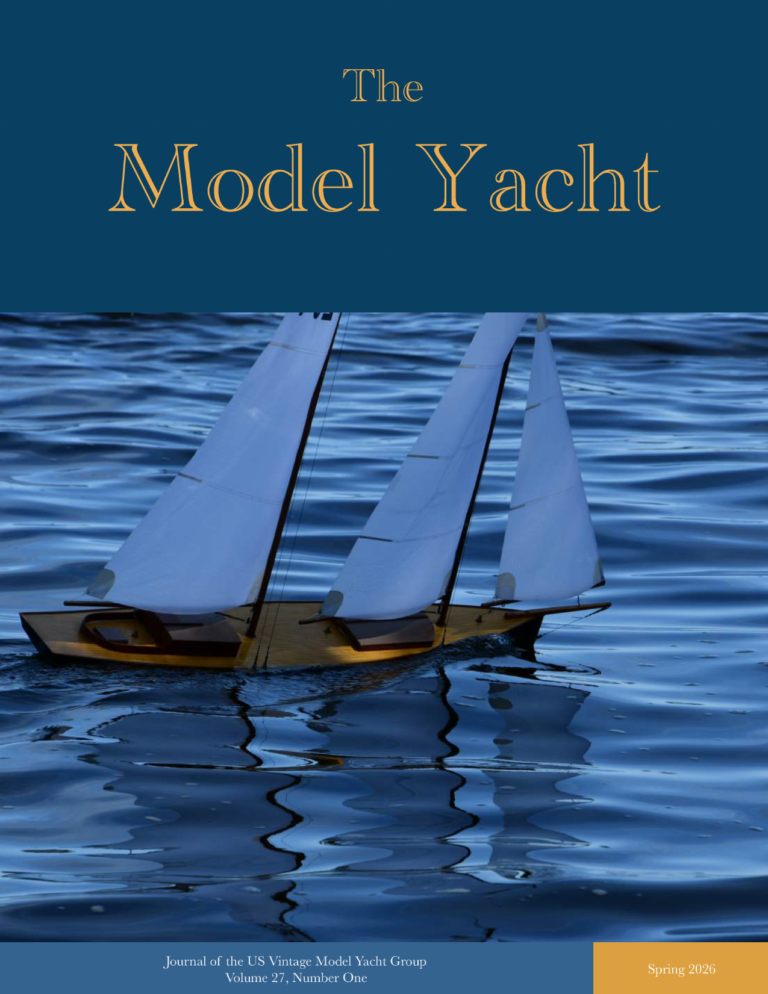
1. Hustler – A New Marblehead Design Design Philosophy: Hustler is a straightforward, orthodox Marblehead-class yacht with moderate displacement (around 21 lbs) and balanced proportions for easy sailing and trimming. Fin Design: Features a reduced fin area with greater sweep for aesthetics and performance. Debate continues over all-lead fins and aerofoil sections, but Hustler opts for a conventional approach. Rig Trends: High-aspect ratio rigs are gaining popularity for better wind reach, though they increase heel angle and spill. The article weighs pros and cons of taller rigs versus moderate designs. Performance Goal: Combines simplicity with improved speed and power, building on qualities from earlier designs like Wasp.
2. Other Featured Marblehead Designs Manta: Narrow beam, deep draught, responsive under pressure. Wasp: Winner of 1963 Model Maker Trophy; good all-round performance. Vega: Lightweight with a bulb keel for normal power. Norma: Deep draught and reduced sail plan for stability. Dynamo: Focus on dynamic balance for power and attractive shape. Hornet: Modern design with strong planing ability in hard weather.
0] | : MAY 1964 – TWO SHILLINGS AND | | | | fa\ SIXPENCE US.A. & CANADA FIFTY CENTS | H.M. CUSTOMS LAUNCH “BADGER’ FEATURE MAP HOBBY MAGAZINE SHIP IN NAVAL LIGHT BULB 3-POUNDER GUN A WATER-SCREW HYDROFOIL MINIATUREACCUMULATORS PADDLE TUG ‘*SEAHAM'” WOWEEL a IMIANKIER} A STYLISH NEW MARBLEHEAD Hustler By S. interest, are more or the less ment of 21 Ib. plus. as majority orthodox of of “M” in Class style. yachts The design shown is the kind of hull many skippers seem to prefer, being straightforward and without frills or gimmicks of any kind. Displacement is moderate HUSTLER DESIGNED BY MODEL MAKER PLANS SERVICE 38. CLARENDON BD. BATFORD. HERTS. There is undoubtedly a case for the all lead fin, recent successes show, with gains resulting from the reduction in wetted area and volumetric displacement. Balanced against this is a loss in pendulum stability and unless the fin has a low angle of sweep, the fin root must tend away from the optimum central position. The American “M” Sunkiss and “A” Class Ranger WITTY Wile a new or novel concept is always and all proportions are normal, with no forcing of the lines at bow or stern, in order to improve the balance. Compared with previous designs the fin area is much reduced, and having greater sweep is more pleasing to the eye. As a result the deadwoo d is pared down considerably, making necessary a slight increase in hull size to maintain a displace- used this idea while both the Tucker Duck and Priest Witchcraft carry only a small amount of wood aft of the lead. For Hustler I decided not to adopt this arrangement as even using blunt nosed sections it is difficult to place the lateral area in the optimum position. Nevertheless this arrange- ment has real advantages. The controversy regarding the use of fine or blunt sections in the fin seems to tend in favour of the former, but providing the leading edge of the fin is well raked the “Aerofoil” type section performs 1964 MAY are It is strange that leading “M” designs t to define areas of often so different that it is difficul similarity. One such point is that fin size and area well. power Is Intend to be reduced as extra beam andreason able as seems corporated in the hull. This reduce d angle of heel a the larger hull will sail atmore efficient for a given and therefore should be quite a lot Apart from innovations in fin design, ultra high rigs of people seem to be going in for they are unthese days, in spite of the fact that increase in wind doubtedly sensitive to anyis real nothing magical about strength. Certainly there ideal cona five to one mainsail ratio. Evenumunder ratio Is someditions it may be that the optim rigs have what lower. Be that as it may, these high cannot be proven highly competitive and the intrend and interignored. Apart from a reductioniableendgain in free ference lorses there is an apprec wa area. area. this would be in sq. in. For the mainsail alone obviously the (2 x Luff in.) +(/s x Leach in.)theSoheight. r area increases considerably with ponds areAnothe partly advantage is that many inland and the taller blanketed by surrounding features,faster g air sails are able to reach into thedrawbackflowin is the inmore effectively. The obvious crease in spill, etc., of both sail and fin, due to the higher centre of effort and increase in heel angle.” Also some area must be lost due to mast “Shadow and drag caused by the “Von Karmen” alternating vortex which is the cause of luff flutter. ~ There are two ways of looking at the comparative Firstly, it may seem success of these higher rigs. that many present day “M” hulls are too heavy and underpowered with a moderate sail plan. The point of view is that a five to one rig should be supported by a more powerful hull leaving a full top suit of lower proportions to cope with any intermediate condition. The basic position still remains the same really in that moderate weather favours the lighter yacht, while the more husky designs do better in a fresh breeze. The point at stake is whether the efficiency of the high rig is sufficiently greater to justify a general increase in displacement, or if such an increase would nullify any improvement in_ sail power. The balance positions as shown on the drawings may be taken as accurate. Construction is straightforward and all the qualities which make the Wasp design so easy to sail and trim have been incorporated, while both speed and power have been further improved. Other Marbleheads by the same designer in Model Maker Plans Service are: Manta A 22 |b. boat of very pleasing lines and narrow beam (9.4 in.), Draught is unusually deep (11.6 in.) and hull sections such that she lifts readily when driven hard. 10/6 MM/551 Wasp HIGH ASPECT RATIO TOP SUIT. —— ccuatae Winner of the 1963 Model Maker Trophy, this is design popular ‘Hornet’. a development of the 0 in., L.W.L. L.o.a. 481 in., Beam 10.1 in., Displacement 21 lb, An attractive craft of good all-round performance, 10/6 MM/574 Vega a bulb An unusual, new boat featuring despite a keel to give normal power total displacement of only 16.5 Ib, L.o.a. 50.25 in., Beam 9.8 in. 10/- MM/759 Norma Another new boat with an draught and attractive measures 50.25 in. x 10.4 20.65 Ib, Plan includes and reduced sail plan. unusually deep Norma lines. in. and weighs full-sized lines 10/- 701 Dynamo A powerful boat of attractive shape — the keynote of careful attention the design to being the dynamic balance. Beam is 10.1 in. and displacement 22} |b. 10/6 MM/508 Hornet A modern and good-looking design with a good planing performance in hard weather. Beam is 10.3 in. and the model mi} 235 weighs 21 MM/472 Ib. 10/6