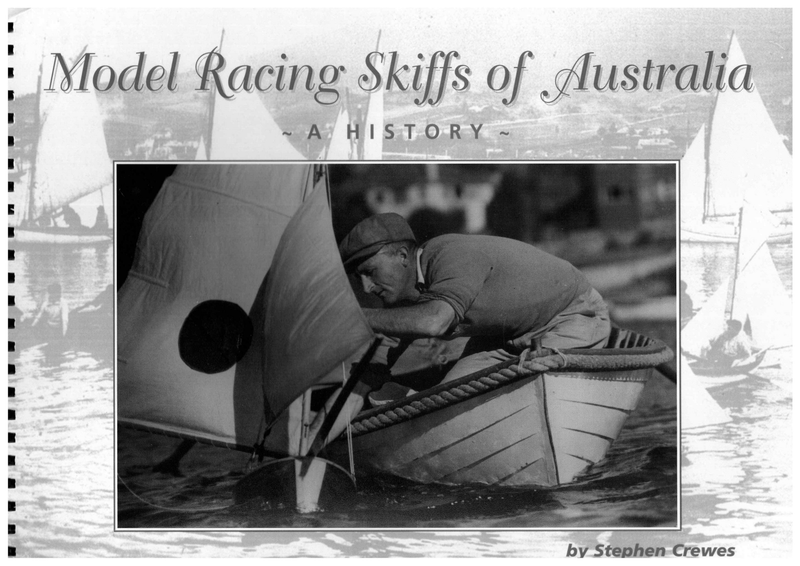
- The history of these unique craft comes from the waterfront area of Sydney, known as Balmain. This was a working class suburb, about a mile west of the Harbour Bridge, and an area that had a lot of boat building taking place in the 1900s. Cockatoo Island, facing Balmain, had a large dockyard on it from the early days of settlement till the 1980s. This dockyard supported a great number of local shipwrights. These craftsmen made most of the open water model racing skiffs.

by Stephen.-Crewes
a Colour Patches D. Abrams, ‘Inverness’ J. Barber, ‘Deanne’ R. Abrahams, ‘Ace of Spades’ A. Roderick, ‘Victor’ CN H. Balkwell, ‘Defiance’ & G. Robinson, ‘Cuttysark’ & K. Minter, ‘Imp’ J. Wallace, ‘Norma’ S. Baxter, ‘Schemer’ & S. Hill, ‘Gwen’ C. Earl, ‘Aberdare’ R. Rudgley, ‘Taree’ P. Yoemans, ‘Ajax’ F. Thomas, ‘Our Jim’ S.Tulley, ‘Blue Peter’ R. Phillips, ‘Fay’ C. Mcindoe (snr) ‘Victory’ R. Cals, ‘The Click’
8 a . _ BwBeBtewTeEBgEegeatqgeRa S@ m = : oo we = eee sao? 4 : ae .- = sont ss aw. eae pages Has Song P : ee ee : : : anna me n omit ite , i Hangman a lpi ms } by Stephen Crewes
All rights reserved. No part of this publication may be reproduced, stored in a retrieval system or transmitted in any form or by any means including photocopying, electronic, mechanical, recording or otherwise, without the prior written permission of the author. Any correspondence should be addressed care of the publisher, PO Box 62, Hurlstone Park, NSW 2193 Australia. © Stephen Crewes, 2003 ISBN 0-9580191-0-X Model Racing Skiffs of Australia: A History Earlier title by the author: Sydney’s Model Racing Skiffs (printed 2002) Printed by Hippo Books, 18 Primrose Avenue, Rosebery, NSW 2018 Australia Designed and set by Hippopotamus Dreams, Sydney, Australia
Contents Preface “WARE Chapter 1 ir csiennnnnnsnnnnnnninnniniiininnntnnnnititttitnnntniniiittttmnnntnntttt 3 SOME MOre HiStOTY ou… onnnnninnnnninnnnininniinniininnininniinniinnniinniinnntnnninest 5 Chapter 2. The North Sydney Model Club oo. nnnnnnninnnnnninnnniiinnnnnnnnnnnnnnn 17 Chapter 3 ‘The Folly Point 18” Model Sailing C1 on nnnnntnninninnininnnne 21 Chapter 4 — The 82% @8S ocowsssssnnnnnnnnnnnnininnininninnininninnniiitninnnninttneniinninttttnniisttttt 27 Chapter 5 The Australian Pre-1900 Yacht ……..ncccccnsnnnnnnnnsnnsnsnsnnsnsnsnsns 31 Chapter 6 ‘The Derwent River 50”…………eon 39 Chapter 7 = The Australian ‘B! 1a on nnnnnnninnnniiinnnnniiinnnnnnninnnniiinnnnnnnnnnnmnnnnt 47 Chapter 8 = The Australian ‘Al C1 aS… nnnnnnnnninnnninininniiiinnnniniinnnniinnnnnniininnnnsnte 59 Back Cover The Flags of the Early Sydney Model Sailing Clubs 1
BPRPRPRRPRRPRPRRPRPRP RPP RRP RAR Aas The start at Iron Cove, 1948 — Drummoyne 12” Club.
Chapter 1 But first let me remind you of the rudiments of the model racing skiffs: these boats were generally referred to in classes as 8”, 10”, 12”, 18”, 2ft and 32” ers. The first two classes, 8” and 10” and 32” ers were considered as pond boats that were sailed around Sydney’s Southern Sydney’s Model Racing Skiffs he history of these unique craft comes from i the waterfront area of Sydney, known as Balmain. This was a working class suburb, about a mile west of the Harbour Bridge, and an area that had a lot of boat building taking place in the 1900s. Cockatoo Island, facing Balmain, had a large dockyard on it from the early days of settlement till the 1980s. This dockyard supported a great number of local shipwrights. These craftsmen made most of the open water model racing skiffs. My first book, Sydney’s Model Racing Skiffs — A Centennial Park, Moore Park and Scarborough Park, in Kogarah, from 1900 to 1950s. The pond boats had a slender type of hull with a lighter keel weight, less draught, and a much lower aspect sail area. The pond boats’ racing courses tended to be windward and return. The open water model skiffs were very much more robust in their construction than the pond boats. Much more bulky, deeper hull depth, wider beams, deeper draughts, heavier keels, long masts and booms. These open water boats were also divided into ‘big’ and ‘small’ types. The big type could withstand very windy weather and rough seas and in fact, the model open water skiff clubs prided themselves of NEVER History, told the story of the pond boats and the open cancelling a race because of foul weather. This racing, water skiffs. It went right up to its demise in 1954. I only was only done in the winter season from April till mentioned the North Sydney 2ft club, the Folly Point September, in Sydney. 18” club and the 32” skiffs in passing, because these boats were sailed or raced in a different way, and, in fact, had a separate identity and a story of their own. These days, the pond and the open water boats have all been lumped in together and are referred to generally as Balmain Bugs by the antique trade, but the proponents always refer to them as model skiffs. These
10” ers K ippax Lake, 1946
HHHKHH RHEE These boats were very much in similar model proportions as with the 18 or 16 foot skiffs that sailed from the many skiff clubs in Sydney Harbour at that time. The keel was attached to the bottom of the model hull by four fairly bulky brass brackets. These slid along a plate attached to the keelson. These brass brackets were rivetted on to the keel fin. The keel when attached to the keelson was held in position by gravity, because the lead had more weight than the hull and mast combined. The secret in sailing these boats was in the use of elastic on the jib clew attached to the forehorse bracket on the deck. This elastic came in different thickness and the skipper had to select the right one for the wind conditions for each race day. When the boat was beating and reaching, the elastic controlled the slot between the jib and the mainsail, to open when and if the wind blew harder at any point in the race. If the wind blew harder then the slot opened up dispelling the wind automatically and kept the boat on course. There was a real art in judging this slot effect. If one got this elastic right everything else was comparatively easy with sailing these boats. On non racing days the owners practiced their sailing skills and in using the slot effect. I have added a story of Keith Spence, who I met since the last book was published. interesting and it goes like this: I found his story Keith Spence with his 10” er, ‘Kookaburra’. Cedar, dug out hull.
10 ee ee oe oe a “They’re off’ — Saturday’s race, Kippax Lake, 193 5. Clarrie Earl’s ‘Aberdare’ black diam ond colour patch.
eeeee ee As a lad, he raced his 10”er at Moore Park in 1927 with about 10 other boats. He won the club’s handicap championship, that year. Living with his parents in Belvoir Street, Surry Hills, not to far from the sailing venue. He and his family would walk to Moore Park’s After Keith won the Tin-Tec Championship his father made him leave the club, because the bookies kept asking him to ‘run dead’ or lose in the racing. Keith’s colour patch was a ‘sitting kookaburra’. Keith Spence (1914 to 2002). Billy Goat Swamp (later known as Kippax Lake) for a picnic on Sundays, race day. To get there he tucked his little boat under his arm, had the sails and booms in a haversack, with the small keel in his hand, he slung the ARR ARR RR BHR bag over his shoulder. He remembers his father was the boat measurer for the club. He said they started the race from the Southern end of the lake, irrespective of the wind direction, and go up and back twice to complete a race. Three bookmakers were always present every race afternoon. They always stood on the north-eastern bank, on the Sydney Cricket Ground side of the lake, on a sloping mound to take bets, on the outcome of the races, from the gathering of onlookers. ‘Two-up’ was also played nearby under the fig trees. The ‘two-up’ participants always had a ready excuse of that they were watching the skiffs racing, if the ‘Black Mariah’ (police car) turned up to raid them. He said he remembers quite vividly, one day while racing, he stood on what he thought was a large stone in the water and it moved under him! There were tortoises in the lake at the time. NSW 2fter, Berrys Bay 1942. 11
_ oF co. — oe Max Howard tacking ‘Marjorie’, Berrys Bay 1947. 12 oe
HHHHHHBHHBHHHHRBHHKHR Hee Veeee a — ee _— SOM aac — . a se — _ NS ‘Marjorie’, Berrys Bay 1947. 13
___S oF – { Re x. e 4 bor 2. 89T yee Seems LT a ——- s 3 Ser J PROFILE —-BopY_PLAN PRINCIPAL __ DIMENSIONS VERAL 12 6 SecTIoNS _ SPACED het WATERLINES Butrocys ~~ ANT 4%, Bum. SPACED _ Spaced _ 2 iwenes Ye we. Yemen. – & Suit. —— ~- INCHES: 6 56 inches. =. Beam 1 Gy TITLE DESIGNED 12_INCH SAILING MODEL HALF LINES WIDTHS SCALE PLAN ATE ICMECKED 14 BUILT {eas DRAWN ant _BoLcako, DRAWING NUMBER: FULL SIZE Re Line plan of 12” sailing model. & 82 2no TAN. =. = £Y, D. BARNETT ne. ISSUE
HHHHHHHHHHHHHBHHBKBRHYeeYSeee)e) 12” MODEL SAIL PLAN x ) Lea #” SPINNAKER Reach 4.5” | | Leach 2’ 8” JIB 2 eee 15
‘Livonia’ under spinnaker, Sydney Harbour. — — . .. ‘Livonia’ — North Sydney 2ft club. 16
eae Chapter 2 . George Martin and his son, Tom, raced at this club with their boat the ‘Murle’. George bought the 2fter from someone in Drummoyne in 1940. Tom, while out HRHHHB RHEE BERBER RR Rae sailing one Sunday afternoon in 1941, saw some The North Sydney Model Club American Kittyhawk fighters, fly under the Harbour Bridge. Fred Innes raced at Berrys Bay in 1946, sailing ik North Sydney 2ft Club and the Folly Point 18” his boat ‘Red Ink’, with his colour patch of red ink spots. Model Club had something in common. That, of His ‘sitter’ was Bill Sumner, who, at the time, lived on rowing the boats with only the skipper of the Fort Denison in the Harbour, with his parents. model skiff, rowing. Most other open water clubs had a rower and skipper in each boat. From time to time other people from other clubs The story about this particular 2ft club came to light after my first book was printed. For it was totally different from the 2ft clubs south-west of Sydney Harbour. This was the first open water club, established in 1910 in Berrys Bay, North Sydney, not far from the Harbour Bridge. The club was also set apart because it didn’t entertain gambling at all. Bookies were not present when the boats raced at this site. It was club racing in the traditional way from the early days and these are some of the things they did. To balance the rowing boat when racing, they had a person known as a came to race at the North Sydney club. George and Harry McGoogan frequently raced there in 1937/39. They were permitted to row their boat in the fashion they did in their own club, with a separate rower from the skipper, rowing from the back seat. It was only about a mile or so from the McGoogan’s home water at Birchgrove to Berrys Bay venue. They used to row from Cove Street Wharf, where they kept their rowboat, to the North Sydney Club to attend the skipper meeting at 10 am Sunday morning. Then row home for lunch and return for the race at 2.30 in the afternoon that started in front of the clubhouse. ‘sitter’ in the boat. All the sitter did was to add weight to the back of the rowing boat, to Don Barnett raced the Scratch boat ‘Marjorie’ at stop the front dipping, during model skiff adjustments North Sydney with the colour patch of a black oval with by the skipper and perhaps to hand the skipper his a white letter M. In his younger days he received the spinnaker at odd times. nickname ‘Donga’ from his uncles and brother. Later on, 17
(recent photo, 2002). 18 Ron Abrahams, 2fter ‘Ace of Spades’. NARRReReRe Ree RRR RRR ‘Aberdare’, big 2fter owned by Max Howard
NVR) RR RRR RRR RRR RRR RAR ARRAR most of his sailing mates in racing 18 footers knew him weekly prizes, each week’s race also drew a year’s end as ‘the Bear’. His sitter was Brian Chadwick, whose trophy for those who won on a father was a diver around the Harbour. Don remained were presented at the ‘End of the Season’ dance, where the model skiff ‘Scratch boat’ at North Sydney for about all the families came. The keg was opened for a good five years from 1948 to the middle 1950s. The Barnett time and it was generally held at the local hall attached family were strong supporters of model skiff racing and to the Council Chambers. particular day. These actually owned a private boat shed at the side of Berrys Bay, not far from Eatons timber mill. Don remembers Vince and his brother, Kenny Minter, racing there with the ‘Imp’. The Minters came from the Don’s first boat was the old ‘Taree’, a dug-out, its St George area, South of the city. He said they use to colour patch of two vertical stripes, a blue one and a red travel by tram to the city, catch a ferry to McMahons one. He said he got it from old Charlie Howard, wharf and then walk to the venue, going along West reported to be an original early 1910 member of the club. Crescent Street, through the Barnett’s yard and walking He was a produce merchant on the Pacific Highway and downa long flight of wooden steps to the beach below. father of Max Howard who skippered the ‘Comet’ and They used to leave their heavy keels at the Barnett’s later the ‘Aberdare’, with the black diamond colour boat shed and carry the rest of the boat home. ‘Stink’ patch. Langford’s was the boat shed near Berrys Bay then and hired the rowing boats out. The fleet at the North Sydney Model Club was always about 14 boats for they ran a regular point score One of the legendary boats of the era was Max with money prizes each week. This was a properly run Howard’s club at all times. Don remembers the club constantly recently, still in beautiful condition after 50 years. I selling sweep tickets around the neighbourhood and at knew straightaway when I saw it that it was one of their work places to raise money for the club. The prize George McGoogan’s hulls, for it had his trademark; money for winning the previous week’s race was double rows of copper nailed planking on the hull. Old always paid the following Sunday morning at the club’s sailors still talk about the qualities of ‘Aberdare’ and meeting. The club met in a tin shed at the side of how it set a benchmark in model skiff building in the Groomes, the coppersmiths, in Berrys Bay. On top of the latter years of the sport. ‘Aberdare’, a 2fter model skiff. I saw it 19
20 a, an Going for the windward mark — Folly Point 18” Model Sailing Club, 1950.
HHRHHBBHHKHHKBKHH HHH EBB Bee Chapter 3 (2) All rowing boats are to be kept to Leeward of the model when tacking. (3) Way must be taken off the rowing boat when handling the model (this means that one had to stop The Folly Point 18” Model Club rowing). he open water 18” ers were only sailed at the Folly Point club, near Cammeray in Sydney’s Middle Harbour. The sailors had the practice of racing their open water model skiffs with the skipper rowing the boat, similar to the North Sydney Model Sailing Club. The Folly Point 18” Model Sailing Club started their races near their clubhouse in Long Bay, Cammeray. The club officials gave a commentary of the race in progress over a microphone system, to the onlookers. The skiffs raced up to Fig Tree Point and on to Quaker’s Hat and back again. These boats were measured on the hull length, that length had to be from 17” to 18” long, not less than 10” in beam, 6” in depth of hull and between 12” and 18” draught. The sail area was a huge 20 square feet. This club had some different sailing rules too. When the club was originally formed, they sailed their boats at Shell Cove, near Chinaman’s Beach at The Spit. After a while they found that the tide was too strong to have good racing, so they moved their course up to Folly Point, about a mile up into Middle Harbour. The President of the club, Frank Madden, would tow 6 to 8 rowing boats from Bill Lyons’ boat shed, near The Spit, to Folly Point each race day, because he had a key to the boat shed. Helen Austen (Barber) remembers, when she was eight years old, going with some of her sisters and her mother to watch her father’s (Jack Barber) model skiff, the ‘Deanne’, race. This model was very fast for it won many trophies, shields and other prizes. Helen also remembers, helping Mrs. Jones, the tea lady, sell cups of These were: tea and two biscuits from the clubhouse for a sixpence a (1) You can only adjust your boat once in every 50 time. It was served in Mrs. Jones’s best china. yards, then you had to put it about (opposite tack) after adjustment, rounding mark. except when approaching a Jack Bushnell’s mother used to take him on the ferry to watch his older brothers race their 18”ers and he 21
| ee ee ee ee ee ee ee ee ee ee 22 wa a ee Above and right: ‘Melody’ 18” er.
HARRHHHHHBHBHKBKHKHHKBHRBBBBRBB ED remembers his mother buying a sixpenny sweep ticket, each time they went. Claude Sainty owned the local boat shed at Cammeray near the Folly Point clubhouse. I was told he only hired out motorboats. I have been told this Claude was a real character. He owned the Bobbin Head boat shed and sold it to buy the Cammeray one in 1942. Claude had a little red kelpie dog, called ‘Muss’ (short for Mussolini), which was always with him. He drove a little Austin 7 motor car everywhere he went. Some of the people who raced at Folly Point were, Syd Ferguson who was the Starter for the club, George Martin and his son Tom, the Bushnell brothers, Jack Barber, Siddy Back, Tom Joel, the Hedge brothers, Miss Sheila Patrick, Bill Jones and Jack West. Some of the model skiff names were: The Ajax, Myra, Valma, Epic, Deanne, the Helen, Vera, Top One, Lynette, Marilyn, Beth and the Gay Fay. George Martin won the club championship in 1948 and 1950 racing the Gay Fay. The Folly Point club lasted till about 1955 and then gradually faded out. There are not many examples of these 18” ers still around today. Right: George Martin adjusting the jib elastic, Folly Point 1949. 23
a 24
oe A es 6. Zo
- er ‘Defiance’, Horrie Balkwell’s 32” Scarborough Park 1948, built by George McGoogan. 26
HHHHHHHHHHBHHBHBHBBHKHBHBRBeBeR eed Chapter 4 . These particular boats were very fast, they sailed twice up and down the lake for a complete race. Horrie Balkwell in 1948 had a 32” er called ‘Defiance’, his colour patch was a blue ball. George McGoogan built the ‘Defiance’. It was a good example of the class in the later The 32 inchers times. This particular class was not sailed in open water, for the sailors in rowing boats would never.have caught ik 32” boats were actually a scale class of the 16 up with these speedy machines. It was hard enough scale of 2” = 1 foot. St George Model trying to catch a runaway 2fter in a rowing boat and Yacht Club was the only club that sailed the these boats were even faster than the championship footers, ona 32” ers in an organized fashion. They raced from 1930 to 2fters. the middle 50s in Scarborough Park at Kogarah, in Southern Sydney. This lake roughly runs north and Scarborough Park was not a particularly good venue south. In those earlier days, this pond was really open, in the later years, because the weeds in the pond kept because there were no large trees to interrupt the winds growing and fouling the bulb keels of the model skiffs. from the south, west and north. The banks were always This was an added burden when launching or tacking sand or dirt and grass. The pond sides were parallel but them because the weed extended out from the bank not exactly straight, for it had a ‘dog leg’ in it, which about 10 feet, as it still does today. Another problem was made it interesting. One did not get a straight run at it when skiffs collided and hung together. There was a and an adjustment was required halfway down the lake. rule, a signal had to be given by the umpires, before Added to this, was the problem of the streets that came anyone could jump in and swim to the models, to free into the park or lake area. On certain days the easterly them if they caught up with each other after a collision. winds gave the added problem of wind shooting down The ‘mate’ on the other bank had to be experienced, for the streets creating wind surges as the skiffs passed a race could be easily lost through poor handling or these openings on the pond, adding to the usual poling off the shore, in the tacking of the boat. He had to problems of trimming the boat. This lake was not very be a really fast swimmer, to reach the model after the wide, perhaps 50 yards at its widest point, so quite a few umpire’s given signal. tacks, when beating to windward could be in order. 27
7 = FP ee ee ee 28 ee George McGoogan’s workmanship, er (recent photo, 2002). er and 12” 32”
The 32”ers were very much like the championship 2 the end, if not caught. To stop one of these speeding fters in looks. The power of these 32” skiffs was said to model skiffs was to get a pole and quickly push the bow be awesome. With the spinnaker, the sail area exceeded around, so that the boat faced the wind in one clean 25 square feet. The keels were between 12” to 16” long sweep. This type of model skiff was still racing when with a great ball of lead on the bottom of the keel, to the Australian B class started racing at Scarborough keep them upright. I think that this type of boat had Park in 1946. reached its pinnacle of design, to the extent that they were almost unmanageable if they were in a blow, for Horrie Balkwell, the Thomas family, Reg Wood (snr), they would scream down Scarborough Park, with a Ron Anderson and Doug Billing were some of the spinnaker and throw themselves up against the bank, at people who were there. Mascotte’, dug out 32” er. 29
SS ac ee ‘Coll ision ‘ State Championsh ips , 1910. 30
oe BBHREeHHH HBB KKK KARR RAR eRe ee Chapter 5 was in England in the 1880s. The English taxed these full-sized working boats on their load carrying ability. The capacity of a full-size tonnage boat was worked out on the old English Tonnage tax levy, which measures a boat on the number of wine barrels, called ‘Tuns’, it The Pre-1900s Yachts – could carry per boat, when the barrels were lined up Tonnage and Drop-Keel from one side of the boat, across to the other. So less here was a great surge in model boating in the middle to late 1800s all round the world. When the ships of the admiralty were visiting here there was a British Naval report of model yacht racing taking place in the ponds south of Sydney in the early 1860s. Similar type racing was being done in the Round Pond in London as well, using the Tonnage type boats. These dug-out boats in Sydney came in two types. The Drop-Keel was a boat modeled after the Schooner type hull that had a drop-keel plate and built to a Sail area x Length formula. The Keel plate could be raised or lowered to suit the wind conditions to keep the boat upright. These designs let the boat heel and still move forward. The sail plan would be mostly spread along the length of the hull and the long bowsprit. Most of these boats were built to the 30”, 32” and 36” length. Tuns across the deck, meant less tax an owner had to pay. It came the time in later years that these full-size Tonner boats became that short in beam that they became man killers. These tonnage type boats were particularly pleasing to the eye. The boat had a deep hull, which gave it a narrow look. A straight Stem post, with a long bowsprit that carried one or two jib sails. The mainsail was topped with a gaff sail for light weather. This type of boat was popular with yacht modelers. The Tonnage boats had to fit into 4 main categories: 40 ton, 30 ton, 20 ton and 10 ton and under. One of the basic rules was, the boat was to be of a scale of the full-size boat. As a few examples: ¢ 40 ton model’s length was 68”, with a beam of 11.25” ¢ 30 ton model — length 56” beam 11” e 20 ton model — length 46” beam 10.5” The Tonnage boat refers to a working type boat that ¢ 10 ton model — length 35” beam 8.9” and so on. 31
ee | | | | Cs ES s & Kempsey Model Yacht Club. Tonners and Schooners at Kempsey, NSW. David Jones (commodore) white coat (left), 1922. (f
eee eee ee ee BBR The majority of modelers built the 10 ton models or less. For most people had to travel home from the racing venue on steam trams (streetcars) where a big boat would have been unmanageable. This was the formula, according to the model building guides of the time, which the model yachtsman used to decide on the size of boat he would make. (length + breadth) squared x breadth 1730 = Tonnage You can see that to get a good fast boat out of a formula like that, was almost impossible. The model yachts had to be built to the yacht racing rules that the club of the day, had imposed on the models, before they could race. Here are some examples: e Length of counter could not be less than 3”. That’s the distance between the rudder and the transom (end of UUM MPM boat). Early Australian Tonner Greyhound, 1887. ¢ Depth (from waterline to bottom of keel), 40 tons = 14”, 30 tons = 13”, etc. e Rudder was not to exceed 2 ‘/2” long in width. ¢ Freeboard could not be less than 2”. Measured from the waterline to the top of the deck. ¢ Bulwarks could not be less than */:” high (railings). This tonnage rule was not a simple one to design to. To get a really fast boat, a full size scale boat had to be drawn and then scaled down to the required Ton class. The Australian Tonner classes generally came in Ift, 2ft and 3ft lengths, some of these model yachts had lead bulb attached to the keelson. 33
eee a — — exon Restoring some old Tonners, Sydney 2002 (Woodward photo).
The Sydney model sailing practice was to accept Drop-Keels in the club racing. This was unlike overseas practice. In England, the Drop-Keels were forbidden to race with any other classes. These boats had a bigger speed advantage over the normal Tonner type yachts. A drop-keel is a keel that hinges or slides back into the hull, if the sailor wants less draught on lighter wind days. This type of keel makes the boat heavier to carry home but one could have a good result with it on the water with a bit of practice. Tonnage boats could sail fast in light winds and in flat water. As a general rule the Tonnage boats had over- large jibs outboard on long bowsprits or, in other words, a big part of the sail area was spread over the fore part of the boat. One of the major problems with this type of boat was heavy weather, because if the wind blew too hard the Tonner would just lie on its side, gather water in, and sink. Full-sized schooners did this quite frequently too. In Northern Australia around 1860, over 70 Pearling luggers were lost in one big storm. “Yachting in miniature — a summer sketch at the Round Pond, Kensington Gardens.” Cover of “The Graphic’, an illustrated weekly newspaper, Saturday 13th June, 1883 showing English Tonner boats. 35
a a § Ww Centennial Park during the Great Drought, 1902.
The difference between the Tonnage and the Drop- The combination of these two types of boats went Keel boats was the places they could be sailed. An into the first designs of the early Sydney’s model racing Australian Tonnage boat generally had no overhang in skiffs that came into prominence in 1910 (circa). This the bow. These could be sailed where there was not eventually brought on to forming a Model Skiff League much wave formation, for example in a pond at that went from 1918 till 1954. That took in both open Centennial Park in Sydney’s south. The Drop-Keel boats water and pond sailing clubs. tended to have some overhang on the front end of the The early picture of Centennial Park Model yacht hull, with scooped out bows, so the hull would not be club was taken in 1902, when the Boer War was in pressed too far down, when running. progress. You will note the pond in the background is almost dried up. There was a big drought in Australia at In the 1800s designs, a long easy bow was a good that time that lasted seven years from 1895 to 1902. thing. The Americans mostly designed their boats with These Tonnage boats seemed to have gone out of long entrances, and a short run. The English yachts had fashion about the early 1920s, because there were much long easy runs as well as long bows. Each country had easier rules to design yachts by then. differing weather and wave patterns for their boats. Model yachting was carried out in ponds in most countries in the middle 1800s. It was carried out in my city, Sydney, and in Melbourne. In fact, a lot of little towns in Australia had a ‘School of Arts’ in those days. These were like little technical colleges. The ‘School of Arts’ had programs for building model yachts. One, in the photograph on page 32, in the town of Kempsey in NSW shows 12 boats, of which there is both Tonnage and Drop-Keel boats. Racing in Sydney’s model yacht community had both type boats for pond and open water sailing. 37
oe oo oe SS __—_*=EZ 1892 Derwent River Model Yacht Club members. Percy Batt, aged 12 years, is second from left. 40 IE
The Tamar club had the first ‘North versus South’ bowler hat, looking over the fence at the prizes his regatta, it appeared to have been instigated by the grandson Percy Batt had won. Henry Batt, then aged 67, Commodore of the era, Thomas Cathcart Archer, a large landowner in the Launceston district in 1896. the was said to have been born on the Convict island of Norfolk in the Pacific Ocean in 1832. models were handled by the skippers from rowing boats, who adjusted them, when racing the boat around the course. When it was the Derwent Rivers Sailing Club’s turn to hold the North versus South regatta. The models Derwent Model Yacht Club won the ‘North versus South’ model event from 1898 to 1900, and the framed certificates and the rowing skiff, ‘Narra’, was won by young Percy Batt with his boat ‘King Billy’. Percy was then 20 years old. were used to race in distance type event on the Derwent River around Battery Point just like they did at the Tamar River Club. The model yacht regattas were sailed the day after the full-sized yachts raced in the ‘North On one of the winner’s certificates, dated January 28th, 1899 it showed the two clubs’ flags and the names of the 17 competitors, many of these model skippers versus South’ regatta. These regattas were sailed in strict surnames correspond with the people who raced the rotation on a yearly basis. The skipper of the model also full-sized boats the day before. This leads me to the rowed the chase boat and was the only one who could tend the model yacht while racing. The people sailing these model scows would have had to row quite fast to keep up with these speedy little boats and the distances that were done by the participants could be counted in many miles. The standard of competition was very high, for the conclusion that they could have been younger members of the family, sailing the models. The names of some of these participants were, R. Miller sailing ‘OK’, A. Males sailing ‘Nancy’, N. Gibson sailing ‘Venice’, A. Johnson sailing ‘Valkyrie’, R. Lovett sailing ‘Stellar’. The names and signatures of the commodore, the president and the secretary appeared on the certificate, they were: E.N. Clarke, John Bradley and E.N. Chalus. stakes were high as well, city pride was also involved. The Derwent Model Yacht Club’s flag hanging on the fence in the photo on page 40, shows Henry Batt in a The Tamar River Model Sailing Club sailed in front of the Tamar River clubhouse for their ‘North versus South’ regattas. Mac Hart, one of the present day’s 4]
Above: Percy Batt aged 15 (circa 1895). Left: ‘King Billly’, North versus South regatta winner 1898, 1899, 1900. Rowing dingy was part of prizes. Henry Batt is peering over the fence. 42
historians, remembers them sailing in 1923. Some of these people sailing them then were E.P. (Ted) Hart, (John) Hart and Herbie Tyson. Max ‘Wicky’ propulsion except the wind on the sails for the models. = Griggs of Devonport, remembers sailing these boats at the Two Esk River in 1930s with his father. He said there were 6 to 10 boats racing, some of the people were Ken Deane, Syd Manchester, Herbie Tyson and Ray Matterratty. Alan Conn also a present day historian at the club remembers these boats sailing at the Tamar club in the 1950s and the boats were all named after types of birds, like, ‘Grebe’, ‘Lark’ and The sailing member, was the only person allowed to touch the model boat after the ‘get ready’ flag was raised to the club’s masthead. = The annual subscription of 1/- was payable in advance. The Derwent River Sailing clubhouse was a large boat hulk on the shore in Sandy bay. Some of these Derwent River 50s are in the Hobart Maritime Museum. ‘Storm Petrel’. Today’s Tamar Yacht clubhouse is a ‘walk thru’ of yachting history in itself. I enjoyed it immensely, for its historic photos and models on display including a photo of Thomas Cathcart ARCHES and a model of his yacht ‘America’. These North versus South regattas continued on after the war, till about 1954, and then they stopped. A resurgence of the Derwent River 50 was made in the middle 50s but nothing appeared to come of it. A pity, for it could have been a really great, open water R/C class for Tasmania. Built for the ‘Roaring Forties’. Some of the Derwent Model Yacht club rules in the early days were: m Each skipper’s racing burgee was flown on the skipper’s rowing skiff. = No swearing was permitted while the club burgee was flying. = No pushing or towing or any other means of 43
PROFILE 1 45 = DIMENSIONS Lewcty Ovegau Lenern Woererline SO wer. “4 $8 vwicn. Denct Overau Mb Net, Beam Ovec ar. DisPLACEMEenT 10 9 14.1 2 LBS. 84 | — 6 7 BODY PLAN ee iia 5i – tJ 0 1 34 rn 7 PLAN é > \ 50 INCH MODEL Reneaweo: Bur BouiaRD.o2- —~ Scarce {225 44 ~nrnmrnnvrAnmrArnnrnreReeeeeeemeeeas Dw. e ee SSS aS
—_ SAI Pp N * 50 INCH MODEL ~ Renga Guwa, betrnen _~ scare 1:5 45
46 nmemmrAanrmrenrtenrtnrnnAnnrnes Pf Dee Why Lagoon 1938 — ‘Getting ready for start’.
Chapter 7 This yacht was really outstanding in its concept. It was light and powerful and sported a newly designed vane steering gear. The usual model racing boats in England and America were still racing with the old Braine steering gear, with old-fashioned jib club fittings The Australian ‘B’ Class (circa 1934) and the standard masts and booms. This Australian ‘B’ class had a radial type of jib boom, which pivoted from the deck, back from the jib rack. The radial jib boom lets the foot of the jib sail ‘round off’ when the boat is ‘off the A« Mexico, USA, sent me some information bout two years ago, a friend, Earl Boebert of about a boat called ‘Dawn’, reputed to be an Australian “B’ Class. I must admit I’d never heard of such a class before but my source said there was one in Belmont, Newcastle in NSW. These boats were reported to be sailed in the early days of the 1930s near the rolling sand dunes on the side of Dee Why Lagoon, where the fresh water meets the sea. This is a northern suburb of Sydney. It was at this place that a Scotsman, V.R. Blacket, first raced his Australian ‘B’ Class. He said he wanted his boats to be wind’ and tightens the foot when ‘on the wind’ to give optimum sail shape and performance in both directions of vane racing, i.e. on the beat and down wind. The Australian ‘B’ Class could be considered as a larger type of model yacht. The concept was almost same as the International model ‘A’ Class, except the rating was worked out at 28.3” instead of 39.37” of the ‘A’ Class formula. It was worked out to give a reduced size boat with a reduced sail area, so it was a handier size than the ‘A’ Class and the owners would be able to carry the boat on the family sedan. The keel was ‘weed free’ or full keel and the rudder hung off the back of the keel and sloping back. comparable to the then new, Marblehead class (circa 1931) that was sweeping the model yachting world. Reg Wood (jnr) remembers sailing these boats with Blacket, built himself an organization around this boat, his father in 1938. He remembers vividly, that these called it the New South Wales Model Yacht Club and boats used to ‘yaw’ down wind or wander from a started regular Sunday afternoon racing at Dee Why. straight line when sailing down the lagoon, under 47
A qh Way Above: 1937 ‘Beating to Windward’. Right: Dee Why Lagoon. V.R. Blacket (right) and son, circa 1938. 48
spinnaker, because of the fact that the rudder and vane exerted so little turning pressure on the hull. Bill went on to say that about half the fleet that year had vane gears fitted, to start the Championship. The performance of this model to windward was Now some startling questions come to mind here. On said to be a little short of the best International ‘A’ Class how, where and why did this Norwegian vane steering gear become available in 1934 for this Australian design yacht standard. The boat was shown on a plan in 1935 magazine in those days. I think the boat design had a couple of years before it was given to the rest of the world? As yet I haven’t got any answers. This is a real been evolved over a number of years. This would mystery! edition of ‘Marine Models’, a prominent English hobby account for all the innovations on it, such as the radial boom, the ‘Wishbone’ main boom, which is very similar in concept to a Herreshoff type boom, and the Sam Berge type (steering) vane gear, near the transom, and the very high, fully sprung mast. One of the unique things about this boat was the vane gear at the back of the boat. The boats in the English International ‘A’ Class championships in 1936, a year later than this design was published, were only just getting these vane gears then. It appears that Sam Berge handed each competitor a vane gear at that International event. Bill Bithell, from Swampscott near Boston in the USA, now aged 92, who represented the USA in England at that Championship said. “We got one from Sam Berge when we turned up for the Gosport Championships. We were a little late getting to the venue. Had we been on time, my mate and I would have had time to fit the darn thing to ‘Blue Chip’ (his boat)”. The vane gear was said to have been invented by Capt Nathaniel Herroshoff of the USA back in 1898 (circa). It was his practice to make his inventions available to the sailing world. It appears Sam Berge of Norway, a young Naval Architect, went to the USA and worked for a few years at Herreshoff’s Bristol, Rhode Island Shipyard. There he saw the Captain, testing model yachts with the vane gear. When he got back to Norway, he started experimenting with this vane gear on his yachts till he got it almost foolproof. Sam Berge’s simple principle was, ‘if you could keep your boat on the course that you set the yacht up to (when standing on the bank), then you would have a good chance of winning the race’. The vane did that, because it kept the boat on a constant angle off or on the wind. The vane only came into play when the boat came away from that pre-set course or ‘that’ angle to the wind, as it was called, and then it actually steered the boat back to the correct angle to the wind again. 49
wiUWeuw euw iuewitew et ae EN Gy – ee: en Dee Why Lagoon looking west “The Run Back”. Australian ‘B Class, c irca 1938 ‘4 Jy 50
The vane gear was very useful when there was lots of wind, like the venue at Dee Why lagoon, near the sea. This is a particularly windy venue because it blows straight in off the Pacific Ocean. Braine steering was everyone’s choice in the early 1900’s to the early 1930’s. It was invented by Mr. Braine and used for international championship racing. One of the better things about the Braine gear is that it is particularly good in most weathers, where it could steer a steady course. The boat hull didn’t have to be a balanced form so much, because one could correct the unbalanced faults somewhat, with the sheet ropes that were attached to the Braine gear on the rudder and to the sail’s booms. However, this Braine gear had one very bad fault for international championship racing. This was, if the mainboom was pushed over to the opposite side of the boat in a wind shift, the boat would not come back to its original course again, and thereby certainly lose the race. There were a couple of factors that needed to be considered with setting up a vane steered boat. The most important aspect was the boat had to have hull balance when it was heeling, going to windward. That is to say the boat heeling in the wind didn’t do any ‘griping up’ or going up on the wind. A large amount of steering by the vane gear, might get an unbalanced boat Dee Why Lagoon, mate on opposite bank ‘having a swim’, 1938. 51
a Dee Why Lagoon, 1936. : oe
back on course. This was not conducive to winning The racing of these model yachts stopped in 1939 at races though. The sail plan needed to be balanced over the outbreak of World War II because all sports events the boat and near the centre of balance and centre of were curtailed, so the country could concentrate on the lateral resistance on the hull as well. The vane itself had war. Some of the beaches were strung with barb wire, to be balanced too, so it would not induce problems of just in case we were invaded. They restarted after the its own making. war in 1946 Scarborough Park in the southern suburb of Kogarah. They all sailed together as one class, again. The Australian ‘B’ Class fulfilled all these things very Around this time the lake at Scarborough Park (1946) well. The boat was balanced to a high degree. The was subject to weed growth but the keels on these boats turbulence wake behind the boat was almost non were weed free. existent. Some of these boats also ran with Braine Of the two examples of the Australian ‘B’ Class that I steering but this was in the minority. know about, that still survive, one is at Belmont and the There were four clubs in New South Wales sailing these Australian ‘B’s. They were, the NSW Model Yacht Club at Dee Why Lagoon, the Newcastle Miniature Model Yacht Club at Belmont, the Scarborough Park Model Yacht Club in Sydney’s south and at the Model Engineers at Ashfield in the inner Western suburbs of Sydney. I don’t think the ‘Engineers’ actually sailed at Ashfield. I was told most of the owners of these boats at Ashfield, lived around Haberfield and Leichhardt, which were affluent working class suburbs. The other in Carlton in Sydney. The boat at Belmont, I personally think, is V.R. Blacket’s ‘Dawn’, the plan of which is in this book. Belmont boat is exactly to the drawing in every detail, including the windows in the cabin top, but apart from the ‘Wishbone’ booms. The boat’s dimensions are: overall length 62.25”; length waterline 40”; quarter beam 37”; displacement 23 Ibs. and sail area of 800 sq”. The Newcastle Miniature Yacht Club also raced the Australian ‘B’ Class in 1936. The venue was near registrations for these yachts got up to B 33. There were Belmont’s present, well-known motel ‘Squid’s Ink’ and model 6 metre yachts sailing with the ‘B’ Class as well ran along the side of the beach there for around 300 as the American ‘X’ Class, these boats all had about the yards. They sailed windward and return courses, next same or similar dimensions. to the beach. ‘Snow’ Sellers said he was 10 years old at 53
oa NEW SOUTH WALES (AUSTRALIA) MODEL YACHT CLUB ADOPTED TYPE .BaSeD on INTERNATIONAL “A” CLASS _FORM 2 3INS ie Cedar plank construction “DAWN 62:25.ins: Load Water Line 40.00ins: V.R.BLACKET. 800.” ins: 1936 Australian ‘B’ Class 54 ee 23.001bs: Sail Area ee Displace ment ee Designed, Built and Sailed by 37: 80.ins: ee Quarter Beam ” ee. Overall Length ee a i ee RATING MOT TO EXCEED
the time when his father took the family sailing there on » Arace constituted one beat to windward and one run Sunday afternoons. Their particular Australian ‘B’ Class downwind or back to the footbridge. After you had yacht looks exactly to the drawing in this book in every little detail including the rig and deck. ‘Snow’ said he first saw the boat when his father produced it, coming out of the family garage, one day. He said his father could lay his hand to making almost anything and had built a boat previous to this one but it fell apart. From his home in Merewether, a seaside suburb of Newcastle, 100 miles north of Sydney they went by car to the sailing site. He said everybody who sailed at that club, it had 13 boats, had a motor car in 1936. In actual fact there was a mixture of “B’ Class and 6 metres at this club also. The racing of these models at Dee Why Lagoon in Sydney ran from the beach, east to west, up through the neck of the lagoon and stopped before the main part of the lake, a distance of about 350 yards. Near where it opened out for the main part of the lagoon (west) there was a walking bridge crossing the neck. In the photos raced everyone in turn, that was called a ‘board’. At this pond there was a selected person who remained on the southern side to push off boats that came ashore. The trick with this course was to avoid the sides of the opposite banks where the sandhills came down close to the water. These sandhills would alter the direction of the winds. These people whose job was to push the boats off were called ‘mates’. Invariably they would get bored standing around and go for a swim, as shown in some of the photos with the heads appearing just above the water. The ‘mate’ on the opposite sand hill side had to be careful because at some places the sand fell into the lagoon and created a quicksand type situation. Smaller children were not allowed to go into that area. One could describe the participants’ dress as very informal. It ranged somewhere between swimming showing the bridge, the amount of water in the lagoon costumes to more formal attire. Some of the women was very high at this particular time. When the water wore shorts and blouses. The people who did the actual was low there would be a gap of about 5 foot under the sailing wore shorts and in the photograph we see one bridge to the water. This was the end of the course. young bloke wearing a Pith helmet. The smoking of Starting flags in lines were set up to denote the length of pipes seemed to be popular pastime also. the course. Races were started into the wind. Most times at that venue, one could count on a start to windward These boats attracted those sailors with an engineer- near the footbridge, for ‘Nor’Easter’ winds were pretty ing bent and professional people because they had to common, blowing off the Pacific Ocean. have personal transport to get these boats around. 55
Left, and opposite page: Australian ‘B’ Class, Herroshoff type main booms, Scarborough Park, circa 1950. 56 ase eauaun»m»rnmanaerenrperReReeMeeReeRReRRRPRPe Above: Australan ‘B’ Class, Scarborough Park, 1950.
Young Reg Wood (jnr) remembers going with his parents to Dee Why Lagoon for an afternoon’s sailing on Sundays. He said they would pack the family car about 8 am at their home in Hurstville in Sydney’s south. The boat would sit between the front bucket seats and through to the back seat. The mast lay on top of the boat and the sails went in a sack on the seat next to young Reg’s lunch. He sat in the back seat clutching the end of the boat. Reg said his father would take about two hours to drive to the sailing site at Dee Why. The family car was a Vauxhall Wyvern sedan, an English import, with a hard top. They would cross ‘The Spit’ by double lane bridge in those days. Reg said that on most sailing days there would be between 12 and 14 boats racing at the lagoon. After World War II, racing restarted at the Scarborough Park venue at Kogarah on Sundays, in 1946. The club was still called the New South Wales Model Yacht Club. They raced up and down the lake for the whole length. The 6 metres, ‘X’ Class and the ‘B’s, all raced together with this club till, about 1955. Then interest in the club started to gradually die because for there was an economic boom starting to happen around Australia. Footy was being played on Sundays. This football was really a big thing in Sydney, bigger than model yachting was. 57
i AN My wv Mi WN jaw vt ee uae ial ma ‘Serene’, ‘A’ Class, reaching under gi spinnaker, 1938, Dee Why Lagoon.
Chapter 8 Early Australian ‘A’ Class racing was first started in Melbourne in 1929, when Donald McPherson migrated from Scotland. He had been the Scottish champion since 1924 for the 6 metre Class. When he migrated To Australia, he quickly got into the then, new class of ‘A’ The Australian ‘A’ Class (circa 1929) ik yacht is the biggest and heaviest of the model yacht classes in the world. Along with this, it has the reputation of having the most beautiful lines of all the classes. Major Heckstall-Smith, the Editor of the Yachting Monthly Magazine in England, designed the class in 1927. racing, with the Melbourne Model Yacht Club which sailed in Albert Park Lake. It turns out that Don was a prolific builder of boats. He was a cabinetmaker and joiner by trade for the Myers Department store in Melbourne and made furniture for a living. Around 1930, he and his mate H. Beauchamp thought they might have a ‘crack’ at the British Empire ‘A’ Class Championships that’s held in England each year, their aim was to put Australia ‘on the map’, so to speak. He wrote to a friend in Scotland and said that he The ‘A’ Class rule is structured around, basically, for and his mate were going to enter in two years’ time. a given waterline length there is a given sail area and Meanwhile, the draught. The designers of this class that ventured Melbourne. Boats were also being purchased from outside these strictures were rewarded with a penalty of England. The local club reported that 4 or 5 ‘A’ Class a loss of sail area. The rule is formulated to come out at boats had been imported from England and were stored 39.37 inches or 1 metre. There are also rules to keep the in the old boat club premises at the southern end of designers moving in the right direction as far as Albert Park lake. The old packing cases that transported appearance is concerned. If one goes to any other them there were being used to store them in. ‘A’ Class was getting stronger in extremes, either in lightness or narrowness of beam, they pay a substantial penalty for doing so. The people Don later wrote to ‘The Model Yachtsman’ magazine who sail this class consider themselves to be the ‘elite’ of in England and told them he was going to enter the the model yachting world. British Championships as Australia’s representative for 59
by Don McPherson. Left: USA Ranger, skipper W.G. Bithell, Fleetwood, U.K., circa 1948. ZAPRPnRRARnRARR RRR RRR RR RRR RRA Above ‘Wee Ege’, 1932 A Class
1932. Over the years since then, Don developed this ‘A’ Class racing started to emerge in other states of practice of making a boat specially to take to the British Australia. Sydney, with the NSW Model yacht club in Empire Championships and then selling it in England Dee Why around 1936. It seems to me that if there was so he wouldn’t have to ship it home again. a local designer, a club did well. After this slow beginning this class is still going strong today, 2002 and In 1948 he took a particular boat there by the name of in fact growing in this country. ‘Spur’. This boat was really outstanding. It’s measure- The ‘A’ Class plan shown in this book is from ments were: ¢ Douglas Billing of Dunbogan, NSW. One of Australia’s LwL 53.75, foremost model yacht designers of the 1960s and 80s ¢ Displacement 53.75 Ibs, ¢ who has had many published Championship designs in 1550sq” Sail Area, all the International classes. This particular boat, ‘Able e¢ Maximum Beam 14.12” Lemon’, has raced with some success and I would with a Deck Beam 12”. highly recommend it. One of the unusual things about This was the year; a lot of outstanding boats came to Fleetwood in England from all over the world, ‘Ranger’ from the USA, which later won the All Nations regatta, ‘Revanche’ Doug’s designs was a slot that was cast into the top of the lead keel that slid on the °/s” thick plywood fin. The lead could be moved for and aft to bring the boat to the correct waterline, before it was pinned to the fin, from Denmark, which had won it the permanently. The name, ‘Able Lemon’ came from the previous two years (1946/7) and ‘Tinkerbell’ sailing for name of the timber yard in Sydney where Doug bought England, winner of the British Empire Championships his wood to make his boats. that year. After two days of racing ‘Spur’ came 4th in the British Empire Championships. The All Nation British Empire successful and unusual Kia-Kia ‘A’ Class design. This Championship, at the same venue. Bill Bithell of had a feature of a ventral spine going along the bottom Marblehead, USA won this event in 1948 with his boat of the hull between the keel and the skeg rudder, to stop ‘Ranger’. This was first time the Americans had won the cross flow of water from the keel. I remember Doug this event after many years of trying. and I were vane racing with Kia-Kia at Albert Park in Championship was held after the Another of Doug Billing’s designs that was 61
CG Approx Mast 2-26)” = m- \ Ns { \ \ t >. t 4 ————] | T | | + I ;; | | 4 — ae Scale wl 4 Able Lemon, D.V.B. Feb 1974. 62
(es, To LOA, LWL., 80. 54! Av Freeboard, Disp. 43S 1b, LWB, 13: SatltArea. 1392. S¢.ins. QBL, Fl” Sections Spaced. 5’4#”, 1-0’. c Kt Woter Lines. AS oe LO $16, Seale B 195″ Draft. Le | | ABLE LEMON. \L ee 35./b. PA )_) I] Nei New | Keel A HA L Yon KY |_| a we SS \4 TY 63
So my friends, you can see a lot of water has gone sailed the length of Albert Park’s great lake, we chased under the bridge from Australia’s earliest model it on foot from both sides of the lake. I was really glad to boating get it back before it smashed itself against the cement recommend this sport, hobby, from the side off the pond. We were both exhausted by this time Admiral to the sailing ‘hotshot’, for all can compete at and when we were pulling the mast off the boat, I some level in this fascinating pastime called sailing. beginnings till today. scratched Doug’s new sedan with the mast. Doug was not amused, funny how one remember these things. 64 ~ The End I can thoroughly ‘armchair’ SRP RRR Melbourne one year and the boat got out of control and
Colour Patches voninea ped K. Magrath, ‘Melody’ A. Watts (snr) ‘The Molly’ J. Leftwich, ‘Rockot’ R. Wood, ‘Melody’ R. Grant, ‘The Susan’ H. McGoogan, ‘Margaret’ R. Brown, ‘Miranda’ L. Barnett, ‘Argo’ M. Howard, ‘Aberdare’ T. Johansen, ‘Cutty Sark’ W. Sumner, ‘Ariwata’ J. Robinson, ‘Livonia’ y D. Spence, ‘Our Tom’ D. Barnett, ‘Marjorie’ F. Innes, ‘Red Ink’ C. Howard, ‘Taree’
Model Sailing Club Pennants Centennial Park Model Sailing Club (circa 1910) Drummoyne Model 2 ft Sailing Club (circa 1935) Ree ae : North Sydney Model Club (circa 1910) Drummoyne 12” Sailing Club (circa 1948) New South Wales Model Yacht Club (circa 1935)