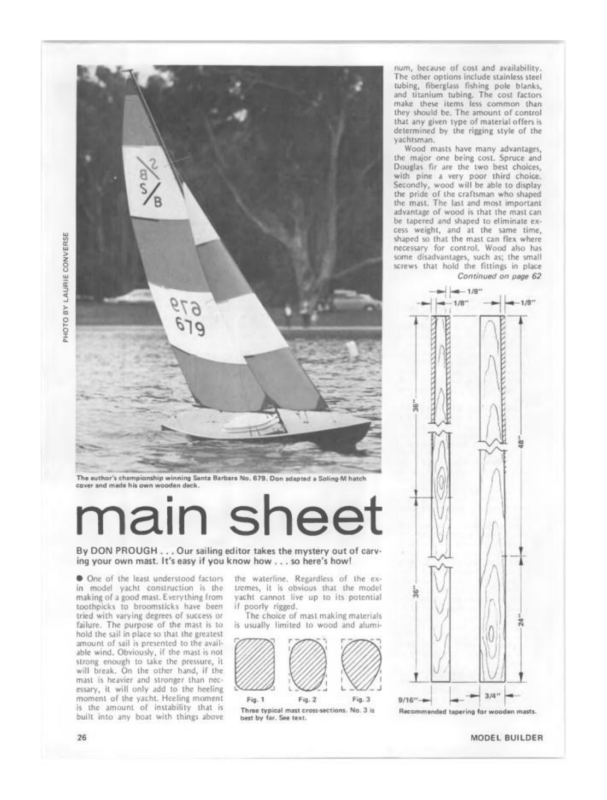
This article was published in Model Builder, Vol 4, No 28, March 1974.
One of the least understood factors in model yacht construction is the making of a good mast. Everything from toothpicks to broomsticks has been tried, with varying degrees of success or failure. The purpose of the mast is to hold the sail in place so that the greatest amount of sail is presented to the available wind. Obviously, if the mast is not strong enough to take the pressure, it will break. On the other hand, if the mast is heavier and stronger than necessary, it will only add to the heeling moment of the yacht. Heeling moment is the amount of instability that is built into any boat with weight above the waterline. Regardless of these extremes, it is obvious that a model yacht cannot live up to its potential if it is poorly rigged.
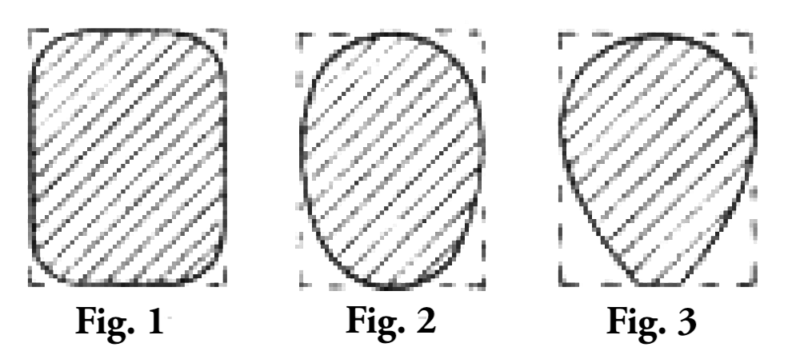
Three typical mast cross-sections. Fig. 3 is best by far. See text.
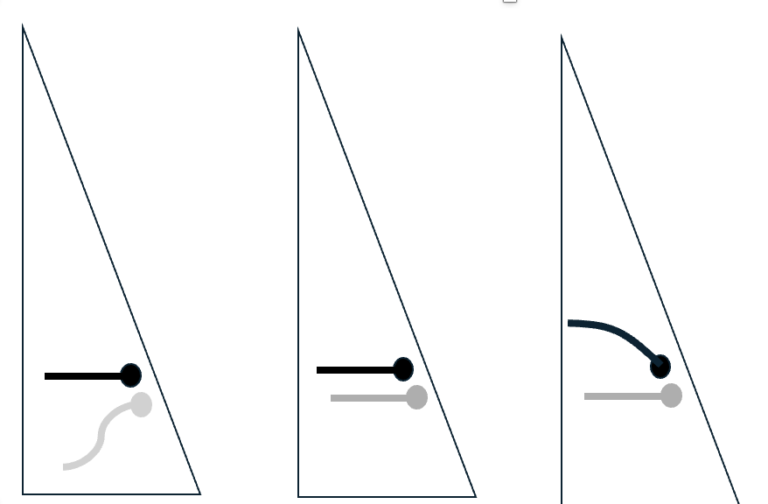
The choice of mast-making materials is usually limited to wood and aluminum because of cost and availability. Other options include stainless steel tubing, fiberglass fishing pole blanks, and titanium tubing. Cost factors make these items less common than they should be. The amount of control that any given type of material offers is determined by the rigging style of the yachtsman.
Wood masts have many advantages, the major one being cost. Spruce and Douglas fir are the two best choices, with pine a very poor third choice. Secondly, wood allows the craftsman to display pride in shaping the mast. The last and most important advantage of wood is that the mast can be tapered and shaped to eliminate excess weight, while at the same time allowing controlled flexibility where needed. Wood also has some disadvantages. The small screws that hold fittings in place can pull out, or worse, split the mast during installation. Another disadvantage is that it takes a great deal of time to properly shape and finish a good mast.
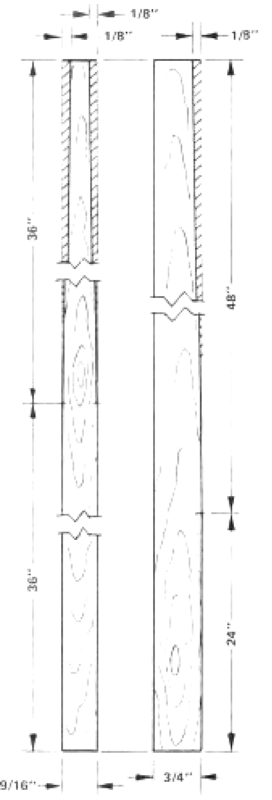
The first step in making a wood mast is to select a clear (no knots) piece of wood with straight grain. Next, trim it to size for length and cross-section. For example, a 72-inch mast should be 3/4 x 9/16 inches, and a 60-inch mast should be 1/2 x 3/8 inches.
The next step is to determine the shape of the mast and the taper from top to bottom. For simplicity, the 72-inch mast will be used for examples. Figures 1, 2, and 3 show the most common styles of wooden masts. Number 1 is not only poor looking, but will not allow air to flow smoothly along the sides of the mast. Number 2 is much better, but not as effective as Number 3. The reason for the flat backside on Number 3 is to attach the jackwire, which holds the sail next to the mast.
Once you have selected the Number 3 type mast, scribe or pencil in a set of lines to mark the width of the jackwire table on the back (aft) side of the mast. The so-called “table” is usually 1/8 inch wide. Make a corresponding set of marks down the front (fore) side of the mast, as these lines will also be used for shaping.
On the side of the mast, about two-thirds of the way down from the top, make a mark at the front or leading edge. Draw a line from this point to a mark that is one-eighth of an inch back from the front edge at the top. Carefully plane off this section. Then redraw the double line on the front.
Using the same method as above, remove from each side a tapered section from halfway down the mast to the top. The amount to be removed at the top on each side is 1/8 inch.
Let’s double-check what has been done so far. The top of the mast should now measure 1/2 x 7/16 inch.
The next step is to mark the sides of the mast with lines to guide you in trimming the rest of the mast down to the proper size and shape. Time and workmanship really show at this point.
As a tip for rounding off the sharp corners, use a piece of 2 x 4 wood about 8 inches long as a sanding and shaping block. Bring the wood down to a smooth finish with 180-grit aluminum oxide paper and check for straightness. If all is well, finish sanding with 320-grit paper. Then apply your preferred wood finishing material, such as clear epoxy, varnish, or a clear urethane coating.
The spreaders should be attached to the mast about 28 to 30 inches up from the base. The lowers are also attached at the same point as the spreaders, and the attachment for the top diamond supports should be 19 to 20 inches down from the top. Drill a 1/8-inch hole through the mast and use 1/8-inch brass rod to form the support for the tubing that will serve as the spreaders and the diamonds. Next time we will discuss how to attach rigging wire, fittings, and other hardware.