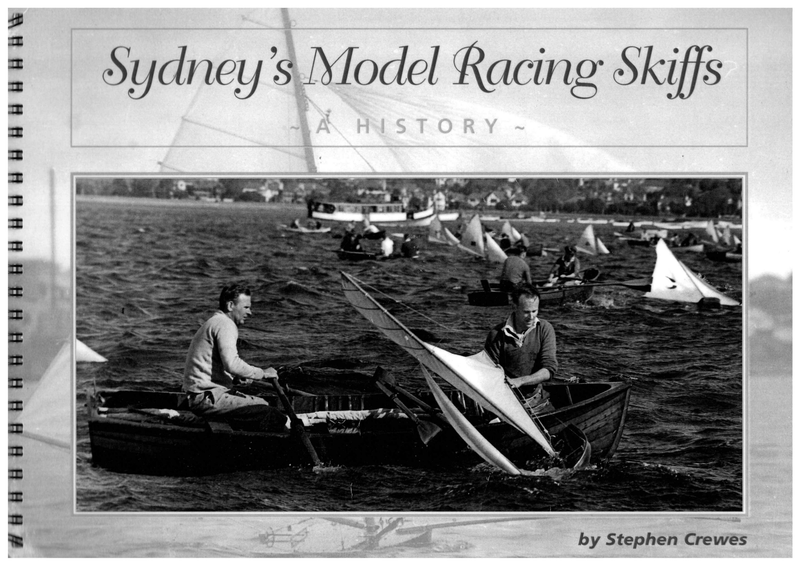
- Here is a history about a leisure pastime that was happening in Sydney, Australia, between the years 1900 to 1954.
- A lot of people know about this sport, hobby or pastime, which ever they may call it. As time goes on, the facts become blurred as to what actually happened with these little racing craft, how they were raced, where they were raced and more importantly who raced them.
- One of the most amazing things about this pastime is that there doesn’t appear to be any written record of the clubs or what took place, during this period. All my research in writing this little book has come from the personal knowledge of old sailors, skiffies and shipwrights. I’ve really enjoyed working with these blokes, for the fire still burns within them.

HHFPRHAAHHHHHHHHHES @HHHBABEASH Sydney ’sNlodel Racing Skiffs by Stephen Creweés
~ HISTORY oe — ii — BPHRHBRRHHRHHRHHHHRnRnH eee ead odel Racing Skiffs i HA Pe a t a ‘ sah A St | sl : igi “reV// a ite Neaditll mryeitr( WW i) a Pah Uli l
All rights reserved. No part of this publication may be reproduced, stored in a retrieval system or transmitted in any form or by any means including photocopying, electronic, mechanical, recording or otherwise, without the prior written permission of the author. Any correspondence should be addressed care of the printer, whose details appear below. © Stephen Crewes, 2002 ISBN 0-9580191-0-X Sydney’s Model Racing Skiffs: A History Printed by Hippo Books, 18 Primrose Avenue, Rosebery, NSW 2018 Australia = Designed and set by Hippopotamus Dreams, Sydney, Australia
Contents ed 3 Chapter 1 __ Early History ………………. 5 Chapter 2. The Clubs… 11 Chapter 3 The Fabric of it all …… 15 Chapter 4 The Venues… 19 Left: Swaztika, Moore Park 1927. Below: Pond and open water boats. Top boat is Chapter 5 The Skippers and 7na the Model Skiffs ………. 23 Chapter 6 The Race ccc 31 Chapter 7 The Rowe cc 41 Chapter 8 The Officials ………………. 45 Chapter 9 The Betting ………. 49 Chapter10 The Demise……………… 53 open water 2ft model.
Lining up for the start, Centennial Park 1914.
Preface did, for I tape recorded all the interviews, and the one that sticks in my mind most of all was when a lady rower, Margaret, now dignified and gracious, shyly told ere is a history about a leisure pastime that was me about how one could cheat while racing on light happening in Sydney, Australia, between the wind days, 55 years ago. years 1900 to 1954. I am a Yacht Skipper who collects model yachts as a A lot of people know about this sport, hobby or pastime, which ever they may call it. As time goes on, the facts become blurred as to what actually happened hobby, so I had a lot of fun writing this book. There is something about this pastime that attracts me to it. Whether it is the outdoors, the spray, the salty air or the they were raced and more importantly who raced them. swish of the boat sailing past, I cannot tell, for I love it all. One of the most amazing things about this pastime is I want to thank Georgie McGoogan Jnr and Freddie with these little racing craft, how they were raced, where that there doesn’t appear to be any written record of the clubs or what took place, during this period. All my research in writing this little book has come from the Thomas in particular for helping with material in producing this book. So many more model skiffies have helped. They have often been named throughout the personal knowledge of old sailors, skiffies and ship- pages. However, not everybody from that era has been wrights. I’ve really enjoyed working with these blokes, mentioned. To all those unnamed who took an interest in for the fire still burns within them. I haven’t tried to give a precise history, or a year by year account, or a blow by blow description of what the development of this book, I want to say thank you. I would also like to thank Pamela ‘Livingston Daisy’ MclIntyre-Smith MA.Ed. CA, Grad.Dip.Ex.PA for giving happened in that era, because it is too late for that now. me the insight into the world of grammar and artistic I have tried to paint a general picture, more of the reasoning. My wife, Marcia Crewes, for the constant people, than the boats. I found the people were often encouragement to dream the impossible, as possible. | more fascinating than the boats; I admired their infinite patience in their dealings with me, giving me the feeling Stephen Crewes of their sport. Probably the most suprising recording I 2002
ae ee ee oe ee eee: ee : i “They’re. off!” Centennial Park 1914.
HHH BHKRHHHHeR Ree ee AHHH HH Chapter 1 In the 1890s a sailing club was formed by a leading department store proprietor, Mark Foy, of Sydney. It was called the Sydney Flying Squadron Yacht Club. This man was interested in skiff racing in a big way. He laid An Early History of the 18’ Skiffs and the Model Skiff League down rules for racing courses and skiffs that are still used to this day. Some of these rules are, all skiffs have colour patches on their main sails, a new handicapping system and the rule of the first boat over the finish line is the winner, rather than a count back in the handicap if all started about 1860. Some half-decked centre boarders were sailing regular races on Sydney Harbour. A lot of private races were arranged with as had been practiced. This handicapping was called the Mark Foy System. All races were to finish on the down wind part of the course for the benefit of the public and onlookers watching. Mark Foy was also instrumental in the few individual clubs. There were distance or passage races, contested between Sydney and Broken Bay to the north (11 miles). One classic race that was reported at the time was with boats ‘Kingfisher’ and both Shark and Clark Islands in Sydney Harbour. ‘Seaspray’; the race was sailed in a strong westerly wind giving the boats a reaching course both ways. ‘Seaspray’ had its rudder carried away rounding the Broken Bay model skiff racing as well. mark, when leading, so losing the race. In the 1870s the classes sailing in Sydney Harbour were: 16’s, 19’s, 22’s, 24’s of the narrow type beam boats. Two 18’s that were built, tried and raced with the 19’ class. These boats were called, ‘Alert’ and ‘Arrow’. This was around the time of the founding of the Sydney Amateurs Club (1872). From this modest start the 18 footers went on to become a very popular class. having triangular courses, including the rounding of All these basic concepts were incorporated into The idea for the model open water skiffs came from model boats sailing in Centennial Park and Moore Park lakes in Sydney in 1890s. This idea was developed by some model yachtsmen, around 1908, in Sydney. The first open water model skiff club was North Sydney. It started racing in 1910 in Berry’s Bay, north of the city. This was beginning of an era that stretched over 40 years. Big crowds of spectators used to watch the 5
Down the first leg.
model open water skiff races in rowing boats and run home down to the Spit, Charlie Thomas and Chris ferries. Webb in one rowing boat following their model ‘Mascotte’ and Billo Haywood and his mate sailing the Not long after this, a club was formed at Balmain and raced in Snails Bay, Birchgrove. Their clubhouse was a model ‘Hawk’ in the other. They both went to put up room above Ollie Dodd’s Boat Shed in Snails Bay. Ollie kept some 18’ and 16’ skiffs on the bottom floor of his shed. Around the same time a club was formed in Iron Cove. This cove in the west of Sydney Harbour had ‘Mascotte’, broke the spinnaker spar when he got it from timber mill wharves as well as public swimming pools. their spinnakers but Chris Webb, the rower for under the thwart of the rowing boat. He quickly got the other, a shy spinnaker and spar to replace the broken one. Meanwhile, Billo had put on this full cut spinnaker and the ‘Hawk’ took off down the final run. As they neared the Spit to turn to the finish, Charlie Thomas’s Around 1918 the NSW State Council was formed for all the Model Yacht Clubs in Sydney. A few of the participants were Centennial Park Club, Moore Park model caught Billo’s model and continued on shying Club, St George Club, North Sydney Club, Balmain and Iron Cove Clubs. The last four were open water clubs. couldn’t be shied. These clubs used the practice of following their models with rowing boats. The skippers in these clubs drew with his flat spinnaker, rounding the point and crossing the finish line. Whereas Billo’s full cut spinnaker A memorable finish to a good race. Billo Hayward and Chris Webb were great 18’ skippers. In the Centennial Park Model Yacht Club, their races inspiration from the full size skiffs. This was done to the extent that some of the full-size skippers actually raced were conducted in a way that they raced up and down the models in winter when the full size sailing season to go to windward, sailing to the other end then putting had ended. up a spinnaker to run downwind. At both ends of the the pond. They started as close to the wind as possible pond there were flags on poles at each side of the lake to There was one State Championship race of 1921 that has been well remembered by the old Salts. It was sailed denote the start/finish lines. on ‘independent’ water in Middle Harbour. The story goes something like this. Two boats were coming had to travel on public transport to get to and from the around the top mark before they were to make the final pond. Charlie Thomas lived in Rawson Street, near The participants’ dress was very formal because they 7
On the run back, Centennial Park 1914.
Centennial Park. Club members left their boat hulls at his place rather than take them all the way to their homes. Quite a few of the pond boats were ‘drop keel’ boats (the keel slid back into the hull). This made them too heavy to take home all the time. It might be in order to mention some of the differences between pond and open water boats. In theory the pond boats were lighter, slender in their construction and somehow having skiff proportions and a nice sheer with a smaller (lighter) keel than an open water boat. The pond boats tended to go for the 6, 8, 10 and 12 inch classes. In contrast, the open water model skiffs tended to be of heavier construction, heavy keeled, deep draughts and taller masts. The open water boats tended to be the 12”, 18” and 2ft class exclusively. Here is a rough guide as to who was sailing what. It did vary from club to club, for instance the Folly Point club in Cammeray sailed 18 inch. The ultimate championship machine was the Open Water 2fter. This was in prominence from 1910 right through till 1950 and all the ‘big’ names, the best of the best, that sailed full-sized 18’s and 16’s skiffs, sailed this 2ft championship class.
10 Z~ARPRMPRRBRRRPRBRRRRRRRPRPRRPRPRP RR A Setting up the spinnakers.
Chapter 2 then 12” and then down to 6”. In fact this is a good way to determine what era a boat came from in this club. The deeper the keel, the older the boat. This silting went on The Clubs From 1900 to 1950 till the club had to stop sailing in 1926. The Moore Park Model Yacht Club was started in the he Centennial Park Model Yacht Club was in the early days before 1925 and it sailed in what was known south of the city and was started in 1890s. There as Billy Goat Swamp. It is called today Kippax Lake, are early British Naval reports of model yachts near the Sydney Cricket Ground. One well known sailor being sailed there in the ponds around that area in the who started his sailing career there was Alf Beashel late 1870s. The club went until 1926 and it was believed from the 18’ skiff ‘Alruth’ fame. In 1955, a photo of Alf the club was a going concern when the Australian appeared in one of the daily papers with his 10” model Federation celebrations were held in the park in 1901. skiff, proclaiming that, ‘if our kids started sailing Some of the members of the club in 1908 were: ‘Tippa’ models, Australia would one day win the America’s Milton, David Jenkins, Charlie Thomas and ‘Wiry’ Cup’. The Moore Park model yacht club raced 8” and Cling. The racing of the models was held on Sunday 10” skiffs on their race days. afternoons and the classes were 10”, 12” and 2 footers. This club had in its 1926 season, 21 boats, although only Another pond club was the St George Model Yacht about 16 or 17 were sailed on a regular basis. The State club who sailed 2ft and 32” boats at Scarborough Park Champion for 10” boats in the 1926 season was ‘Our near Kogarah. This club is not to be confused with the Jim’ raced by Charlie Thomas. older Open Water model skiff club of the same name. This club was one of the few around that had a club- When the Centennial Park pond was new, models of house. It was a tin shed, about the same size as a family about 2 foot draught were used. The pond became garage, where the club members hung their sails and silted up over the years. Soil was washing into the pond masts. In the shed also were the flags for the start and from the surrounding district during rainstorms and the finish lines and chalkboards to write the handicaps on, depth of the pond water became less. The draught on etc. This clubhouse was located at the end of Lakeside the models reduced as well, in the preceding years, 18”, Avenue, on the eastern side of the pond. All their races 11
nnnnrnnnwz The Centennial Park Mob (left to right) ‘Tippa’ Milton, David Jenkins, Charlie Thomas, ‘Wiry’ Cling. Centennial Park 1908. 12 z~anmnrmrrerAenAaPrerenrenenerenAnniren Advance 10”, Moore Park, 1911.
comprised of handicap starts and their start system was called the Automatic Handicapping System. The boat that came first in the preceding race had 2 minutes deducted from its handicap time; second boat had 1 minute; third boat had ‘/2 minute, for their next race start. The boats went off on their individual starting times and then they sailed 3 times up and down the lake for a complete race. The scratch boat started not less than 10 minutes behind the first boat to start. This was the general rule of racing. These starting handicap times were written on a chalkboard and placed in front of the clubhouse on the morning of the race and could be changed as the afternoon went on. Setting up the boat properly was paramount to winning for the lake was very narrow. One had to sail with a mate on the other side of the lake so he could tack the boat before it hit the’ other bank. This lake is about a quarter mile long with a spit coming out slightly near the middle on the eastern side. In 1935 a boat by the name of the ‘Colonial’ sank off that spit at Monterey Street. The skipper looked for it for weeks but never found it again. The club members named the place Colonial Point after the sinking. This man-made lake has brackish water in it and it is not that clear now, although in the 1930s it was said to have sandy beaches along its length and very clear water. Today, the lake has a reputation for the gatherers of Blackfish weed. The open water model skiff clubs from 1910 were: e North Sydney Model Sailing Club, sailed 2ft model skiffs from 1910 to 1939, at Berry’s Bay. e St George Model Sailing Club, sailed 2ft models from 1910 to 1932, at Sans Souci. ¢ Balmain 12” Model Sailing Club 1910 to 1930. e Iron Cove 2ft Club 1910 to 1939, stopped during WWII restarted 1942 to 1954. e Drummoyne 2ft Model Sailing Club 1937 to 1949, also sailed Fivedock Bay. e Balmain 2ft Model Sailing Club 1937 to 1939, between Cove Street Wharf and White Horse Point. . e Birchgrove 2ft Model Sailing Club (called ‘The Grove’) sailed from 1942 to 1945, at Fivedock Bay. e Middle Harbour 18” Model Sailing Club 1935 to 1939, at Folly Point, Cammeray. e Drummoyne District 12” Model Sailing Club, 1944 to 1954, at Iron Cove. e ‘The Club’ 8” models, fostered by Ken Heydon 1940 to 1944. This club was for junior members, at Fivedock Bay. 13
eer eee esenieonone Phau oan Hot days sailing, starting to windward 1912. 14 ee ee ee eeee a ss
Chapter 3 The Fabric of it All ‘ve been researching these Australian models skiffs [« two years now. I have found model sailing boats have been very similar in other countries around the world in the same eras. The same way of controlling and adjusting the yachts for example and using rowing boats to do this. Even today in radio control yacht racing we use a rowing boat to retrieve, lay buoys and sometimes adjust the model yachts. The sailors have changed their dress styles over the years to today’s easy casual sailing wear, from the early model yachtsmen in the 1900s who were wading in the water in collars and ties, suit pants and vests and occasionally, a Trilby hat. The women in the early days wore was also a popular attire. Some saw the need to roll their trousers up to keep them dry because they had to travel home on public transport afterwards. Centennial Park Model Yacht Club, around the 1900s, erected a tent for the day for the womenfolk to rest in. Some members came by car, some by horse and dray, some by bicycles and some rode the steam tram (streetcar). Freddie Thomas, now 79, still remembers his parents and family travelling in a steam tram to go model sailing at Sans Souci in Sydney. There is one account of a young bloke called Harry McGoogan in Balmain taking his girlfriend, Margaret, sailing. She rode her bicycle from her home in Lilyfield to his place, and they would then both ride to where Harry kept his rowing boat. She would take their lunch and afternoon tea on her bicycle, he would carry the model skiff and all the gear on his bicycle. This is how he managed. He took the mast and the spinnakers, In some of the old photos of the period, the women actually ventured into the water on hot days. Some of rolled on the booms and placed them along the bicycles main bar and tied them on. He placed the model skiff hull in a bag and put it over the left shoulder and 4 sets of sails were rolled up and put in a bag and it went over the right shoulder. The 2ft long keel was held in the left the men and boys wore neck-to-knee swimming costumes with a bowler hat and a number of sailors wore shorts and straw ‘boaters’. The football jumper hand signals. dresses with mutton chop sleeves, with large hats and sat on the waters edge to watch their menfolk sail. hand. The right hand was used to steer the bicycle, as well as using the brake and for stopping and giving 15
Vera II, open water racing, Sydney Harbour 1946. 16 ee h ablebek MWMUUUUUYNUNUYMNUUNUeNeueubukeke eS
The modes of transport that were used to get their boats and themselves to the ponds and the bays were various. There is an example of a Frenchman, Horace Boussy, in getting to the championships in England from France around 1948, regularly using a coffin like black box to transport his large ‘A’ class boat to Fleetwood so it would not get damaged in transit. Some were take-apart model yachts, in order to make them as portable as possible, so they could be transported on bicycle, by steam tram or even Billy-cart. This sport grew to such proportions that ferries were hired to take the punters and families around the sailing course. All open water model racing skiff venues had one ferry and at least 3 bookmakers, even on ordinary club race days. if in the afternoon a north-east wind came in, it would create a heavy chop around Clark Island. This caused havoc to the rowers, not the models, to such an extent that the rowing boats would nearly sink with the waves sloshing over the sides. They had to employ bailer boys to bail the rowing boats out to keep them afloat. These were one of the ‘joys’ of model skiff harbour racing in the middle of winter. George McGoogan Jnr’s first recollections are in 1927, as a 5 year old, going with his father and uncle to Sans Souci, Botany Bay, to view the model open water skiff races. George won his first race in 1935 with a boat his father bought for him, the ‘Thistle’, built by Tommy Kelly. George renamed the boat after his sister, Jean. His colour patch was a black pennant with a gold cross. Some of the State Championships were raced on the Sydney Harbour’s 18ft official course between Clark and Shark Islands. These model championships attracted huge numbers of spectators, so each of the clubs hired a ferry to accommodate their families and supporters. These ferries were also used to pull each club’s 3 or 4 rowing boats down harbour to the racecourse for the entrants. A picnic atmosphere prevailed during these 2ft championships. There were 4 model skiffs allowed from each club. There was only one race on the day. The problem of this venue was that 17
Thompson Street in Iron Cove, 2001. “Syras’, Kogarah Bay, 1927. 18
Chapter 4 The Venues NORTH SYDNEY erry’s Bay, this particular bay could be thought of as an all purpose bay, for it had small oil/ petroleum tanks there and several boat hire sheds on the foreshores. The opening of the bay faced towards the South. The Barnetts owned the local boatshed. This venue was on the north side of the Harbour. BALMAIN Snail’s Bay looked east towards the Sydney Harbour Bridge. This bay was used until the ‘dolphins’ (to moor ships) were erected. The club had to move to Iron Cove to sail. DRUMMOYNE, AT FIVEDOCK BAY This ‘dog-leg ‘ course was always raced in one direction. Starting at the Fivedock Oval mark (off the Park) it always went anti-clock wise irrespective of the wind directions up to the Parramatta River. Then it went down the western side of Fivedock Bay to a mark near Moore Street then back to the Fivedock Oval mark, 3 times around. On the side of the bay (east/south) was a sandy beach where they sailed 8” model skiffs. According to Peter Ferreira it was called simply ‘The Club’. Ken Heydon fostered it and built the models. IRON COVE The course was from the end of Thompson Street wharf to Millar Street buoy (west) to another mark off Callan Park, then down to another buoy, just before (western side) of the Iron Cove Bridge and back to Thompson Street, 3 times around. This club used a small boathouse, next to Thompson Street wharf and owned by Bevan James, as a clubhouse to store its flags, etc. Mr. James owned the house across the road from the boathouse. BIRCHGROVE (CALLED THE GROVE) THE DRUMMOYNE 12” Sailed off White Horse Point. The course was basically from Cove Street wharf, adjacent to Cockatoo Island to Elkington Park near the Dawn Fraser Swimming Baths. Sailed from Thompson Street Wharf to Millar Street to Callan Park (south side of Cove), back to Thompson Street, 2 times around. 19
. Below: Scarborough Park Lake, showing Clubhouse to the right, 1933. Above: Spider in Iron Cove, 1930. 20 AARRAA A APRAR RRR eee 5
One of the State Championship courses for 2fters was between Shark and Clark Islands, with the wing mark off Bradley’s Head, in Sydney Harbour. One of the ‘early days’ courses was in Middle Harbour, near the Spit, around the 1920s. The State Championship course for 12”ers were on the Iron Cove course. Folly Point 18”ers were at Cammeray, north side of Sydney Harbour in Long Bay. SANS SOUCI Near Humpherie’s boat shed between the Captain Cook Bridge and Tom Ugly’s Bridge. That boat shed was at the side of the old punt ramp. Clubhouse situated at Thompson Street, Iron Cove. 21
Above : Full spinnaker run, ‘Margaret , Jy 1947. Right: ‘Joan II 22 , J 1947.
Chapter 5 Families also played a big part in some of these clubs. The Mc Googan family, for instance, had 7 children and most of them sailed at one time or another. If they didn’t actually sail they did other things like row. The The Skippers and the sailors were George Snr and George Jnr and Hugh Snr Model Skiffs and Hughie Jnr. Some of the skippers that went from the old Balmain he sailors of these model skiffs were like most real sailors, a mixed bag of blokes. Quite a few of the skippers came from the ranks of the full-size skiff sailing clubs. Some of the big name skippers were model club to start the Iron Cove 2ft Club, were: Bert Aggat, sailing “Taree’, Sol Baxter with ‘Schemer’, Alex Nicol, sailing ‘the Brighton’, Archie Watts Snr, sailing the big ‘Molly’ and Saggerty Hill, sailing the ‘Gwen’. Billo Haywood who sailed for St George, Vince and Ken Charlie Howard from North Sydney Model Sailing Minter who sailed for North Sydney and St George and Club took up model racing in 1913 and when he retired, others including Chris Webb and Alf Beashel. The his son, Max Howard, took his place and raced ‘the number of 18’ and 16’ skippers have been put at 30% of Comet’. Ken and Vince Minter, who raced the big 2fter the entrants for these model skiff fleets. ‘the Imp’ and George and Harry McGoogan sailed with this club at times around 1939. The model skiffs were only raced in winter. The fullsize sailing season is in summer and, then between April and September the model sailing scene was in full swing. Another part of the fleet would have been footballers who wanted to keep fit with the rowing that went with this sport. The last part of the fleet was made up of people who were interested in sailing models in close competition and who might make a ‘bob or two’ (money) in the process. At the Drummoyne 2ft Model Sailing Club at Fivedock Bay there were: Arthur Wood sailing the “Vera II’, Dan Kells sailing ‘Mary’, who won the state championship in the 1940s, Bill Bowry sailing the ‘Rita’, Halley Ferreira sailing the ‘Jupiter’, Ken Keydon sailing ‘Dynamic’ and Alan Rodrick sailing the ‘Victor’. At the St George Model Sailing Club at Sans Souci there was Charlie and Freddie Thomas sailing ‘Syara’, 23
24 nerrrnrnrenrnrnrnnnnnnnrnnnnnnnaZz# ‘Dynamic’ tacking off Bradleys Head, Sydney Harbour, 1947.
Bill Anderson with the ‘Vera II’ and Vince Minter sailing the ‘Hawk’, The Birchgrove club skippers were the Johnson brothers sailing the ‘Jan’, L. Cowan sailing the ‘Ranger’, and George and Harry McGoogan sailing the ‘Maree’, the ‘Joan’ and the ‘Margaret.’ The model skiff league had plenty of good shipwrights available to build these models. These were people who could produce really fine model skiffs. Many were employed on Cockatoo Island shipyard around the war years. I recently saw a model skiff hull made with ‘reversed’ carvel planking in steel plating, a 2fter. This in itself was a piece of art and was made by Gus Hurst, a boilermaker in the 1940s. These shipwrights were also involved in sailing 16ft skiffs out of ‘Dynamic’, with the same colour patch as a flying blue bird. In 1948, Ron Hunt became the Champion, open water model skiff sailor at the 2ft State Championship, racing the ‘Amron’. Peter Ferreira became the 12” State Champion — his boat was called ‘Vera’. His colour patch was a green letter V on the main sail. The scratch boat at Fivedock Bay and Drummoyne 2ft Club was Arthur Woods sailing ‘Vera II’, his colour patch was a large red V. The skippers of the 8” model skiffs at Fivedock Bay were Jim Freeman, Ron Hunt, Col Moir, Bill and Harry Tutt, and Jim Pegram. Some of their boats were called ‘Susan Lyn’, ‘Ajax’ and ‘Mary Lou’. Drummoyne Sailing Club and at other clubs around that part of Sydney Harbour. At times these full-size skiffs’ and model skiffs’ boat names and colour patches get confused. For example, take Halley Ferreira, his parents named him after the Comet. He called his boats, both the full-sized 16’s and models, after something from outer space like the ‘Planet’, ‘Jupiter’, etc. Sol Baxter called his boats ‘Norma’ and ‘Amron’. Ken Heydon, who sailed at Fivedock Bay, called his 2fters the ‘Bluebird’ or 25
ni Setting the boat up. Roy Phillips, 1945. 26
THE MODEL SKIFFS Model racing skiffs were unpainted, without exception. This was a showpiece of one’s workmanship because the hull planking would have been suspect had it been painted. A good many of these little craft were built by shipwrights to show off their skills. A great proportion of the early model skiffs were built by what is called the ‘dug-out’ system. The term ‘dug out’ means that the boat hull was carved out of a block, both inside and out. Most models were made like this until 1927, so George McGoogan said. The hull was fashioned out of a cedar block about 2’3” long. The first thing the carver had to do was to saw the ends off the log, about ‘/s” long, to use it to make the deck. This cutting off the ends of the log took a few days. It had to be cut slowly and accurately. Then the hull shape was marked on the block before the carving began. After the outside hull was carved into shape, the inside was commenced. A special technique had to be adopted to get a really light hull. This is how they accomplished it. As the carver was taking out the wood from the inside he would hold the hull up (every now and then) to a strong electric light. If he noticed any sort of light coming through the hull he ‘ringed’ that spot with chalk, indicating that that part need not be worked again. He worked onwards around the hull doing this. The deck of the model skiff was made up with the two end pieces of the cedar log. George McGoogan Jnr said that after 1927 the model skiff hulls were made with frames and ‘planked. George’s hulls were always planked and copper nailed. There were other methods of construction as well. These model skiffs were mostly all the same in looks. They were all plumb nosed, rounded at deck level to knife-edged on the bottom of the bow and the hull depth was about ‘/3 the length of the boat. The beam for the 2fters were about 16” across with a wide transom. A keel track was fastened to the bottom of the hull, to hang the sliding keel. Before the race, the boat was set up on the shore, being rigged on a frame that attached to the bottom of the hull. The model would then stand up while being rigged. After the set-up, the frame was slid off and the keel slid on. These boats used bulb shaped leads on the bottom of their fin keels. The mast was in a fixed position and was about 10’ high on the top rig. Each boat had about 4 rigs of various heights. It was part of the sailing skill to pick 27
. .. oe ~S sini ae ss ese : aeons es es ee Soe — : Ae sae Bs oo pe ose i ue Bia — ee ‘Advance’, the champion 10” at Moore Park, 1925. 28 maenmnrmrnmrnmrnmrnmrnnrnrnnhnhnhnnninnnnnnns# ae
the right rig for the day. While there was a large rudder on the transom it-was not used to steer the boat around the course but used more as a sailing trim to put pressure on the sails. The sail area was said to be about ‘double bed’ size and was made of the ‘best’ Japarah cloth. This cloth is quite tough, made of closely woven material. The spinnakers were made out of parachute silk, if it could be obtained. The fittings on these skiffs ranged between rough home made, to proper fittings made in a fitter’s workshop. These skiffs had no backstay but two side stays, each side angling back from the mast, made of cord or wire to help to stiffen the mast at the jib takeoff point. A long bow sprit was attached to the front of the boat called a ‘bumpkin’. The forward end of the bumpkin had a fitting with a wire attached going back to the bottom of the bow which some people called a bob stay. This would be tensioned to put an arc in the bumpkin, thereby when attaching the jib sail the mast was put in tension. Girl with a boat. 29
RRR PRR RRR RRP 30 SRPRPRRR RR RRR Rigging the ‘Vera II’, Rodd Island, Iron Cove, 1942.
Chapter 6 The Race n race day all the sailors would be busy. In the to () veri of the race there was a club meeting all the determine the order of racing, where participants were present. The rower would ready his boat. The skipper and his mate would rig the model. The decision on the rig for the day was very important. This choice of rig could win or lose them the race. Before the nominated starting time the lower order boats started. The scratch boats crossed the line at the starting time of the race at 2pm. The starter wouldn’t say very much at all. He held up a flag (different flags meant different starting times), or in some clubs they held up numbered minute boards. Let’s say the first boat was off on a 6 minute handicap and his time flag was half red and blue. When it dropped the starter would immediately put up the next flag, ie. a green flag for whatever time (say 5 minutes) and drop it one minute later and so on down through the starting fleet. The rower would start rowing, after his model had gone about 10 yards, with a nod from the starter. Now just regress a moment, one of the major penalties in this type of racing was hitting a competitor’s boat/skiff combination. This was a ‘Go home’ offence or ‘Go ‘ome’ as it was commonly called. So everyone was careful at the start not to hit anyone. Another difficulty was the relationship between the model skiff and the rowing boat, for they both, together, were counted as one unit. One could not sail one’s model or your rowing boat between another model and its rowing boat. It was an offence with the only penalty, ‘Go ‘ome’, from the umpire. So come with me as passengers in the rowing boat and sail the race with the scratch boat, ‘Ardath’ on this cool Sunday afternoon in a bay in Sydney 1937. Well, the winds come in at 12 noon as always, a lively Sou’Easter. The slower boats are on a port tack going towards the shoreline so they can have just one long tack to the mark on starboard, a real safe bet. This bay looks east and west; we’re going west. After we have gone about 20 yards the skipper whispers to the rower in a hissing tone that he wants to quickly turn to the starboard tack. He says, ‘Lets give the buggers something to think about’. The skipper never yells to the ol
oF BES Bes ta 2Ps Nae S38 e – SH
rower. He doesn’t want anybody else to know what the air we fly along, keeping an eye open at the fleet. The action plan is before hand. model is about 6 feet in front of the rowing boat. The rower smartly rows up to the model, the skipper leans over the gunnel and grasps the end of the main boom, and flicks the mainboom over while still holding on to the end of it. Like a kind of steering, at the same time as he is doing this, the rower has stopped the rowing boat by holding the oars in the water. This tacking The skipper makes all the sailing decisions but there is input from the rower, like when he says ‘Watch out Skip, a darky’s coming’ meaning that a short quick gust is coming which darkens the water because of the ripples effect. Sydney has a wind mean strength of 6 to 9 knots. Now these little gusts are not generally coming was a practiced ‘art’ and it was practiced often because if the rowing skiff was still moving, when the skipper touched the model skiff, it was ‘Go ‘ome’ from the umpire and the ‘Umps’ watched the scratch boats like hawks. So we tack and now smartly move to the side of the course. The reason we’re the scratch boat is because we’re the fastest and know where to go in relation to wind and tide. In the clear 33
34 Z”RPRPRPRARRPRRRPRRR RPP RP RPP RP Pea Beating to windward off Rushcutters Bay, 1947 Championships.
from the same direction as the normal wind, only a spectator while the other is in a rowboat amongst the couple of degrees out, so the skipper, if he’s got time, fleet ahead. Bluey says to Curly ‘the Ump is talking to decides what he will do. He has two options straight- someone, mate’ so Curly wheels the boat around before away: one, he can do nothing and let the boat handle it; Bluey has stopped the boat. They both know the judge or two, get the rower to bring the rowing skiff alongside can’t see the model past the rower and skipper in the the model to windward to feather the model a bit. rowing boat, from the clubhouse. Our skipper drives on. The skipper speaks to the Starboard tack ‘on the nose’ as Bluey says. What rower, who’s name is Bluey, and says its time to tack Bluey was saying was that the wind had moved and the again and they repeat the previous tack action, to port model had to do it’s best beat to windward or hard on this time. Curly, the skipper sees that as he tacks and the nose as possible. While the other boats are going sails on he has made ground on the distance between more easterly because they might not have noticed a the 6 minute starters and the ‘Ardath’. slight wind change. This is the hard way to go. This is the time, that if you’re going to get bloody wet in a We start to see why the scratch boat went to the rowing boat it is going to happen on this tack. The starboard tack quickly, for he tries to be on a different waves coming across the bay stand up just that little bit tack to the fleet. Straight away a boat looms near us, higher especially when the tides running. coming on starboard tack. We all mentally calculate the speed of both boats and know we will pass below him. On we go. While the fleet is in front of us, we can see some of the quicker boats, the ‘Jo-anne’ and ‘Spider’ are As we sail on and near the lee shore we see that the starting to eke out to windward of the rest of the fleet wind is going a little bit easterly and the fleet is falling who are still on starboard tack. The rowers following off the heading to the mark. Curly the skipper says to their boats are spread about in a hundred yard radius all Bluey, ‘on the nose, Blue’. Bluey has a quick look over going to the east on starboard. We are starting to close his shoulder to see were the judges are, sometimes the gap. We are now getting near the fleet but higher on they’re still at the start line, sometimes they row with the wind. We are nearing a headland in one end of the fleet. Today they’re a lazy lot, one is standing near the bay. the clubhouse with binoculars in his hand, talking to a 35
36 Za mPRPRPRRPRPRPRPRRRRPMPRPReAnanne Adjusting the keel.
Curly talks to his rower and says, ‘Blue, come up on the windward side, mate’. Bluey brings our rowboat up opposition, they go through their drill faultlessly and to the front quarter of the model to feather it off the wind a bit. This increases the angle to the true wind and tack with the hand on the end of the main boom. sends the model off to the east for a slight way so as to round the point. After this he brings the rowboat back, around we go, swinging the model around on to port We are windward of the fleet now and Curly has the main sail up tight to make the mark. We fly down there, lets the model increase its speed and goes on the nose again. We are right at the back of the fleet now. There is a fair amount of noise; skippers are calling out to each passing all the slower boats. Curly is preparing the bits other, some of the rowers demanding room to row, full reach. The spinnaker, with the boom attached is put novice skippers calling to their rowers for they haven’t yet acquired the art of championship sailing and the to one side. A discussion goes on about the keel. How wind and waves slapping on the boats. trips the main boom as to put it on another beat in a and pieces for the reaching leg of the course as we go. Bluey talks to the skipper on how close the wind is to a far back? What’s the tide doing? At the mark, Curly mark passing manoeuvre. The mark is off to our starboard side. The fleet, because of the slight wind change, has tacked to port to As he passes the mark he again grabs the main boom get to the mark. Curly pushes on through the fleet. This can be dangerous for some novice sailors can panic and run into your boat. Blue and Curly start calling in unison ‘starboard’, ‘starboard’, because they may think on the end with his right hand and pushes the centre of that more calling will be mightier rather than none. Less ments to the main and jib elastic bowsers. That done, he than a minute passes before the ‘Bessie’ runs into our put his left hand in the water near the front of the hull rowboat, Curly sees it’s a novice and tell him to ‘push off and keep going’. The boat to the left has a foul up in tacking. The skipper is swearing, not at the boat, not at steadying the craft, the right hand slides the keel back, the rower, just swearing to show his urgency to the matter at hand. As soon as we clear the fleet Curly calls out loud, this time to ‘tack’, trying to frighten the the main boom down to de-power the main sail, which stops the boat almost straight away with his left. Here Curly moves very fast. He crouches to make the adjust- halfway to near the transom. With the left hand still steadying the boat Curly puts a slight angle on the rudder to mostly none, this all has taken him about a minute and a half and he is off across the wind to the wing mark. 37
38 PRP RPRPRARPRPRARRRAPMPARAMPAanner Tacking the boat — ‘Charlie Chuckles’ Woods, rower (left), and Arthur Woods, skipper (right), 1947.
The rower, Bluey, is at this time getting really tired and Curly lends a hand, rowing. The model shoots off at a good rate, the chase is on to beat the model to the next mark because if they’re late getting to the mark, their model just sails on. They beat the ‘Ardath’ to the wing mark. Bluey, as instructed, stopped the rowboat next to, but to windward of the model so Curly can ‘put on the spinnaker. Curly thinks he can sail faster on a quartering run to the finish line. Bluey starts to get anxious about the time the skipper is taking and says ‘Come on, skip’ (any more than that, it is a full argument). The keel is moved almost back to the transom. The spinnaker is put on with the boom attached. The braces are attached. The main is let out and the jib adjusted and given a little push and the model is on it’s way again in a cloud of spray down towards the finish line. Did we win? George McGoogan holding a 12” boat. (photographed 2001) 39
er tt it 40 SA ePRRARA The race ison… D. Kells (right), Sydney Harbour,
Chapter 7 feet up against. He was in a different rowing position to a normal rower because he was facing forward and sitting higher on the boat to give him some downward The Rowers purchase on the oars. When the skipper rowed too, he used. the front Me ability of the rower. Most of the rowers rowing seat in the normal fashion. The rower had to were family, ie. fathers, brothers, sisters. to argue with the skipper but to keep the skipper Some were life long friends, workmates, skipper/crew, informed of what was happening around them. The boyfriends/ girlfriends. They all seemed to be people rower knew how to do those ‘other things’ such as to who were connected in some sort of relationship with propel the boat forward in very light wind without the skipper of the model skiff. Take the case of young being caught by the umpires. any races could be won or lost according to know how to control the boat under all conditions, not Ron Warnes. Ron said he had some terrible arguments with his father over sailing. Ron’s father was also his rower. Harry McGoogan’s rower was his girlfriend. This section, I suppose, could be entitled “Rowers and Rowing Boats”, for it was equally important to set the rowing boat up as well to get them to handle properly. A sandbag had to be put into the rear of the boat near the transom to balance the boat when the One lady rower, Margaret Ritchie, said she knew all about the ‘illegalities’ of light weather rowing. She said she was an ‘expert’ at this. It was a way of propelling the model skiff forward when there was almost no wind. This is necessary to ‘get on’ she said, but not let the umpires catch you doing it. Margaret said it was done in the wrist movement and propelling the model ever so skipper leant over the front of the rowing boat to adjust slowly forward, you had to be able to position the the model. The rower had to row looking forward. To rowing boat while the model skiff was sailing. Her accomplish this he had to have his own rowing board or skipper, Harry McGoogan, said she was so good at this seat. This fitted across both gunnels (or the top) of the he never wanted her to row for anyone else. So he rowing boat, with another board, positioned, to put his married her, that’s how his story goes. 41
42 SRP RP RPRPRRPRPRARPRHRRRAARAHAKHANAAL Centennial Park, 1920.
A model skiff could be made to go a different course by using the wind bouncing off the rowing boat and hitting the model skiff sails at a different angle from the true wind direction. The rower was in charge of the sails and spinnakers placed in the boat and would pass these to the skipper as needed from under the thwart. The boats they used were, generally, a double rowing boat with two sets of rollicks and two sets of oars. When the skipper was not using his oars he put them across the boat or along the boat so they would be handy, but not dragging in the water. Some people owned their own rowboats like the McGoogans at Balmain. Ron Hunt kept his at the boat The model skiff clubs played an important part in bringing in regular business to the boat shed owners. Margaret McGoogan said she used to take the afternoon tea, which usually comprised of an apple pie her mother made and a bottle of drink, in their rowing boat. She said the other sailors in the club called her the “Tea Lady.’ Arthur Woods’ rower, was his brother, nicknamed ‘Charlie Chuckles’. shed in Iron Cove. In the main, rowing boats were hired from the local boat shed at a cost of 2 shillings and sixpence. These boat sheds were dotted around early Sydney’s foreshores. In Balmain at Snail’s Bay, Ollie Dodds owned the boat shed, off Louisa Street. The boat shed contained an upper floor and Ollie allowed the local model skiff club to use it for their meetings on Sunday mornings. They did the start draws and handicap placings for the afternoon’s race, etc there. The boat shed near Iron Cove was Boyds and they supplied rowing boats for the racing in the Iron Cove clubs. Fisher’s boat shed in Fivedock Bay called ‘Fishers Nest,’ hired the rowing boats from there. Skiff made by Vince Minter. 43
“Kismet. THE THERTAK @ Racing in Fivedock Bay, Vera II (left), Arthur Woods. 46
hands was even more staggering. The starter, from his penalty, ‘Go ‘ome.’ It was a pre-requisite that they, at own rowing boat took charge of starting the race and times had to defend their ‘Go ‘ome’ decisions in the then he followed it as well. manly art of ‘fistycuffs’. There were cases of model sailors boarding the umpire’s boat, to ‘ave it out’. In the Iron Cove 2’ Club, the starter had the handicap time boards in his boat. On each was the number of min- utes for a boat’s handicap. For example, the 10-minute board was held up. The boat that goes off at 10 minutes was to actually cross the line when the starter put the board down. The starter also laid the course. He had to be an experienced sailor with knowledge of wind and tide for the area. In some clubs, flags were used to signify when a model skiff and rowing boat were to start. There was only one race a day. The judges or umpires, or as a lot of people called them, the ‘Umps’, had a name for being absolutely fair. There are known cases of family members being disqualified by ‘the Umps’. Take the case of Harry and Margaret McGoogan. Her father-in-law told them to ‘Go ‘ome’ for some infringement on Iron Cove. Margaret said she was shocked, but they went home. Young Ronny Hunt suffered a similar fate from his father, ‘Go on, get ‘ome’, little realizing they came in the same car! The racing rules were not taken lightly and if you got the ‘Go ‘ome’, you went home. Now these umpires Checking rowed their own boats, some had a putt-putt boat, some with the stood on shore with binoculars and called out the only calipers. 47
Under sp innaker, F 10€! dock Bay, 1941 48 e ee ee eee ee PUUUUUURUe See
Chapter 9 mile away. He travelled on the ferry that followed the racing fleet. He had two other bookies with him and some other friend to keep a ‘weather’ eye open for the The Betting Te model skiff racing in Sydney was always a professional league. Even the old model yachts in Centennial Park around 1900 were at it, for they had money prizes. In 1920 the State Champion boat, the ‘Dart’ owned by Charlie Thomas started the race at 6/4 on and came third. The 6/4 on was set by the book- maker and displayed on a chalkboard, before the race. police. These ‘friends’ were known as ‘cockatoos’ and it means literally, a boisterous parrot. The bookie or bookmaker had some control of the finishing places of the racing. He generally had the scratch boat in his ‘pocket’, or, in other words, he paid the scratch boat to lose or win as he dictated. This is how he set it up. He would tell his skipper where he wanted him placed at a certain time of the race, for example the race in Fivedock Bay, when the boat passed Chiswick Point, the scratch boat could be running third. That was At Kippax Lake there was always a two-up game to get the punters to put their money on who was lead- going, about the same time as the model yachts were ing after two-thirds of the race. The bookie knew who racing, down the southern end of the lake under the big was going to win. Even before the model skiffs started fig trees. Sometimes the gamblers bet on the boats but the race! mostly they played two-up. Now, if the police showed up, they had a ready excuse for being there, they were watching the model yachts. All prize moneys for the Sunday event was presented on Monday nights for the Fivedock Bay races, at their club house, the ‘Do Drop Inn’ milk bar near the old I met a ‘local sporting identity’ who said he was a Kismet Theatre in Fivedock. The prizes were: 1st place, bookie for the model yacht racing. We’ll call him Tom, 30 shillings; 2nd place, 10 shillings; 3rd place, 5 shillings. for want of a name. Tom said he was bookie-ing for a Now, this prize money came from sponsorship of the number of years. He worked from 1942 in Fivedock Bay local trades people and the sweeps and raffles that were when the Birchgrove Open Water 2ft Club was racing run constantly throughout the race afternoon. The there and sometimes in Iron Cove, which is only half a bookies, also, made donations each week. The bookie 49
50 SBRPRPRPRPRRPRPRPRP RRR RRP RRR RPRP RRP George McGoogan, ‘Joan II’, 1948.
paid his skipper 35 shillings each time he raced (so the skipper said). The police were also trying to catch the bookies on the ferries as well. If the police raided a ferry, the bookie would simply jump overboard and swim ashore. The St George Model Yacht Club also had a bit of the odd gambling. They had sweeps running on the com- Tom remembered on two occasions where he counted wet money at the end of the day. petitors at 2 shillings a ticket. They ran something like this: a spectator would pay2 shillings for a ticket with a There was one club that was not like all the other boat’s name on it, drawn from a hat, that boat would be racing in the next race. If, say, 10 boats were sailing in clubs in regard to betting. This was the Drummoyne 12” Club; it was a non-betting club. Alex Harper was the the race, ten tickets would be sold. The person holding president, Dave Brand was the treasurer and Alex the ticket with the winning boat’s name on it won a money prize for that sweep. These sweeps were always MacDougal was secretary. What probably went to explain the no betting policy was the fact that Bill going on in the afternoon races in the 1930s. Simons who was the handicapper, was also sergeant of Freddie Thomas of the St George Model Yacht Club police in that area. The club met on Tuesday nights at the Drummoyne ‘School of Arts’, in Victoria Road. remembers it well. The thing that really got to him was that the spectators, who knew nothing about racing a model, become experts when they had their money on them, telling the skipper to do this, or that, as the boat was sailing up the lake. Now the club would run about 20 of these sweeps on a Sunday afternoon. This was illegal in N.S.W in 1935, especially on Sundays. Sometimes there would be over a hundred spectators at Scarborough Park, with three bookies present. There were quite a few raids from the local police who tried to catch them at it. 51
oe a ee Near Drummoyne Park turn ing 1942 52 mar. k, eee eee eee eee eee eee &
Chapter 10 reader, Sydney can turn on some bleak winters. If the wind didn’t get you, immersing your arm up to your shoulder in cold seawater did. Once you were wet, you couldn’t rush for the towel to dry off. So there was this The Demise of it All A s they say, ‘All good things must come to an end.’ element of discomfort that only the hardy could accept. Ron Hunt was a member of the Iron Cove 2ft Club. He was 16 in 1948. He was the youngest member of the club then. All the other members of that club were into their 30s and 40s. Ron’s rower was an old bloke by the The reasons may be many and varied for the ending of this unique pastime. In many ways this sport was hard to practice, for it was an involved type of pursuit. It was a team sport, not only with skipper/rower combinations but the fabric of it all. Many were involved, from the spectators. to the boat shed owner, who hired the rowing boat, to the shipwrights that made most of the model boats, to the bookie, to the local trades people, such as the local milk bar owner and the ferry boats that hauled the fans and so on. They all played their part in making this sport unique. name of ‘Deafy’ Olmun who was in his 60’s. Ron said, ‘Deafy’ sort of came with the model skiff that his mother bought for him off Jack Wallace. When Jack was model skiff sailing, ‘Deafy’ was Jack’s Rower. Sydney was changing after the Second World War. People were starting to get full employment. Australia was at the dawn of another era with a growing population and this type of sport fitted less and less into this new way of life. Young people were starting to get better-paid jobs so they could own motor bikes, cars, etc. The population started to get more mobile and move out of the inner Sydney suburbs. These sailors were not quite in the full-size yacht clubs but not quite out of them either. One had to be a Many of the people, who sailed the model skiffs, also valiant, resilient and hardy soul to do this in the middle followed the rugby league football, which played on of a Sydney Winter, in all weather. Believe me, dear Saturdays. It was comfortable to do ‘Footy’ on Do
the boat ‘Comet’. 54 SRP RPRPRPRP RRR RRR RRRRRRARRRRP Max Howard checking
Saturdays and race the models on Sundays. Then the football started to be played on Sundays in Sydney. The locals took their football very seriously, more seriously than open water model skiff racing. The Open Water Model Skiff Sailing stopped racing as a club almost straight away, not in the usual sense of a club just fading away but stopping in a decisive way in the early 1950s. I have heard various stories on what or how this took place. One was about a big race that was raced in Iron Cove with the 2fters. There was a great deal of money in bets put on this particular race. So the story goes. The boat that was supposed to win, in fact, was coming last. The owner, his mates or their supporters (it wasn’t made clear) picked up the losing as well. So winning a race or doing well in it offset the discomforts of practicing this sport/hobby. These model skiff sailors took their boats out of the water and never sailed again after what happened in this event. For they could not see anything worthy to race for, anymore. It was said that this race was the one that broke their hearts and ended the era of the Open Water Model Racing Skiffs in Sydney Harbour. I personally think it was a combination of things, including the football that was now being played on Sundays, the model sailors who practiced this sport were getting older, and there were not enough younger people coming through to support it. model in a rowing boat and carried the model some distance to give it a better place in the race. It was a blatant act, they must have thought nobody would notice. But a lot of people saw it. Most people pay a high regard to, basically, not ~ The End ~ cheating. The Iron Cove Model 2fters (the last 2ft club) members saw what was happening and knew this example of cheating had taken the sport too far in the wrong direction. They decided it was not worth putting up with this situation any longer. This was a hard sport to do properly, physically, for it was in the coldest part of the year in Sydney with the discomfort of being wet 55
RRP RRR RRR RRP Orummoyne 2=Ft. Model Sailing Cluh (Five Dock Bay) ; For the “ Do-Drop-Inn” Trophy donated by W. BOWRY, Victoria Rd., Drummoyne No. | 1 2 4 4 5 6 1 8 9 , BOAT | DIST. GOLOURS BLBIE GIFT GWEN YRENDYS R. Score BF, Hinshelwood] C Borr j L. Aniviti =| Green ball Black pennant. Bold cross Red oblong. white diamond Red anchor RITA | Blue R ALPHA CUTTY SARK BLUE PETER JUPITER ‘ R Waod | =; { G. Robinson 5. Tulley H. Ferrieru +) | 10 ll MARJORIB TOO ; BLUE BIRD 13 14 VICTOR VERA 12 skipper Start; 2,30 p.m. BRIGHTON W. Bowry D. Kells K. Keydon | A. Nicol A. Rodrick A. Wood | 2red burs Cutty Surk flop Blue Peter flap Blue Stur H’CAP 10 min, 1D 9% ,, Lae 6%, Ca Red & blue flap Blue bird 1 Red, white & blue crescent =| PMR RRR RRR Race starts and finishes at Drummoyno Oval Buoy. Blue oval, red V Red V 5% 4%, , le ae % Y.. %.. Acie Ser. Lost woek’s results :—Alpha (A 1, B 300, € 500, 0 691) Ist; Vora (A 43, B 238, G 425, 0 690) 2nd: Victor (A 154, 8 303, C 452, D 767) 3rd R J. THURSTON, Hon, Sec. 89 Daning Street. Drummoyne DEARING PRINT 56 Drummoyne Above: Max Howard with ‘Comet’ at Berry’s Bay. REP GENERAL HANDICAP
Patches S Colour R. Scott, ‘Elbie’ mee R. Wood, ‘Alpha’ C. Moir, ‘Susan Lynn’ B. Bowry, ‘Rita’ a G. McGoogan, ‘Jean II” P. Ferreira, ‘Vera’ H. Ferreira, ‘Jupiter’ D. Kells, ‘Marjorie’ bd C. Barr, ‘Gwen’ V A. Wood, ‘Vera II’ O H. McGoogan ‘Maree’ Deo R. Grant, ‘Jo-anne’ R. Hunt, ‘Amron’ J. Pegram, ‘Flight’ R. Warnes, ‘Jean’