- Logbook From Our MYA Correspondent
- Murphy’s Law or How not to build a Marblehead. Australian Mike Beilby tell how to avoid the pitfalls

June 1980 50p (U.S.A, & Canada $2.25)
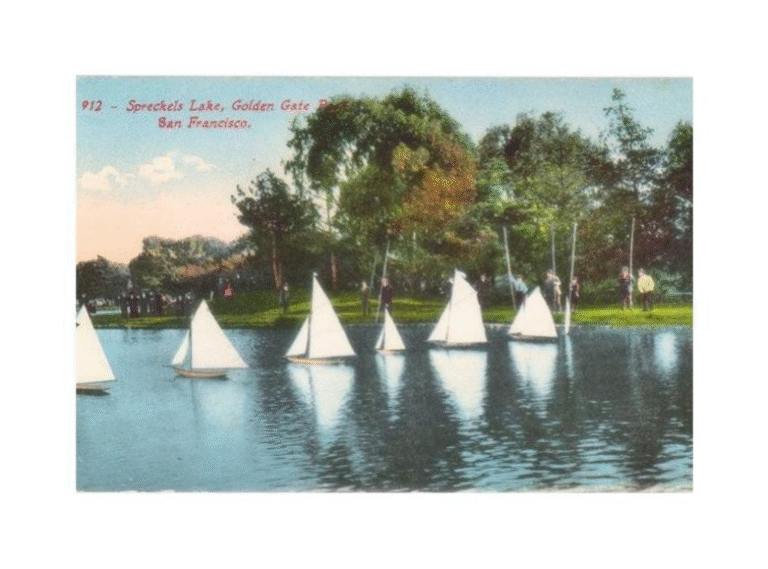
this Looks as thoughious first stime. g forcanthealway sailin vane handbutatGui triessthis Ted Geary come up with ingen club d Idfor M, o: Roger an (Phot again is itself! methods of handicapping for mixed fleets; one is board Elstead Moat Stollery). From Our MYA Correspondent h is oie NICATION is a subject whic in most perpetual thorn in the flesh a isanational or international sport organ tions, communication being the adequate that dissemination of information esoa club Wher re. pictu the in is yone ever a does not have a permanent home, or there regular indoor meeting programme,layi are bound to be difficulties in disp ng circulars and the like, but there are ways al occasion round this. Many clubs have an be difficult to newsletter, and it should not that any list documents received so have a interested member can arrange tothis, the ng Faili ones. cular look at parti corsecretary (who receives most of the respondence) could take his in-file along to sailing meetings for any keen member 35p a dozen £1 a dozen, and 6m 4p eachoforrules or the plus post. Complete sets t with ,quic new radio rules, can be deal take a kly, few but mixed orders will probably days. in A lot is placed on a secretary, andjob many cases he only took on ng.theHowbecause no-one else was willi that they ever, not all secretaries realise ers and are the links between club memb of their the national executive and that one is to vital functions (if not the most vital) ly rapid is ion rmat info any that ensure to see. not to passed on. The club member isvalu able know when some important or nally by communication is sent out natio , by the MYA Council (or, internationally secthe IMYRU) and the minimum a clubknow , retary must dois to let his members or pass the material to someone who will show it around. The cause of these comments is thetofact be that very few club members seem whic h ures aware of the Guide to Meas if and MYA, the by year last out sent was time of lot a then own unkn is its existence Sail Measurement n over It seems that there is some confusio uremeas ght -hei half a for the proposal almost ment of sails; it was voted downwas not certainly because its purpose such like. Annual subscription is £3 post paid (£5 inc. post outside UK) and the ss is editor is Chris Jackson. The addre Model Yachting Newsletter, 81 Nipsells Chase, Maylandsea, Chelmsford, Essex. Radio Rules rules The new printing of the radio sailing chosen has now been achieved (a verb lable from deliberately!) and sets are avaiSmee d, PO Vic y, etar Secr ions icat Publ the was 4AQ WD3 . Herts and money spent on producing it seen h, wort mans Box 6, Rick remittances post, wasted. Evidence that it has not been g udin incl 0 £1.0 e .pric l verba . A fresh supply generally is the number of queries, made payable to the MYAblue few binders for e as well as written, over the last mad ally speci the of have these cost ; ived months which would not need to (or, rece been also rules has as complete set A been made had the questioner seen post. g udin incl , each 5 £1.2 of!) £2.25, Of it has usually transpired, even heard of loose-leaf rules now costs stat ionery and this helpful guide. ing Print er. bind a in 0 £3.5 not to , ably ider More recently, a copy of Model Yachs,ting cons d ease incr costs have but are produced Newsletter was sent to all secretarie rules the age; post ion ment it that but they still in many cases they obviously felt their as economically as possible,fund s are tied was for their private benefit, since MYA of alot e quit that n mea fied by be sold, can club members are totally mystiadde they ker quic the up in stock; d, is ll financial posimention of it. This, it should bebuta quarovera the is hier healt the not an official MYA publication tion. pri36R terly magazine — style production Rating certificates for 10r, M and by basis rofit non-p a a 60p or each 6p vately produced on are s Card ion and Declarat a general and for enthusiasts, to provideresul ficates 10p each or certi A post, plus n, doze and ts forum and an outlet for race 388 is simply a understood, but basically it asur ed area unme that ring ensu method of the mast. cannot be gained by bending only slightly The sketch shows in an mea surement this how form ted gera exag will hang B Sail tion. situa the controls A when (albeit inefficiently) just like nsail mast is the mast is straight, but wheerlythe , and the bent the sail will set propwill be gained. area ed shad the whole of of 1in on As mentioned last time, a bend 60 sq. in an 80in luff gives something like e roach asth e sam the t abou y tivel effec or, the that ly, ental incid , Note sail. area of the , as leaches of both A and B are the same are the roaches. bent mast In the case of a permanently the bend by ed gain area the ) spar (or other wable area, is measured as part of the alloindu ced by but a 2in bend can easily be ened when standing rigging and straight sails, so the ure meas to es com the time cut or can you if , rules ent that under pres can get panel a sail to set well as in B, yoully, with mora away almost legally, if not prov you ided area, free of lot a quite ts poin e eon som n whe express surprise a bend in the out that you are sailing withwith a 1in mast mast. A lot of skippers sail of their mainset the er bett to er bend, eith haven’t sail or, often, becausecanthey often shrink noticed; a cord backstay have eased when wet and the skipper may eight foreds-h houn a if or, , stay his fore Model Boats
Zuiderpark from 2nd to 9th August. Consequent on Peter Pandesoff leaving the Bulgarian Association he has been MPBA News from Jim King THINK it was Robbie Burns who said “The best laid plans of mice and men gang oft awa’’, (my apologies to Scotland if | have misquoted their famous poet). And howright he was forthere was| all set to go to Vienna for the Naviga Praesidium when fate decreed | should take a hurried trip into the local hospital, and even a quick and unforeseen recovery left me in no condition to make the flight out there. However Stuart Robinson was going to be my travelling companion and has undertaken the journey in order that we can have a first hand account of what goes on, and if he gets back in time | will include any salient points later on in this epistle. With the current situation | will have to cut down my travelling for some time to come, so more than ever before | would like to ask you to send as much info about what is happening as is possible so that | can sift through it and include in the column. Thanks in advance for your help and | will answer every letter if you include a stamped and self-addressed envelope, as apart from the cost | would like to cut down as much on labour as is possible. One of the regular occurrences in the MPBA organisation, and| suppose in most other similar bodies, is the loss, mislaying etc., of trophies. For some reason at intervals we find ourselves unable to locate trophies of one sort or another and itis not so long ago that John Cundell did a round up of trophies and managed to locate most of them. Now however two more have gone missing, both are awarded to pole racing events so the number of people who could be holding them is relatively small. The trophies are the WicoPacy and the Mears, the base for the Wico-Pacy is in MPBA hands but the trophy itself is unaccounted for. The Mears is LOG BOOK (from opp. page) stay, simply ignored the change in the set of the mainsail. The half-height measurement, M in the sketches, stops this, and is easy to apply. Dutch full-size and model measurer A. Verheus goes further and suggests z, } and } height measurements expressed as a percentage of the foot measurement (a flat figure might favour high aspect ratio sails) which controls the actual amount of cloth used and hence the power potential, which is the only thing we wantto control. Banning bends in masts is almost impossible, as is allowing only a degree of bend, so some form of width measurement to prevent a gain in unmeasured area seems the obvious answer to what is a grey area at present. June 1980 missing without trace at the present time and this is unfortunate for the trophy is awarded for a 1000 yard race and is, as far as | know, the only one awarded for this distance, so recovery is of prime importance. It is always regrettable when holders of cups, etc., don’t return them on the due date. It does not entail much effort and for those trying to is made alittle easier life run the association if such co-operation is forthcoming. No doubt some tightening up of our record system needs to be done and if so perhaps some of this aggro can be eliminated in the future. Trophies are not the only thing that people seem reluctant to hand back to the proper keepers but other items of MPBA ownership are also the victims of this lackadaisical attitude—a typical example is the flags used at international and national events. As many know | have had custody of several of these for some years and have loaned them out on request. Now in a large number of cases they are passed on from the original borrower tosomeone else and very rarely are they returned until | have done some detective work, current example is the MPBA pennant used at the 1979 Straight Running Nationals and still not returned at the time of writing (30th March). It does not require very much effort to ensure return to the proper quarter and in the ultimate this would save much time and some money. Having had this little moan | hope that my words do not fall on deaf ears and | promise not to use up valuable space again unless| think it necessary as in the present instance. For the interest of the multi-racing men | have to report some small change in the arrangement for the World Championships, as most will know this event will now take place in Rotterdam at the Of course, if the IMYRU adopts the proposal for a standing committee whose first job would be to regularise and simplify sail measurement procedure, other ideas may emerge, but the half-height idea makes such sense that it must stand a very good chance of being part of any new system. Vane v Radio Many clubs with both vane and radio interests have run mixed races, where radio exponents tackle vane sailing and vane men try radio. The heading photo shows Ted Gearey, ex MYA Radio Control Secretary, sailing a vane 36R at Elstead Moat in a Guildford club event. This was the first attempt ever by Ted, in 25 years of sailing with a vane boat, and he did extremely well. Keen spotters will note replaced as Chief Judge by yours truly. | am sure that this replacement will not affect the. efficiency of the judging for among the assistance available will be John Cundell and several continentals well versed in multi-racing and there is the fact that most of the competitors are expert in their field and the duties of a judge with the type of experience among the competitors is much eased. Between us though we will ensure that rules are abided by and all, no matter who, gets a fair crack of the whip with no favours being shown. The fact that the venue for the World Multi-Championships has had to be changed is a little disappointing to many but these things are the facts of life and perhaps the event will be all the better for being in another site. Incidentally for those who are seeking some cheap accommodation in Rotterdam, negotiations are taking place and as soon as information is available it will be sent to those who have enquired. On the home front June sees a number of national events and with luck good weather should bless them, the eliminators for the National speed event over the Naviga course will be held in all three areas on the same day 1st June, so forcompetitors that it will only be possible to have one go at the eliminators. In the north, Heaton Park, Tynemouth is the venue and Wanlip, Leicester will see the midland section in action while in the south Rye Meads is the venue. The event is scheduled for a 10.30am start in the north and one must assume that a similar time will prevail in the other areas. This event seems to have had a resurgence of popularity in the past couple of years, perhaps the expense of multi-racing is proving a little too much for some but it would be nice if the same could be said about the one time popular steering event (continued over) that the boat is the Square One design, A Whiter Shade of Pale, which has something of a name for having spent more time on exhibition stands than in actually sailing; it will also be noted that it now sports a Stollery ‘swing-rig’, in which the main boom pivots round the mast and extends forward, the jib boom being pivoted on its forward end. Though looking a little odd off the wind, the rig is very efficient and imposes less strain on the hull or, in radio form, on the sail winch. Clubs who have run domestic mixed events may like to share their ideas or experiences with others who would like to arrange something but aren’t sure of the best way to go about it? Novelty events are popular at club level, so why nottell us about yours? 389
we got they approached the bow, but planks were there, in the end. Incidentally,alre been cut from sheets which had e ady stanthe sinc th leng 51in to d inte f-jo scar than here per chea h muc is a dard 3ft bals away longer sheets. Where | could getchos en h with it, 3/4in was the plank widt n dow e cam this bilge the of turn the at but ks were build my first RECENTLY set out to ade as a scratch-built R.M. Dec s ago,chine hard c, basi e mor er rath t boy, | buil size by finance model yachts — limited in t of shee and the length of a standard couple of a n, The et. fe e thre wit, to a, bals clu b started to funcyears ago, when a RM Perth, Western in tion successfully miles from my Australia (a mere 300 to 1/2in and less. Most planest to the red a little on the side clos tape ‘d lie down centre-line, mainly so that they no attempt was e Ther fuss. m imu min with e number sam the into es fram to divide all n, acquired a domicile) | got the bu g agai up l and set it rather nice, locally-made sheland a homewa San l with two- channe made winch and thereupon provided the accordingly, of segments and taperd ulti ly be because all planking woul A3/4mate k plan in ess. proc the in y earl red cove en stiff to hale gunw the nd was laid arou r planks to beat on my regulars with so meone easy smoke”. big ” the to ts visi nt infreque easily to me. Now losing doesn’t co me e littl very I’ve sailed full size all my | ife withthat it was a nd rather than admit ion which was lack of regular competitthe tail-end of the disgrace forcing my relegation tosure that “if it looks model fleet, and being w up a design of right, it will sai | right’ |dre to put me my own whic h was intended back in the winners’ circ le. build it, The only thing was that | had to hurried e on wer myself. All | had to sgoat the lakeside, and tion ques to s answer ons for all-grp > build a Marblehead. Australian Mike Beilby tells how to avoid the pitfalls Bill van Dieren’s suggestiBoats of about construction from Model two years gs went so you shall see, and at first thin article for To” w “Ho a plan o well | start edt thing and this journal. Then, as first one became this, a then another, went wrong it “How Not To” article! bitte down and polish polyester fibreglass resin be easy in but at least the planking would 5in, 15in, of balsa. | ch ose frame stations transom and 25in, 35in and A5in fromn the of a stem lieu in 49hi at me set a bow fra ahead add be to k post, 3/4in balsa bloc rubber ed buffer. n of this, an d then a 1/2i doomed!’ ‘10in between frames, you’re for the not but t, righ re You’ you say. ing very reasons you think. By virt ue of haven cloth light finishing ti ssue (not wov fine) | very really, just chopped mat, but de and was going to glass rein force insich; the out, giving a glass balsa sandwi Now read on. best engineering possible. ion x 1in sect A piece of timber about 2in frames as The jig. ding buil was the only rproof ply had wate jig-sawed out of 3/16in e fitted deck beams integral and these wer into way part cut s slot into n dow de upsi Diag (1) :- article. not perThe completed planking wastion, espe- fectly butted in the carvel tradi had been a cially at the bow where twistspac ing had problem, and the 10in ribs which would resulted in a few small flaw eglassed need filling and sanding, soto| fibr stiffen the the inside immediately, pres s. This structure against sanding“Howsure article To” the and usly famo it did mind. my in pe sha rer clea take started to ago. | opted for the former, as | planned Following local sugg estions, n balsa 1/8i soft h wit to plank over frames skin. |know from and finish over with a grp sand r experience how h ard it is to the deck stringer and the othe diagwere mitred into it as necessary,edSee each to -glu edge were ks plan All 2. ram e rwis othe an in ness stiff e som other to get used was sloppy set up. The adhesivequic k-drying balsa cement, due to its prett y well. went gs thin and es, erti prop w To” “Ho the plan to ted star That’s when| Coarse sandpaper on a cork block soon The finished job —not relevant to the construction article, but the photo proves! finished it! to allow clearthe jig. The jig was tape.redThe frame ance for bow plankingon to itsbow The end. ctly dire d ewe was scr the to ed bolt was one, d transom, a rake specially cut stern end so that it would lifte 1. The slots wer out readily, see diagram set up the sheer- cut to the right depth to was lined up to line and when each frame wedges were dri- my satisfaction, small ched to take The frames had been not s and after nger stri k dec n 1/8in x 1/4i es, these fram the of g appropriate bevellin commenced at were gluedinand planking used. With the the centre line. No keel was e hard put to wer pins a, bals of soft grade e planks as inth t twis ary control the necess ven in to tighten them. ks into line knocked the edges of the plan s. These spot low few a up wed sho and microof ure mixt a with d were fille mixt dry very (a n balloons and resi the softness ofure, the intended to approach set to left and ties) quali ing sand in a bals aled reve day next the ing Sand overnight. s, especially in that some of the filled area(it’s osed to the broad flat stern area stillsupp ow. So holl were hull) ing plan a be with a d drie and ied appl was r more fille outwet and cold was it heater because impatient. | took side and | was becomingand found some up the sanpaper again, ent. pres still y concavit in After about the third filling,itioand cond ns, | atrocious fibreglassing and resin to the applied the finishing clothers cros sed, left fing all with and outside, go off. to room bath ed the mess in a heat Fortunately, | had the advice of a local mboatbuilder and was using his reco Diag (2) :- Wedge | = “ aes aay Typi cal Frame Deck LIne Model Boat
Left, internal view after removal from jig. Planking of hull with only 5 frames is impractical and temporary frames should be inserted between those shown. Note partially cut fin slot in middle frame. Right, jig temporarily replaced. Note balsa bow block has been added after removal of bow frame screw. Raked transom presents notching difficulties, overcome with a 3/16in bolt. Below, the hull bottom fibreglassed with clear resin. Note the large area of filling towards the stern. can get here, it’s not very compact and holds a lot of resin, so the finished job is still heavy. On a surf-board the cloth (60z in their case) is impregnated with resin — and then the bulk of this is squeegeed off mended ratio of 8ml of catalyst to 1lb of resin and it went off quite well. | had rolled the whole surface over with a puddling roller made from a parsley cutter to “’wetout” the matt (regular full size practice), but being matt it was still rather lumpy. | had heard that surf-board makers apply a wax-filler resin which is readily sanded as now | know why their workshop floors are always such a mess. If | ran a squeegee over the finishing tissue, it would be torn * apart, so you have to wet it out and leave it. It still ends up rough and the resin used (known as “laminating resin’) needs sanding, for which it’s not designed. The ” squeegeed cloth leaves a textured, but generally smooth surface over which is brushed the waxed fi//er resin. This sets with a waxy sheen to it butis easily sanded smooth. In fact it’s not hard to remove 60 or 70% of it so that it’s only filling the dimples in the textured surface, with a consequent weight saving. 40z cloth is going to be so much stronger than the the next stage, but this surface was too rough and would need pounds of such a filler resin and the shell was already 2Ib in weight. So, | took up the sandpaper again — 120 grade wet this time. Three sheets and a couple of hours later I’d knocked off the major bumps, together with a fair bit of skin from the ball of my thumb and it was again obvious that the stern section was hollow! When| looked inside, the planks were visibly bowed inward (about 1/8in) and it finally dawned on me: the interior fibreglass, applied earlier, was curing ahead of everything else, and in front of the electric heater was shrinking visibly as well. Well-arched areas near the bow were fairly immune, but others were not. That’s when the “How Not To” article came into being. Next time, (if there isa ‘“next time”), | won’t ‘glass the inside first. I’ll just sandpaper more carefully. I’ll have frames every Sin, instead of 10in. Every second one will be balsa and can be cut later. The outside will be ‘glassed and I’ll do the inside only if it seems necessary and the weight (4 or 50z) can be spared. This hull is enormously strong. One could almost stand on it; but what’s the sense in that? Following more advice from the surf-board brigade | realise my choice of finishing tissue was wrong. Although it’s lighter than the 40z woven cloth we June 1980 tissue Above, the mating of the fin to the centre frame is clearly shown. Note aft cut away for radio gear. Below, internal layout with hatch areas framed. that interior reinforcement shouldn’t be necessary — resulting in further weight saving. Of course, the interior will have to be waterproofed with something before wet sanding of the outside is attempted. But to return to the saga; when the laminating resin was sanded reasonably smooth | brushed on a coat of the filler resin and then sanded the hull fair with 120 wet. This was done in clement weather on the back lawn. If you have to work indoors it gets messy. All sanding at this stage and earlier was done with a cork plock, of course, and with the wet surface it was very hard to see or feel the hollow patches which the block hadn’t got down to. High spots could be seen against the light but the low ones required the boat to be dried off, Eventually | touched many of 397
them up with a second coat of filler before final sanding. When everything was fair | went down through 320, 400 and 600 wet and dry paper, without the block, to get a good finish. | was able to test the squeegeed cloth process while making the fin. This was to have been from 3/8in marine ply, but its un-glassed weight was 6oz, so | threw it away. | then laminated up scraps of 1/8in balsa to 1/4in thick and glassed this. Due to the segments being of different strengths, and my glassing only one side at a time, this warped badly. Talk about Murphy’s Law! That’s what I’m going to call the boat. Fin number three was from a single thickness of hard 1/4in balsa, which with a small tenon of 1/4in ply scarfed into the bottom (to locate the ballast, and a useful handle while fibreglassing), weighed 2oz. It was glassed on both sides simultaneously, the 6oz cloth being folded around the leading edge. It didn’t like such a tight curve, but stayed down after the excess laminating resin had been squeegeed off. After filling and sanding it weighed 330z. | estimate that such a sheathing on the hull would have weighed only about 10oz. The rudder was treated similarly, after a 1/8in stainless steel rudder post had been laid between two 1/8in laminations. The fin was intended to reach deck level, slotted through frame number 3. It was cut away immediately behind the frame to make way for the radio gear projecting only about 1/2in into the hull at that point. Frame 3’s 3/8in slot was cut out most of pta short amount top and the way, excefor bottom to keep it in one piece during planking as can be seen in the photo. These segments were now cut out, the bottom opened up with a hacksaw blade and the fin slid into place. Healthy fibreglass fillets were applied where it came through the bottom on the inside and a small fillet of micro-balloon filler was laid on the outside for stream lining. The latter was then glassed over with the finishing tissue which was then sanded fair into the hull and fin. Flotation tests were con- better but | was becoming too weight conscious and balsa seemed OK on my earlier model. The ballast bob was cast in two halves and the inner faces filed to fit the 1/4in tenon in the bottom of the fin. The tenon had, by now, been cut to project only about 1in and shaped to show a taper when viewed from ahead. The lead ballast was then epoxied together and to the tenon. Following local practice, the lead was then fibreglass sheathed, and filleted onto the fin proper, providing more strength than the internal tenon and epoxy. There but for the painting, | finally had my O/D Marblehead. Should you tackle such a project, you ducted at this stage to determine the correct fore and aft location of the ballast. A stand became essential at this stage, and with that made, it was possible to set should consult all the local fibreglass experts you can find, especially any who do external, one-off grp finishes. Surfboard makers or vehicle customizers come to mind. (Yellow pages in Britain 3in piece of vertical grained balsa became These people can readily advise you on up the innards. A 1/2in x 1/8in king plank was laid down the centre of the deckanda . a strut for the deck-mounted mast. Deck beams were added or altered to provide two hatches, one for the main gear and one over the rudder. Hardwood blocks were epoxied in place for all fittings, including chain plates. The rudder tube was epoxied into place, with a cross member to brace its top end and various pulleys mounted below deck so that | could try a concealed sheeting system. The hull was finally decked with 3/32in balsa. 1mm or 1/16in ply would have been usually contains a number of suppliers.) the chemicals available in your area and best procedures in the climate in question. Minutes spentin their workshops will save you hours in yours. Beware, however, of the advice of some retailers. Sad to relate, even in Britain (and | speak with some experience) they do not understand all the products they sell and seldom listen to your long and careful explanations of your problems. Find a craftsman handling similar problems, and get it straight from the horse’s mouth. Good luck. FIGHTING FLEETS (from page 395) be seen the mainmast had been re-sited to around the second funnel, the foremast had been cut down, new directors fitted, ports plated over, and many additional AA guns added. Very few boats were carried as they were a liability in battle and life rafts were carried for life-saving. Three of the class, Houston, Northampton and Chicago were war losses. Houston participated in the Battle of the Java Sea on 27th-28th February 1942 in which the Japanese overwhelmed an Allied force of Dutch, British and American ships. Although she survived that battle she was sunk in the Battle of the Sunda Strait, along with the Australian cruiser Perth and the Dutch destroyer Evertsen (see Number 168 — MB April 1980) after attack- ing and sinking two Japanese transports landing troops and supplies on Java on 1st March 1942. Northampton was lost on 30th November 1942 in the night Battle of Tassafaronga when American warships intercepted a Japanese destroyer force attempting to run supplies to Guadalcanal. Although they successfully intercepted the nine Japanese destroyers with no fewer than four heavy cruisers, one light cruiser, and six destroyers, the Japanese destroyers put up such a feroci- ous defence that they succeeded in not only sinking Northampton but damaging the New Orleans, Minneapolis and Pen398 sacola (see last month’s feature), for the loss of only one of their destroyers. The Japanese had once again proved both their superiority in night fighting and the Chicago: Mare Island N. Yd., LD 10 September 1928, L 10 April 1930, C March 1931. Houston: Newport News, LD1 May 1928, propelled, ‘long-lance’ torpedoes. L 7 September 1929, C June 1930. Louisville: Puget Sound N. Yd., LD 4 July 1928, L 1 September 1930, C March 1931. Northampton: Bethlehem S.B. Co., LD 12 April 1928, L 5 September 1929, C May cover a supply and reinforcement opera- Displacement: 9,050 tons (std); 10,544 tons (full load). into the Central Solomons. They were Armament: effectiveness of their 24 inch, oxygen- Chicago was also lost in the Guadalcanal campaign on 30th January 1943 when, to tion for the island, US forces madea sortie attacked by Japanese planes which damaged Louisville and Wichita and sank Chicago and the destroyer La Vallette. Louisville and Chester served through the war in the Pacific, while Augusta served in the Atlantic and European Theatres. It was Augusta which took Pres- ident Roosevelt to Argentia, Newfoundland in August 1941 for his historic meeting with Prime Minister Churchill during which the Atlantic Charter was drawn up. She participated in the Allied invasion of French North Africa in November 1942, the Normandy invasion in June 1944, and the landings in the south of France in August 1944. All three were stricken 1930. Machinery: 107,000 SHP=32.7 knots. 1931:9—8inch; 4—5inch AA; 2—3 pdr.; 6 —21 inch TT. AA; 24—40mm 1945: 9-8 inch; 8—5inch Aircraft: AA; 27 — 20mm AA. 4; 2 catapults. (Aircraft probably deleted by 1945). Complement: 1931: 611. 1945: 1,200 (approx). Colour scheme in peacetime was light grey (Humbro/ matt no. 64) with black waterline and planked decks as shown. In wartime a number of different schemes was used, one of the most common being ocean grey (Humbrol! HF 4) overall, includ- ing decks. In 1945 a common scheme was dark grey (Wumbro/ HN 2) below level of quarterdeck and carried at same level, parallel to waterline, through to bow; all shortly after the war. above, including decks, was light grey. Supplementary drawings, showing ters were as follows: ers, are at 1:1,500 scale. The particulars of Augusta and her sis- Built: Augusta: Newport News, LD 2 July 1928, L 1 February 1930, C January 1931. Chester: New York SB Corp, LD 6 March 1928, L 3 July 1929, C June 1930. contemporary British and Japanese cruis- Next month: Part Ill — Portland and Indianapolis. Model Boats