
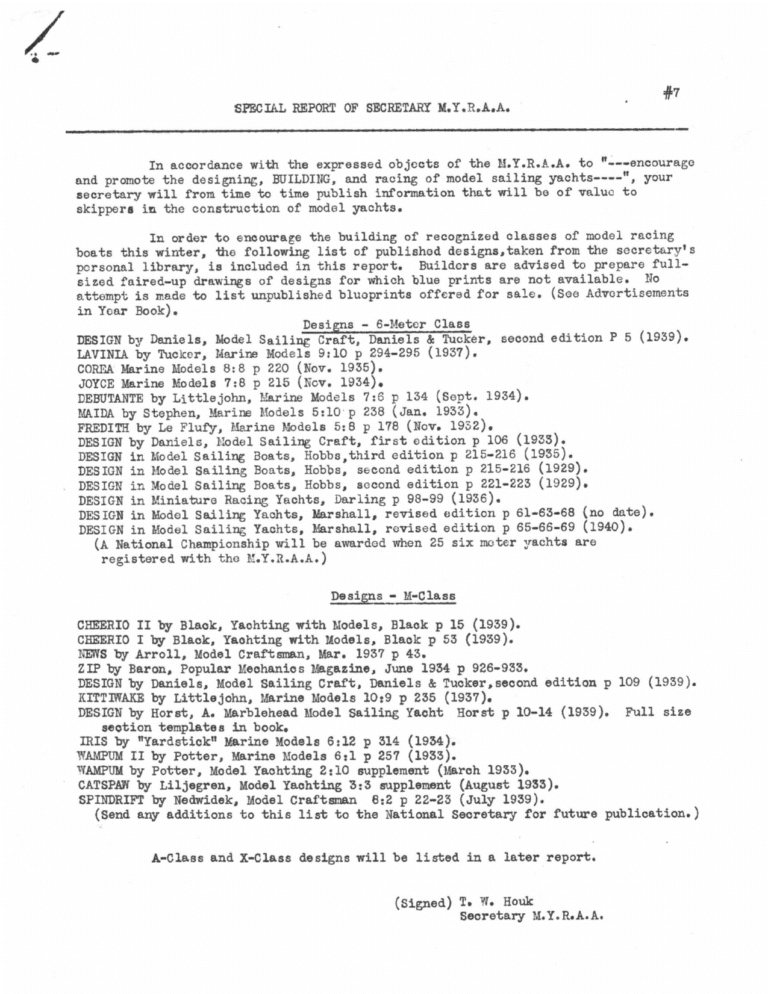
MYRAA Special Report of the Secretary of M.Y.R.A.A. – November 1940
Designs for the 6-meter, M Class, X Class and A Class
Designs for the 6-meter, M Class, X Class and A Class
We personally like the 70-800. It is easy to transport. We will not design our own model, but will shop around until we find a model to our liking, then build it and try to give a comprehensive idea as to the trials and tribulations of the amateur craftsman.
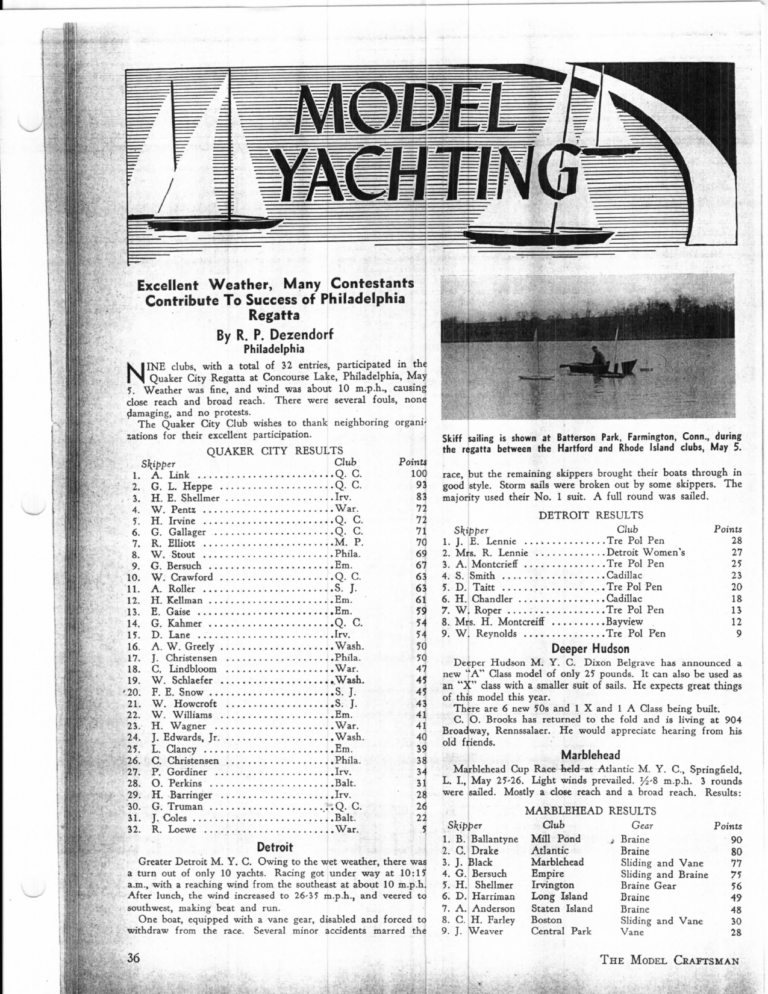
In all of the discussion and agitation which has been brewing recently regarding the pros and cons of the vane gear and sliding
rig combination, there has been little, if any, mention of the one phase of this matter that should be given primary consideration.
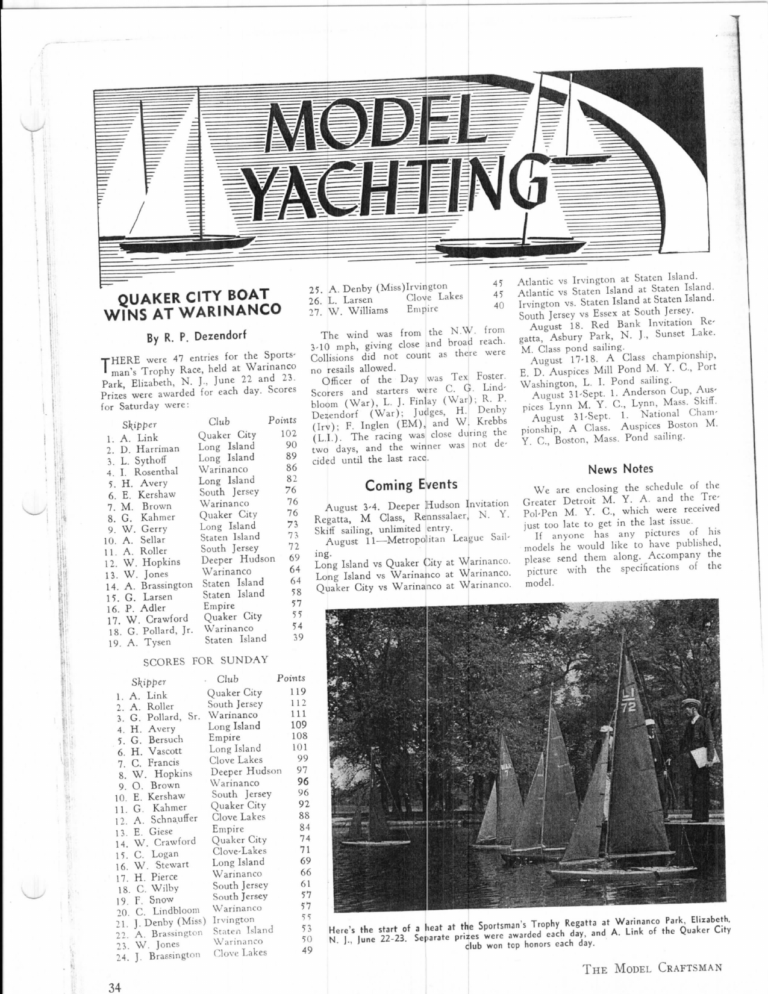
The controversy among the model
yachtsmen in the Eastern division about
the use of the sliding rig and vane gear
is rapidly reaching the point where. unless a level headed view is taken of the situation, the entire sport of model yachting in this division will receive a
serious set-back.
We have received some answers to the
article by F. S. Snow, on the Sliding Rig in the last issue.
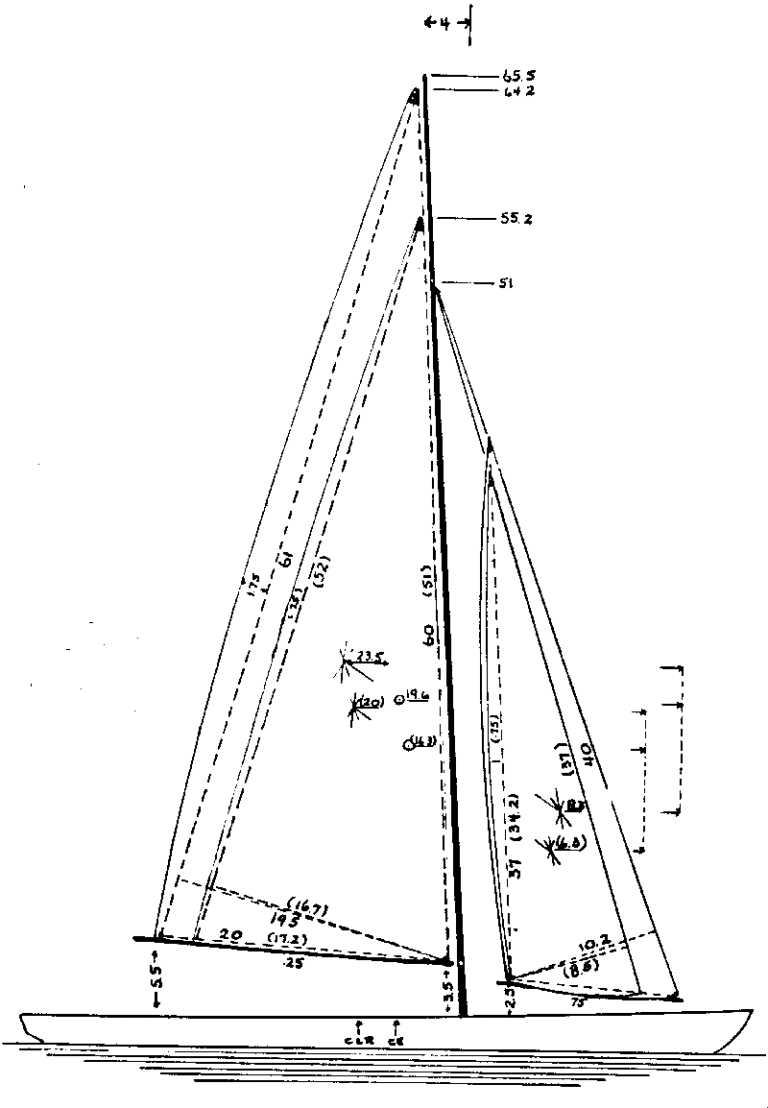
Here in Wisconsin, where skippers frequently encounter high wind velocities during the course of our model yacht racing season, it is almost essential that our craft be equipped with first, second, and even third suits of sails, while the hulls themselves remain of such a design as to be driven easily on those days when the winds are light. This situation compels may of us to make more than a casual study of our sail requirements.
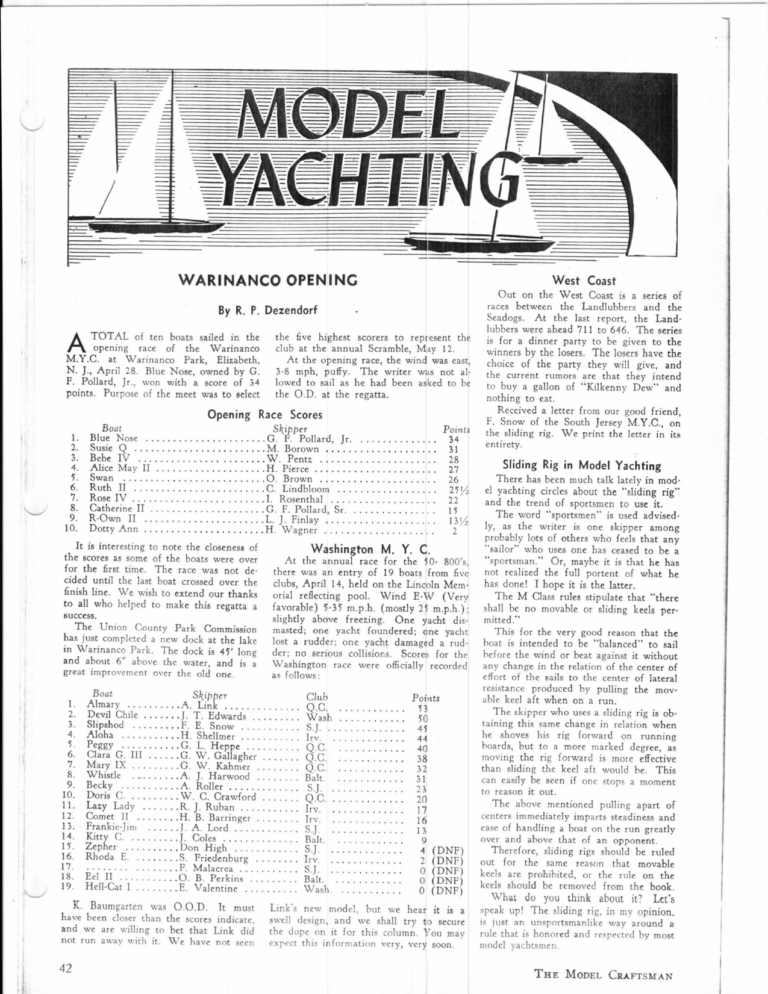
There has been much talk lately in model yachting circles about the “sliding rig” and the trend of sportsmen to use it.
Naturally, every model yachter crowds the area restrictions in his No. 1 suit of sails in order to get the most out of his boat on the “light” days. When this suit (and the wind) causes too great a heel in the hull, with a consequent slowing-up of the peed, it is time to put on the second suit, continuing to the third, if the second proves too large.
Laying out the sails is the first step, so about 3” from the selvedge, and parallel to it, mark a fine, straight pencil line the length of your leach measurement—the mainsail on the left hand side and the jib on the right.