
The Design of Model Yacht Sails
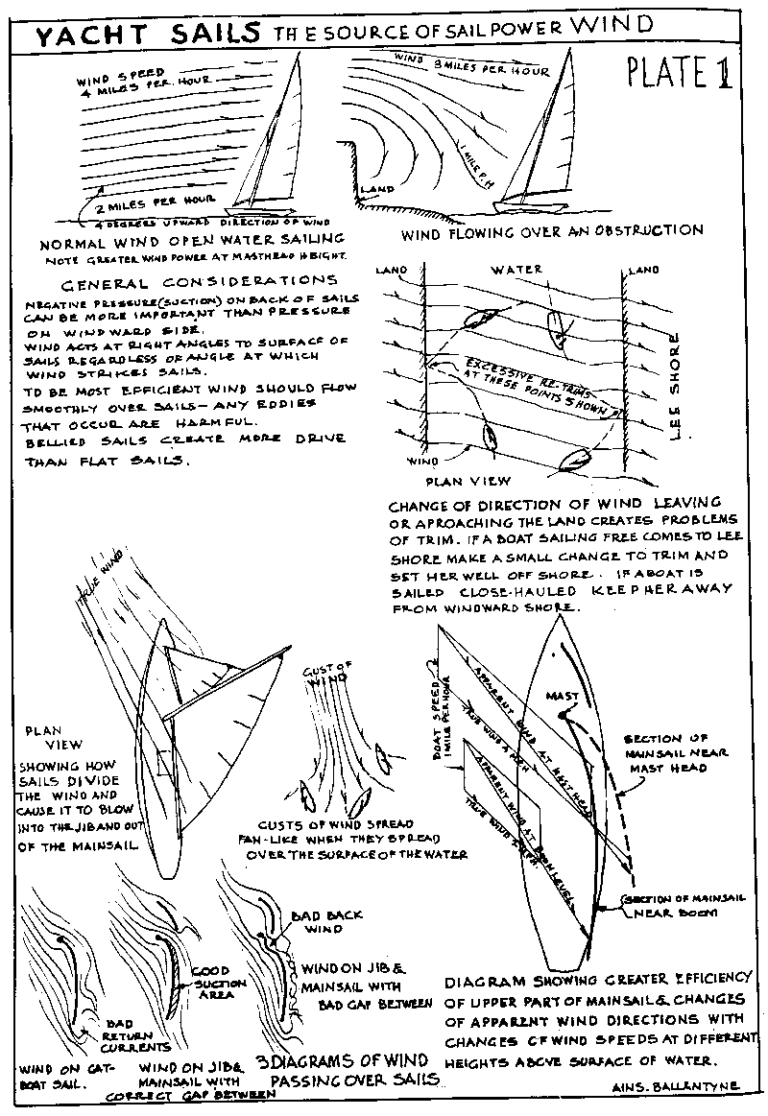
Surprisingly little has been written about the designing and effect of sail-plans as applied to yachts, but periodic fashions in sails seem to come and go, and each in turn is hailed as the best yet.
Surprisingly little has been written about the designing and effect of sail-plans as applied to yachts, but periodic fashions in sails seem to come and go, and each in turn is hailed as the best yet.
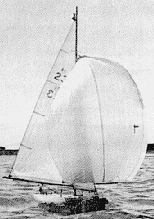
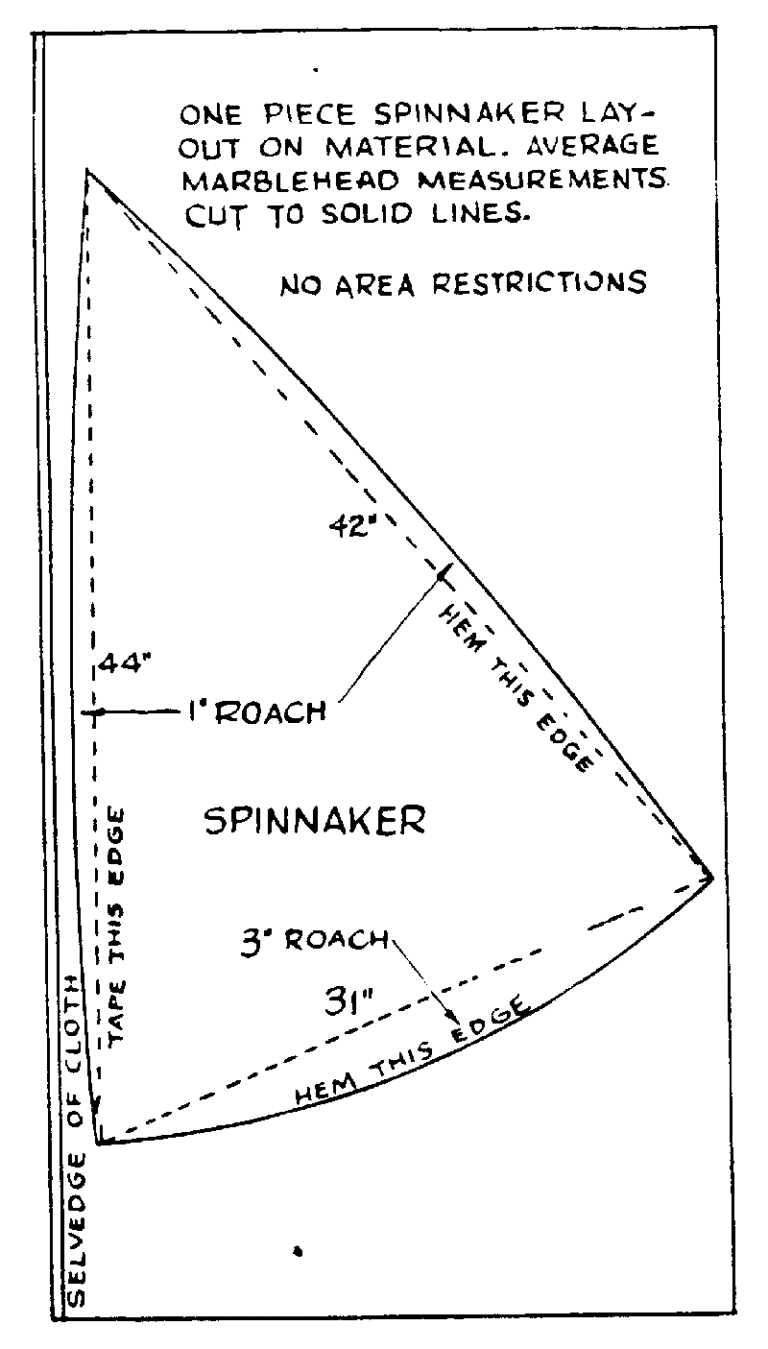
The proper use of a spinnaker adds speed and steadiness to a model yacht when running before the wind, and may also be used on a broad reach.
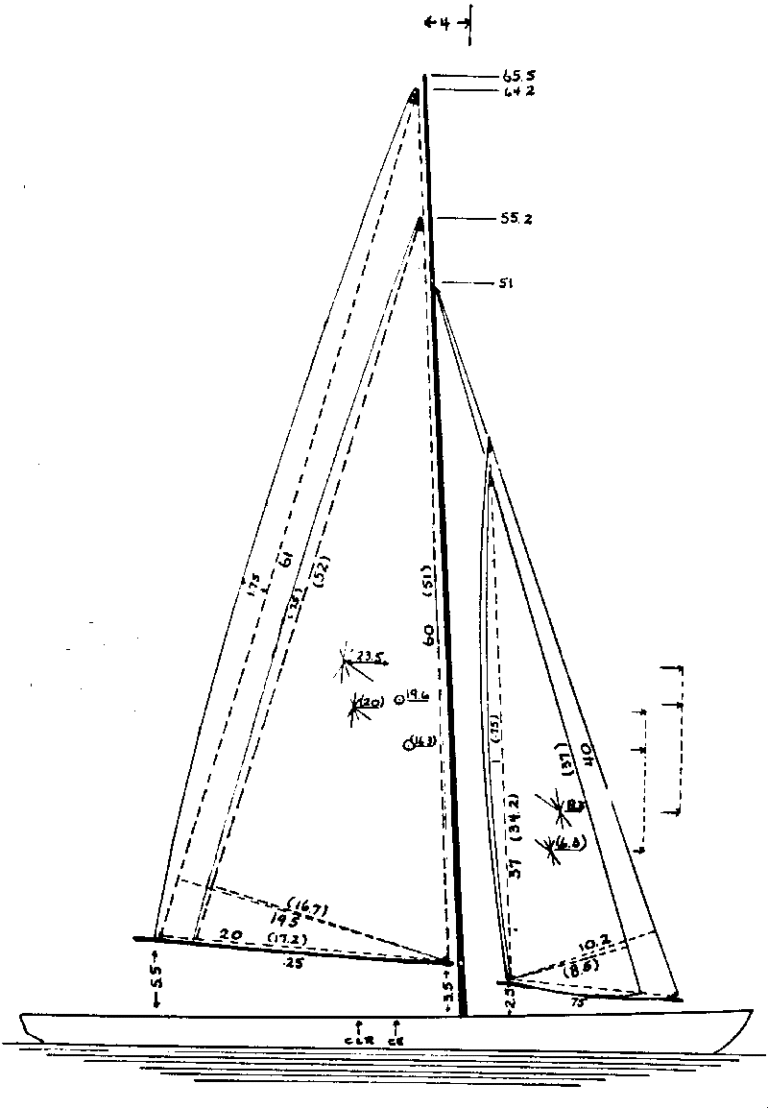
Here in Wisconsin, where skippers frequently encounter high wind velocities during the course of our model yacht racing season, it is almost essential that our craft be equipped with first, second, and even third suits of sails, while the hulls themselves remain of such a design as to be driven easily on those days when the winds are light. This situation compels may of us to make more than a casual study of our sail requirements.
The sailing qualities, speed, and control of your model are dependent on good sails.
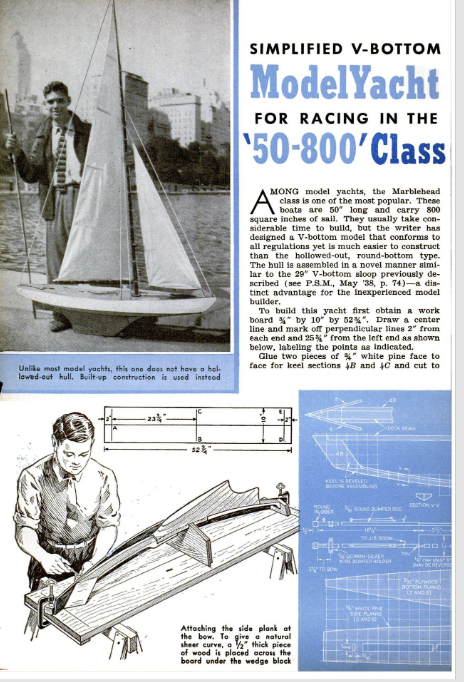
This article describes, and provides plans for, a 50-in hard chine hull that can be built with plywood.
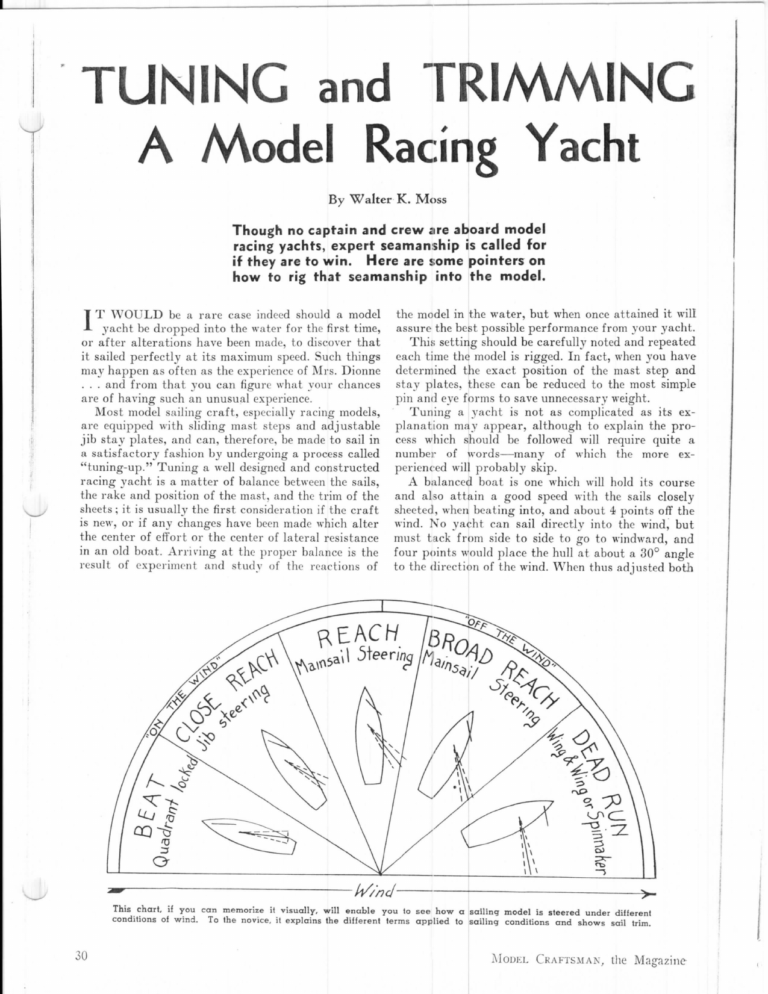
A balanced boat is one which will hold its course and also attain a good speed with the sails closely sheeted, when beating into, and about 4 points off the wind.
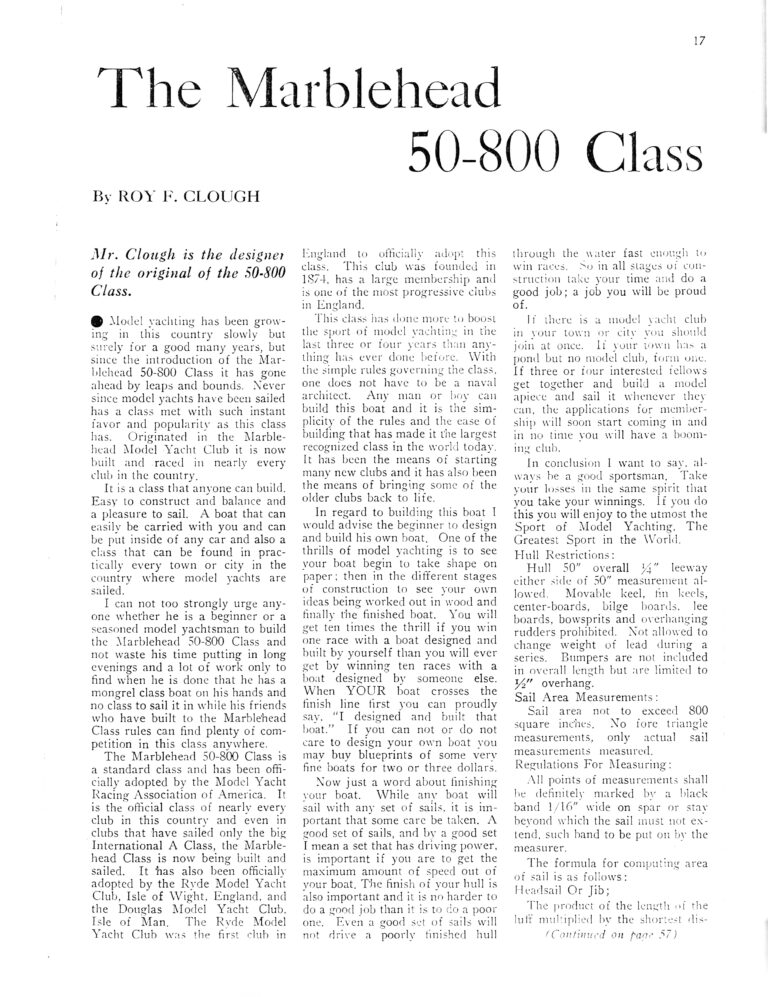
Model yachting has been growing in this country slowly but surely for a good many years, but since the introduction of the Marblehead 50/800 Class it has gone ahead by leaps and bounds.

On the 10th of September 1934, the Boston Traveler printed this picture (Fig. 1) under the headline “Radio Controlled Boat Operated by Pressing Button in Box Ashore” The story began:
It was no less than sheer wizardry.