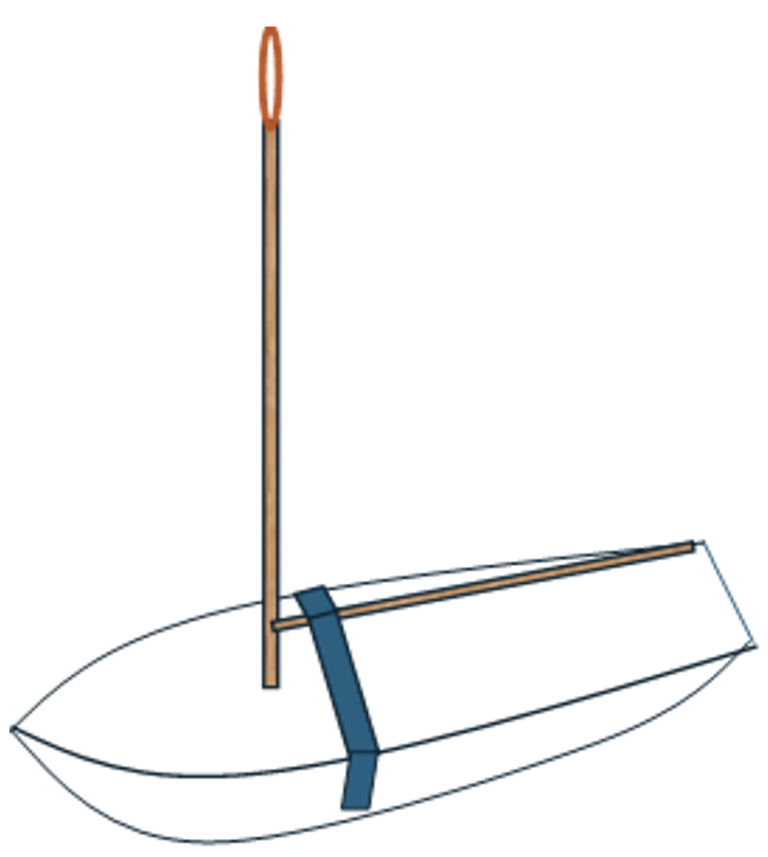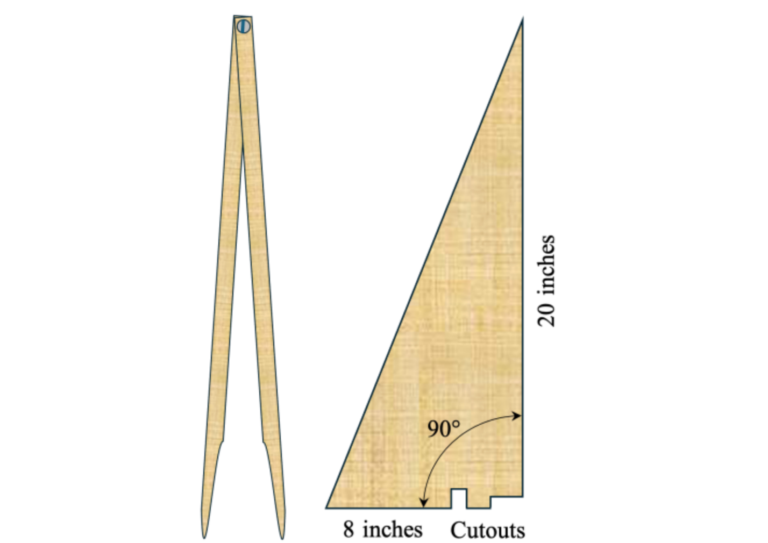
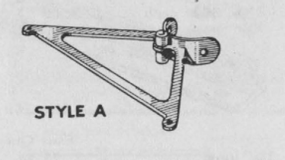
Stay struts [R22] are not used on all model yachts. When they are it is usually for appearance or improved performance. It is an assembly that allows you to adjust the shape of the top of the mast to change the shape of the mainsail to improve performance.
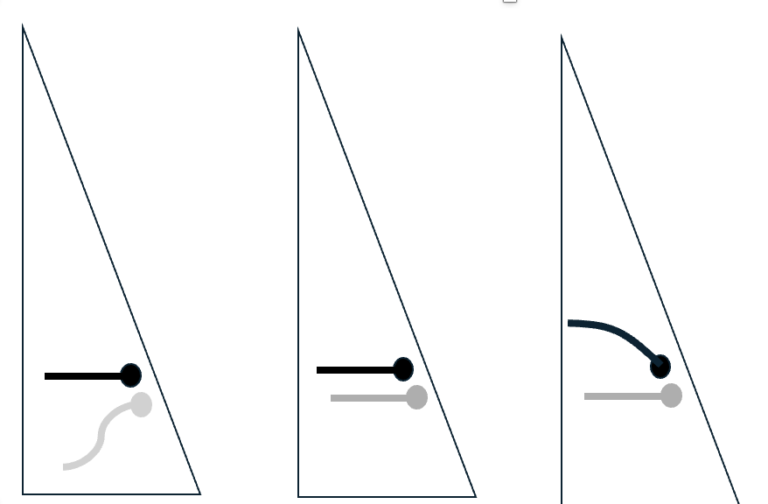
These struts are used to induce or control “prebend” in the mast. This allows sailors to flatten the mainsail in heavy winds or power it up in light air by adjusting how the mast curves.
This article explains how to make a Jenny stay strut, the main component of the assembly. Using simple tools and a piece of sheet metal, you will cut out, bend, drill, and shape the strut. This fitting has an accommodation built into it that replaces the forward mast tang.
Materials
- 1/16- ⨉ 2- ⨉ 3-in sheet aluminum or brass
- Two #2 ⨉ 3/8-in pan head stainless sheet metal screws or brass round head screws
Tools
- pattern of a Jenny stay strut (available as a PDF)
- pencil
- aviation shears or band saw
- center punch
- assorted files
- assorted types of abrasives
- 1/16- and 3/32-in drill bits
- cordless drill or drill press
- smooth jaw vise
- small ball peen hammer
Procedure
- Determine the size appropriate for your boat and resize the pattern on a printer to meet your needs.
- Glue it to a piece of thicker paper.
- Cut the pattern out.
- Tape the pattern to the piece of metal.
- Trace the pattern on your chosen piece of metal.
- Mark the hole locations with an automatic center punch.
- Cut the shape close to its final shape.
- File the part to final shape.
- Sand smooth.
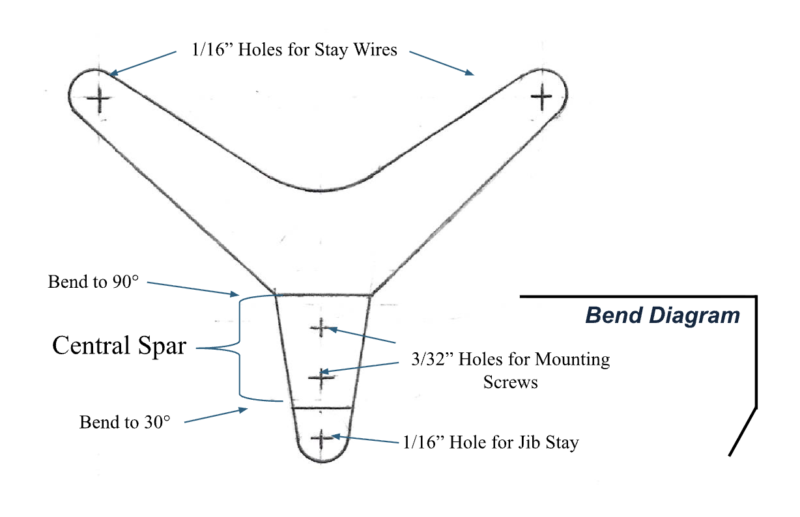
Note the layout diagram for the holes and bends.
- Drill two 1/16-in holes on the ends of the part and the bottom of the central spar.
- Drill two 3/32-inch holes on the central spar for the screws.
- Mark the bend lines.
- Place the part in a small smooth-jaw vise with the 90-deg bend line lined up with the top of the jaws of the vise.
- Use a piece of hard wood and place it against the part at the jaws.
- Hammer the block while applying pressure to the part
- Stop when the bend is at 90 degrees.
- Repeat the process for the 30-deg, bend.
- Clean up the part with small files and sanding sponges.