By John Henderson
running rigging [R46]: The rigging used for raising, lowering, shaping, and controlling the sails on a sailing vessel.
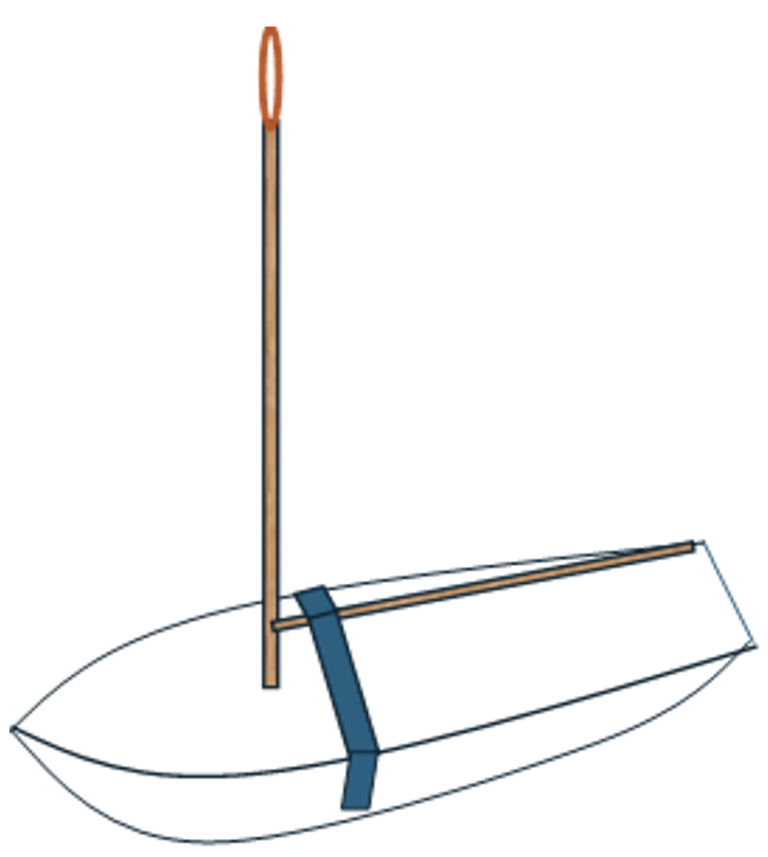
Models generally have less running rigging than full-size boats. Usually, only the sheets are adjustable by radio control when sailing (sometimes this is a class-imposed limitation).
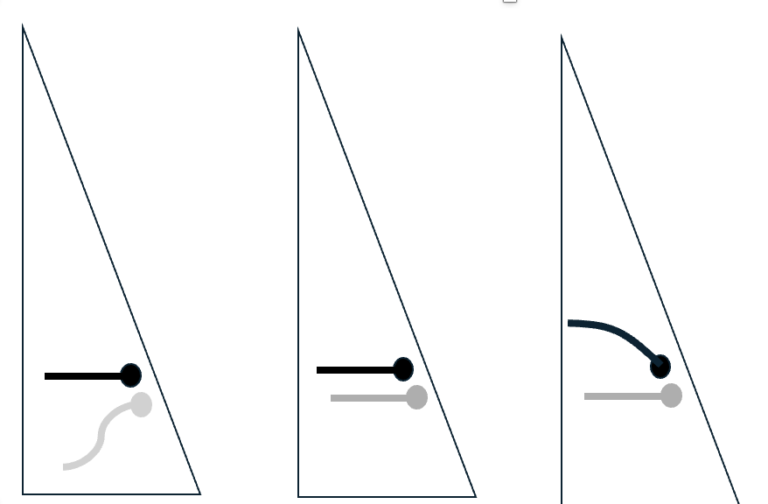
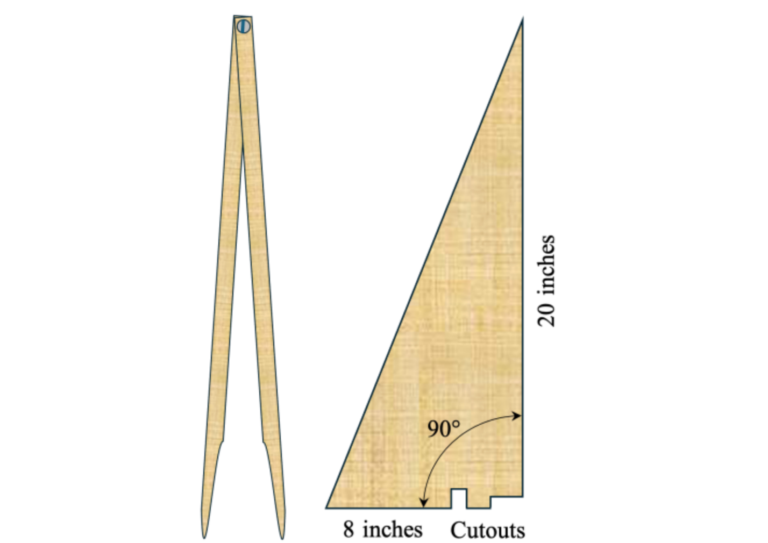
Model classes that have two channels of control (rudder and sail trim) control the main and jib trim angles simultaneously. The relative trim angles are set by skipper adjustment before the boat is launched. See Henderson, John. “Setting up Swing-Arm Sail Controls.” The Model Yacht. 22:1. Spring 2021.
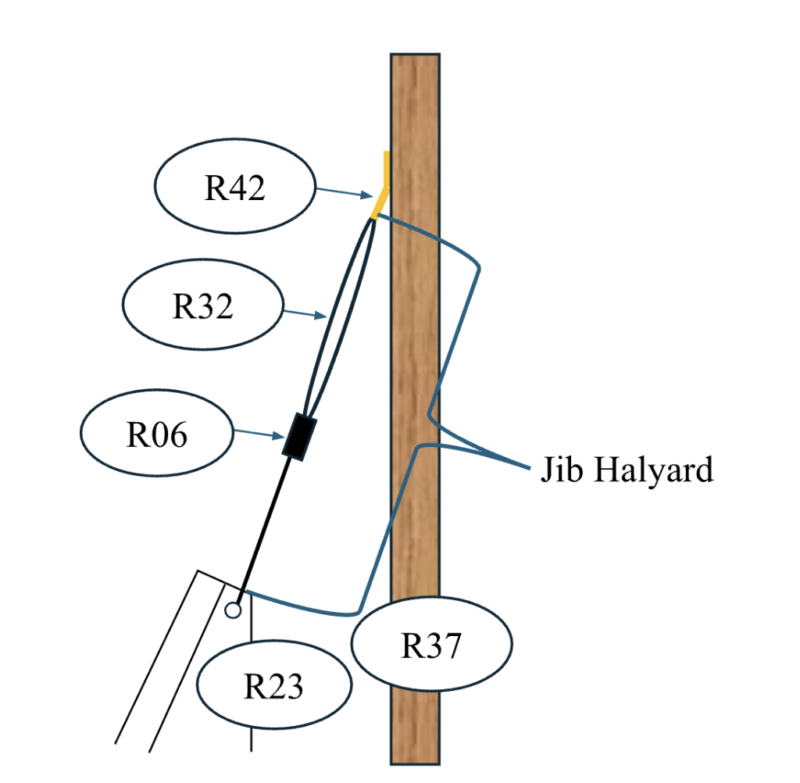
Other functions usually considered “running” rigging are outhauls (R44), halyards [jib halyard (R25) and main halyard (R36)], and topping lifts (R62). These are not generally highly loaded, and many arrangements are possible. They are made with line (R32), not wire, and bowsies (R06) provide the adjustment.
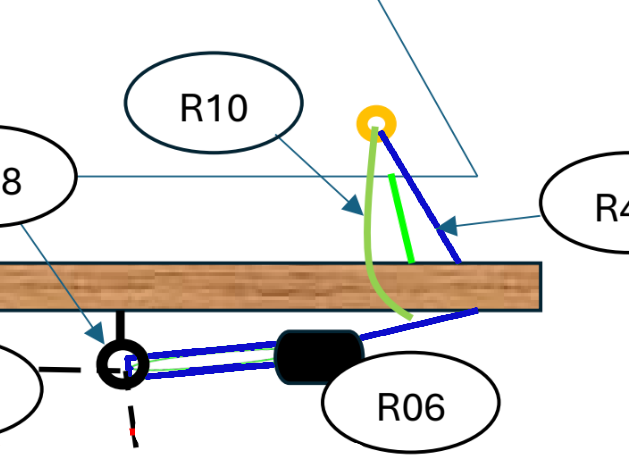
Line (R32) for running rigging should be low stretch. A strength of 80 pounds is more than sufficient. Other hardware like hooks (R21), swivels (R58), cotter pins (R11), and screw eyes (R48) can be found at model yachting suppliers, from fishing tackle stores, or online. Sources are provided for most items on the item definition pages (like Hook (R21)) or on sub-assembly pages (like Bowsie (R06)).
Related Articles
- “Bowsie.” usvmyg.org. June 2026.
- Henderson, John. “Setting up Swing-Arm Sail Controls.” The Model Yacht. 22:1. Spring 2021.
- “Hook.” usvmyg.org. June 2026.
- “Jib Halyard.” usvmyg.org. June 2026.
- “Line.” usvmyg.org. June 2026.
- “Main Halyard.” usvmyg.org. June 2026.
- “Outhaul.”
- “Threading a Bowsie” usvmyg.org. April 2026.
- TMY Editorial Staff. “Fairleads.” The Model Yacht. 24:2. Summer 2023.
- TMY Editorial Staff. “Make an Outhaul Fairlead.” usvmyg.org. May 2026.