by TMY Editorial Staff
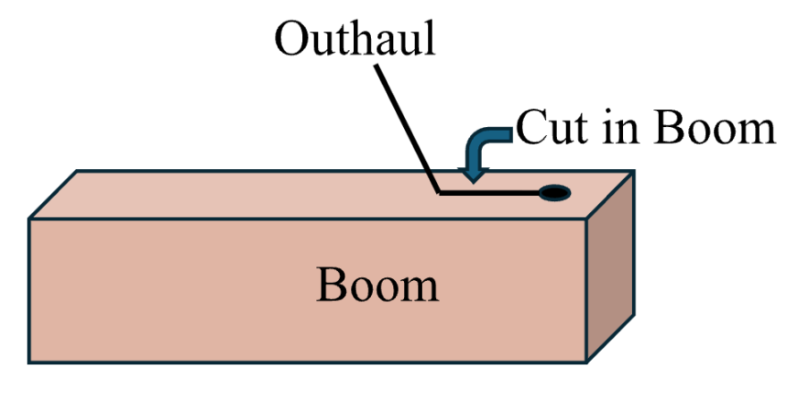
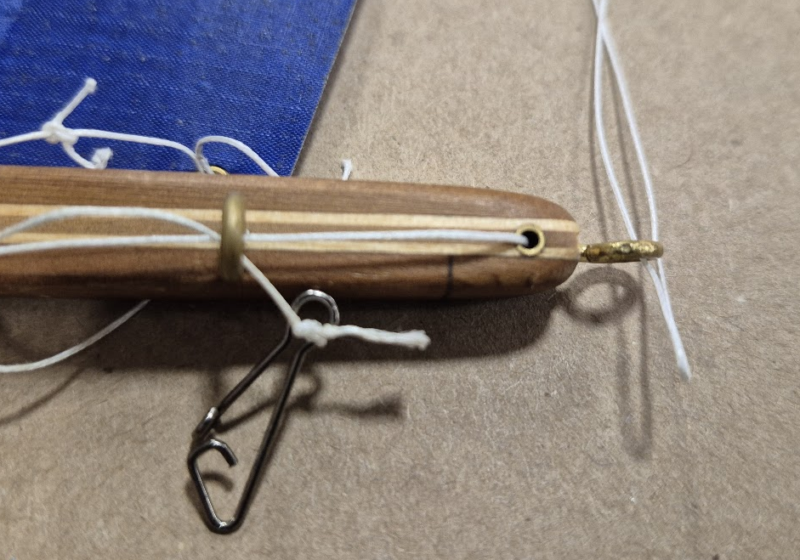
Over the years we have observed that the outhaul line will cut into softer woods (along the grain) used for the booms. These woods generally have a straight grain and softer tendencies, which allow the line, that is always under tension, to cut into the boom. The following simple solution can keep this from happening.
Insert a small piece of brass or aluminum tube into the location where the hole passes through the back of the boom to accommodate the outhaul.This will stop the line from cutting into the boom.
Materials
- Thin Cyanoacrylate Adhesive (CA)
- 3/32-in brass or aluminum tubing
Tools
- Awl
- Ruler
- X-Acto Saw and Miter Box
- 1/16” and 3/32” drill bits
- 60° and 120° angle countersink bits
- Small fine flat file and finding sanding block
Procedures
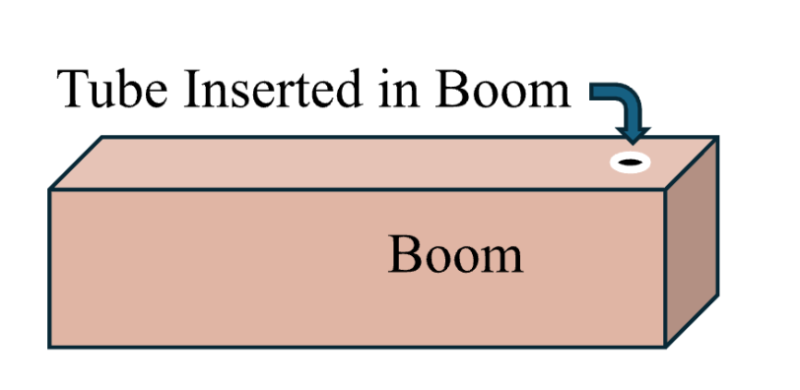
- On the top edge measure in from the rear of the boom one-half of the width of the boom. Example: If the boom is ⅜ in wide, then measure in 3/16 in from the rear of the boom.
- Mark the location with an awl.
- Drill a 3/32-in hole vertically through the end of the boom where marked.
- Cut a piece of 3/32-in tubing, brass or aluminum, slightly longer than the height of the boom.
- File/sand off the burrs.
- Carefully tap the piece of tubing into and through the hole so it sticks out on either side of the hole.
- Place a drop of thin CA where the tube enters and exits the boom between the tube and the boom. It should wick down between the tube and wood making it fast.
- File/sand the tube flush with the face of the boom on the top and bottom.
- Run a 1/16-in drill bit through the tube to clean off the burr. You can just twist the bit between your fingers, and it will go right through the hole.
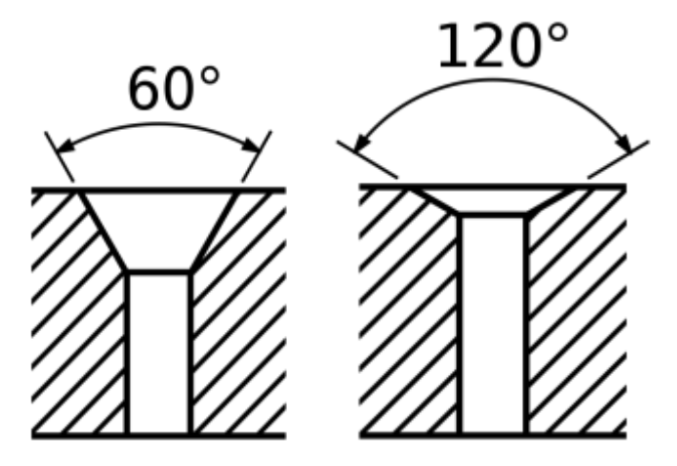
- You must chamfer the top and bottom of the tube.
- Use two countersink bits, one with 60° angle and the other with a 120° chamfer. These will make a nice “radius” for the line to turn on. NOTE: If you know how to sharpen drill bits you could grind the two angles noted above, one on each of two drill bits.
- Start with the 120° angle countersink and then the 60° angle countersink.
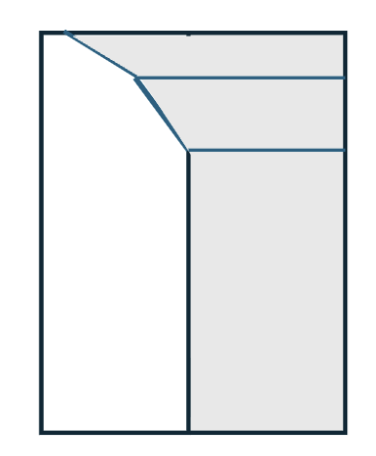
- Use your fingers to rotate each countersink in the end of the hole, top and bottom, to double chamfer the hole. This will greatly reduce line chaffing of the outhaul.
While the chamfering does eliminate most chafing of the outhaul line, some does occur over time. When you do your winter maintenance, double check the outhauls and if a lot of fraying is evident, change them out.